

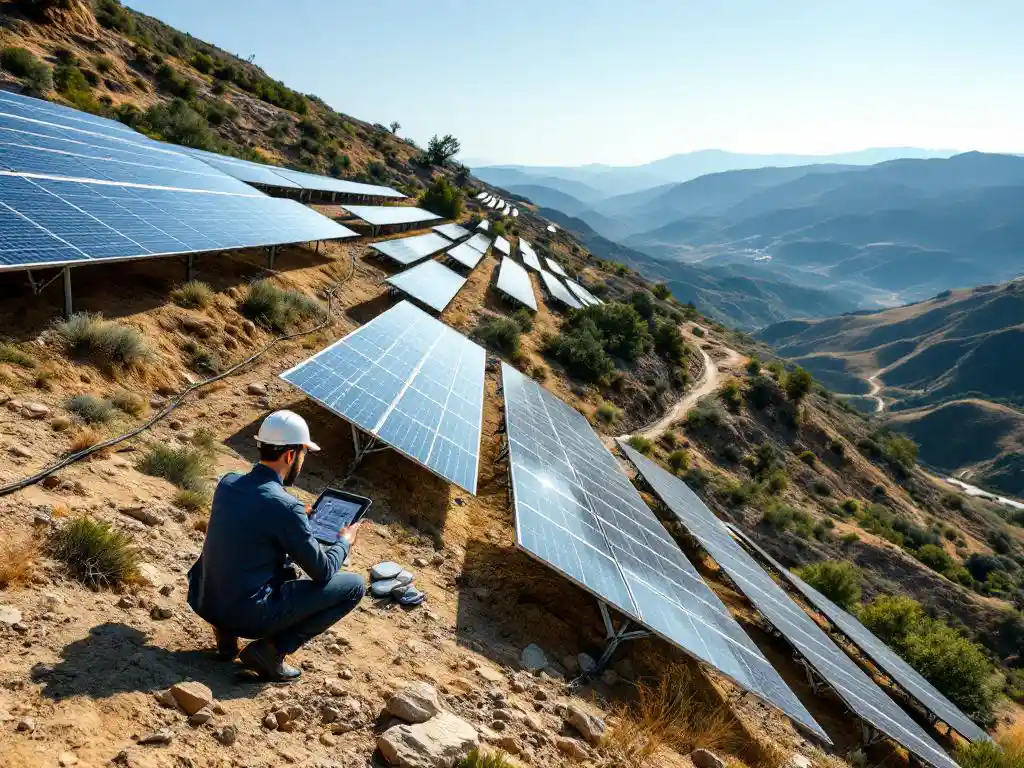
Hillside solar installations present complex engineering challenges that extend far beyond traditional flat-terrain projects. Sloped terrain requires specialised design considerations for foundation stability, modified structural calculations, and complex shading analysis. These installations demand advanced solar design software capable of handling terrain modelling, automated stringing calculations, and three-dimensional visualisation to ensure accurate, construction-ready documentation for challenging topographical conditions.
What unique terrain challenges make hillside solar installations complex?
Hillside solar projects face significant terrain-related obstacles, including variable slope gradients, soil stability concerns, and complex drainage requirements that do not exist in flat installations. The varying elevations create foundation design challenges, where each mounting point may require different structural solutions, while geological considerations such as rock formations, soil composition, and erosion potential directly impact equipment placement strategies and long-term system stability.
Slope gradients exceeding 15–20 degrees typically require specialised mounting systems and modified foundation approaches. The soil stability assessment becomes critical, as seasonal weather patterns, water runoff, and ground movement can affect the structural integrity of solar arrays over their 25-year lifespan. Engineers must account for these variables when designing foundation systems that may need to accommodate different load distributions across the installation site.
Drainage requirements on hillside installations are particularly complex, as improper water management can lead to erosion around mounting structures and potential system failure. The design must integrate natural water flow patterns while ensuring that solar infrastructure does not create new drainage problems. This often requires cut and fill analysis and terrain modelling capabilities that traditional design approaches cannot adequately address.
How do shading patterns affect solar panel performance on slopes?
Shading calculations on sloped terrain are significantly more complex than on flat installations due to inter-row shading variations, seasonal shadow changes, and topographical features that create unique shading patterns throughout the day. The three-dimensional nature of hillside installations means that traditional flat-ground shading models are inadequate, requiring sophisticated analysis to optimise panel spacing and tilt angles for maximum energy production.
Inter-row shading becomes particularly challenging on slopes because the relationship between panel rows changes depending on the terrain gradient. Panels positioned higher on the slope may cast longer shadows on lower panels during certain times of day, while natural terrain features such as ridges, valleys, or vegetation can create additional shading complications that vary seasonally as the sun’s path changes.
Modern solar design software must incorporate advanced 3D terrain modelling to accurately calculate these complex shading scenarios. The software needs to account for the actual ground profile, panel positioning relative to terrain features, and seasonal sun path variations to determine optimal spacing between panel rows. This analysis directly impacts the overall system layout and energy yield projections, making accurate shading calculations essential for project viability.
What construction and access challenges do hillside solar projects face?
Construction on hillside terrain presents significant logistical challenges, including equipment transportation difficulties, limited construction vehicle access, and enhanced safety requirements for workers operating on sloped surfaces. These challenges often require specialised construction techniques, alternative equipment options, and modified installation procedures that can substantially impact project timelines and costs compared to flat-ground installations.
Equipment transportation becomes a major consideration, as standard construction vehicles and installation equipment may not be suitable for steep terrain. Heavy machinery such as pile drivers, cranes, and material transport vehicles may require alternative access routes or specialised equipment designed for slope operations. This often necessitates careful planning of material staging areas and construction sequencing to minimise site disturbance while maintaining efficient installation workflows.
Worker safety on sloped terrain requires additional precautions, including fall protection systems, specialised footwear, and modified work procedures. Installation teams may need additional training for slope work, and the construction process may require more time per installed unit compared to flat installations. These factors must be considered during the design phase to ensure that the proposed layout is actually constructible within reasonable cost and safety parameters.
How does hillside terrain impact solar system design and engineering calculations?
Hillside installations require modified structural load calculations, adjusted wind load considerations, and integrated drainage system design that fundamentally differ from flat-ground projects. The engineering calculations must account for gravitational forces acting along the slope, differential loading conditions across the array, and the interaction between natural terrain features and solar infrastructure to ensure long-term structural integrity.
Structural load calculations become more complex as gravitational forces create additional stress vectors that do not exist in flat installations. The mounting systems must resist both traditional wind and snow loads while also managing the downslope forces that could cause system movement or failure. Each mounting point may experience different load conditions depending on its position relative to the slope gradient and surrounding terrain features.
Wind load considerations on slopes are particularly complex, as terrain features can create wind acceleration zones, turbulence patterns, and pressure differentials that vary significantly across the installation site. The design must account for these localised wind effects while ensuring that the overall system can withstand the specified design loads. Advanced PV design software with integrated terrain modelling capabilities becomes essential for accurately calculating these complex load scenarios and generating construction-ready documentation that accounts for the unique challenges of hillside installations.
Successfully designing hillside solar installations requires sophisticated engineering tools that can handle the complex interplay between terrain, structural requirements, and energy production optimisation. At Virto Solar, we understand these challenges extend from initial site assessment through construction completion, demanding careful consideration of factors that simply do not exist in traditional flat-ground projects. For expert guidance on your hillside solar project, contact our team to discuss your specific terrain challenges and design requirements.
Frequently Asked Questions
What software features should I look for when selecting a solar design tool for hillside projects?
Look for software with advanced 3D terrain modelling capabilities, automated cut and fill analysis, integrated shading simulation with topographical features, and the ability to generate different foundation solutions for varying slope conditions. The software should also include wind load analysis for complex terrain and automated stringing calculations that account for elevation changes across the site.
How much more expensive are hillside solar installations compared to flat-ground projects?
Hillside installations typically cost 15-30% more than flat-ground projects due to specialized mounting systems, additional engineering requirements, challenging site access, and extended construction timelines. The exact cost premium depends on slope gradient, soil conditions, site accessibility, and the complexity of required drainage solutions.
What is the minimum slope gradient that requires specialized hillside design considerations?
Slopes exceeding 15-20 degrees typically require specialized mounting systems and modified engineering approaches. However, even gentler slopes between 5-15 degrees may need enhanced drainage design and adjusted foundation solutions depending on soil conditions, local climate, and long-term stability requirements.
How do I determine if my sloped site has adequate soil stability for a solar installation?
Conduct a comprehensive geotechnical assessment including soil composition analysis, slope stability calculations, seasonal water table evaluation, and erosion potential studies. Engage a qualified geotechnical engineer to assess factors like soil bearing capacity, potential for ground movement, and the need for soil stabilization measures before finalizing your design.
What are the most common mistakes made during hillside solar project planning?
Common mistakes include underestimating drainage requirements, using inadequate terrain modelling that misses critical shading issues, failing to account for construction access limitations early in design, and not properly calculating differential loading conditions across varying slope gradients. Many projects also overlook the need for specialized equipment and extended construction timelines.
Can existing flat-ground solar design approaches be modified for hillside installations?
Traditional flat-ground design methods are inadequate for hillside projects and can lead to significant performance and structural issues. Hillside installations require purpose-built design approaches with 3D terrain analysis, modified structural calculations, and specialized foundation design that cannot be achieved by simply adapting flat-ground techniques.
How do I optimize panel spacing on slopes to balance shading losses with land use efficiency?
Use advanced 3D shading analysis to model actual terrain conditions and seasonal sun paths, then iterate panel spacing to find the optimal balance between energy yield and site utilization. Consider varying row spacing across different slope sections, and account for both inter-row shading and shadows cast by natural terrain features when determining your final layout configuration.
Source link