


May 21, 2026
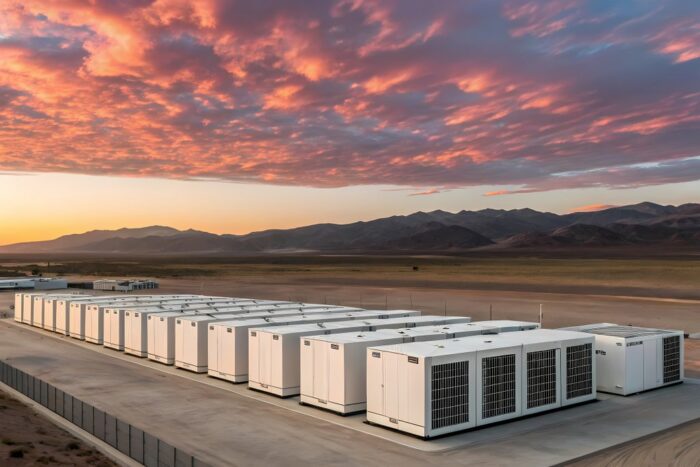
The Solar Energy Industries Association’s (SEIA) latest U.S. Energy Storage Market Outlook report spells sunny skies for the storage sector of the solar industry.
With 9.7 GWh of storage installed in the first quarter of this year, the energy sector is hedging its bets against an increasingly straining electrical grid, SEIA says.
Combined with U.S. involvement in the war in Iran, that instability created record numbers for the storage sector in early 2026 with installations up 32% year-over-year. In spite of policy changes at the federal level which targeted the renewable energy industry, the storage sector had its best quarter ever in terms of installation.
Darren Van’t Hof, SEIA’s interim president and CEO, says storage can be a massive boon to the U.S. in its seemingly endless efforts to meet spiking energy demand.
“Energy storage’s remarkable first quarter only underscores the fundamental values of this technology: it’s insulated from fuel price shocks, keeps electricity costs down, and strengthens grid reliability,” he says. “While long-term forecasts are validating that the demand for this technology is rising as off-takers seek energy security, actions in Washington to stall permitting are threatening to slow that progress.”
Breaking it down by the numbers, 7.8 GWh of Q1’s installations belonged to utility-scale storage, with commercial and industrial behind that at 648 MWh, and finally 515 MWh for residential storage. Known solar hotbeds Texas, Arizona, and California led the charge in the first quarter, with wild cards Georgia, Iowa, and Mississippi also posting impressive figures. Perhaps most notably, 71% of those utility-scale storage installations were built in states President Donald Trump won in 2024.
Resetting energy expectations
It’s been a common refrain this year among energy experts that storage options are no longer simply a nice perk to have attached to solar assets. Instead, storage and batteries have made a name for themselves in their own right. This most recent report from SEIA underscores that sentiment, backing it up with favorable statistics from across the country.
So, the industry must reset its expectations for where storage will be in the near future, as soon as the end of the decade. SEIA forecasts installations of about 610 GWh worth of energy storage by 2030, up from previous projections as price volatility continues to plague gas and oil supply chains.
There is a catch, however. Should federal bottlenecks like the One Big Beautiful Bill Act (OBBBA) and the end of the Investment Tax Credit continue to add up, electrical bills will continue to spike if solar and storage projects slow. SEIA’s reports show that 467 projects across both sectors currently have pending permits, and are therefore politically vulnerable.
So, the landscape is certainly still as uncertain as it was, but ongoing policy change hasn’t stopped the storage market yet.
“Energy storage is no longer just for backup, it’s critical energy infrastructure,” says Shan Tomouk, the BESS and energy lead at Benchmark Mineral Intelligence. “A supportive policy landscape for BESS will be crucial to enabling the rollout of AI and data centers, while mitigating adverse cost impacts to regular customers.”
Tags: batteries, BESS, commercial and industrial, Residential Solar, SEIA, storage, utility-scale
Source link