

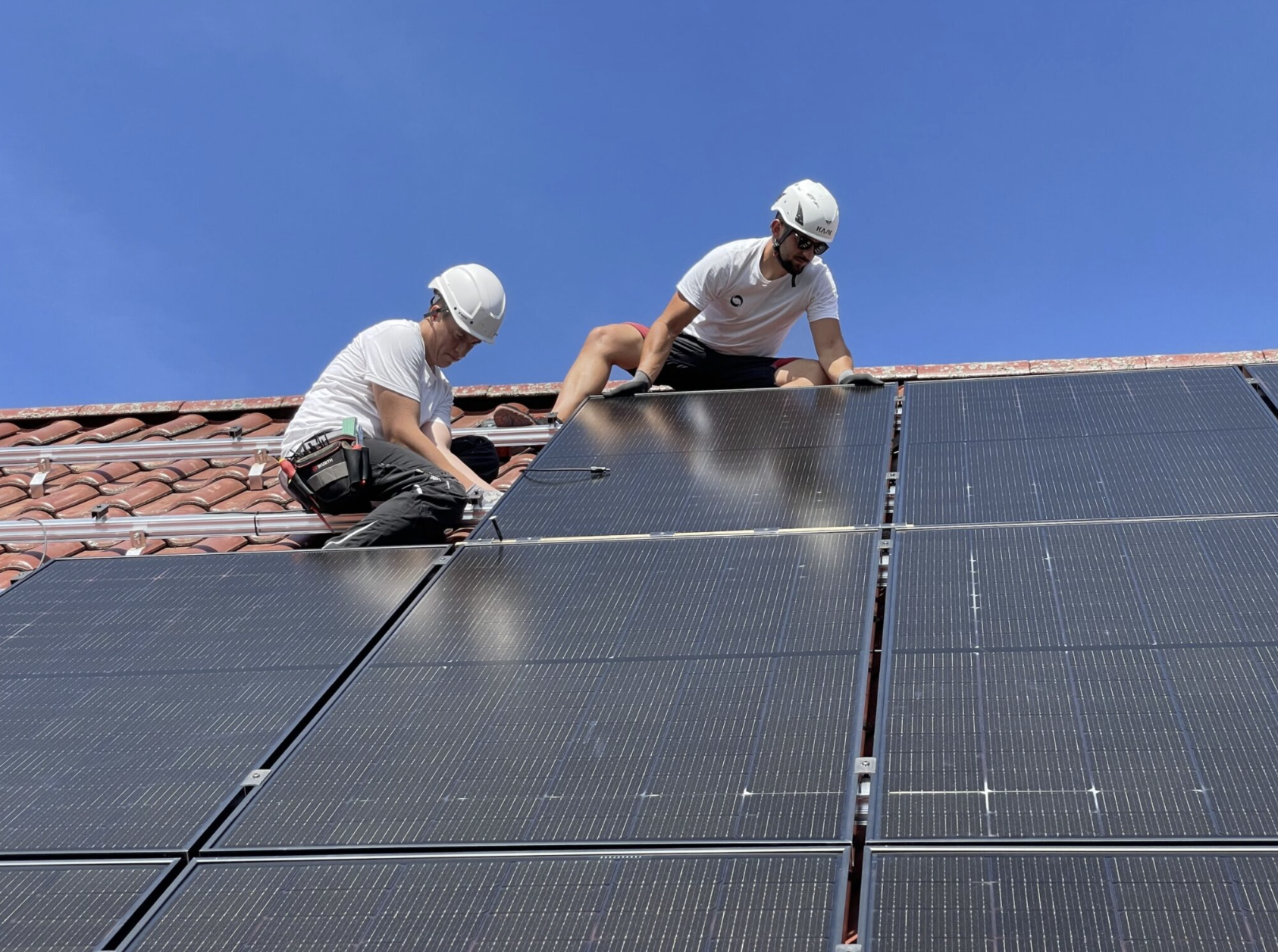
Feed-in tariffs for newly-commissioned solar systems in Germany were reduced by 1% beginning August 1.
The move follows plans to abolish feed-in tariffs for photovoltaic systems by 2030 as included in the draft Renewable Energy Sources Act (EEG) 2027, proposed by German Economy Minister Katherina Reiche, which was approved by the German cabinet last week.
While Germany’s Federal Network Agency is yet to publish the updated tariff rates, German residential energy company 1Komma5°, has calculated small rooftop PV systems with a capacity of up to 10 kW that export only surplus electricity to the grid will now receive a feed-in tariff of €0.0770 ($0.089)/kWh, while systems that feed all generated electricity into the grid will receive €0.1222/kWh.
Support for PV systems with capacities between 10 kW and 40 kW falls to €0.0666/kWh for surplus feed-in and €0.1024/kWh for full feed-in. For systems between 40 kW and 100 kW, the feed-in tariff is now set at €0.0544/kWh for surplus electricity and €0.1024/kWh for full feed-in.
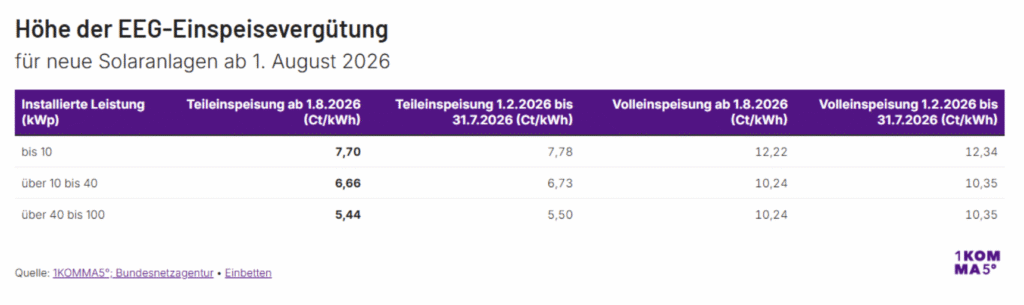
These tariff rates will remain valid until the end of the year. After that, however, the state aid approval covering this section of the EEG expires, meaning a replacement mechanism will need to be agreed.
Under the current EEG draft, the capacity threshold for mandatory direct marketing of electricity is set to be reduced gradually over the coming years. In the long term, only PV systems with an installed capacity of 25 kW or more would be eligible to receive a market premium.
A transitional arrangement is proposed for smaller rooftop PV systems. For a period of 36 months, grid operators would continue purchasing their electricity, but the applicable tariff would be reduced by €0.01/kWh to €0.052/kWh. At the same time, the draft EEG introduces a direct marketing bonus of €0.015/kWh, payable for four years from the commissioning date for systems participating in direct marketing.
Source link