

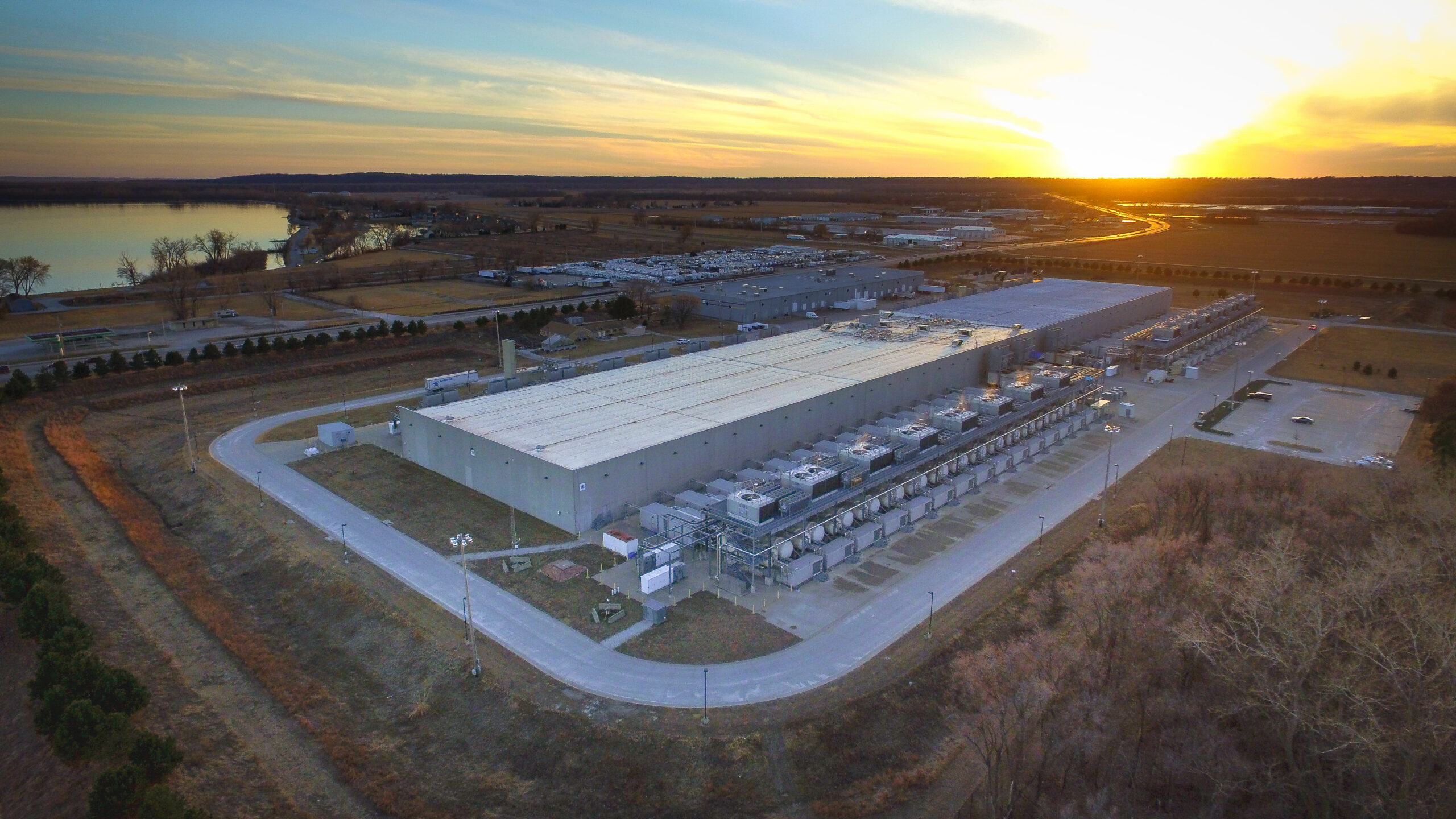
Rising electricity demand from artificial intelligence data centers, manufacturing, and electrification is colliding directly with long-standing grid interconnection bottlenecks across the United States. With long-distance transmission infrastructure taking up to 15 years to build, clean energy developers and tech hyperscalers are turning to on-site power and distributed energy resources to bridge the gap.
According to a whitepaper by Reuters Events, U.S. electricity consumption is projected to grow by 25% to 50% by 2050.
At the same time, grid interconnection queues reached over 2,200 GW of planned capacity in mid-2026, far surpassing the nation’s total installed capacity of 1,400 GW.
While investor-owned utilities plan $1.1 trillion in grid investments through 2029 and regional transmission operators (RTOs) like the Southwest Power Pool (SPP) and Midcontinent Independent System Operator build out 765 kV extra high-voltage backbones, those transmission lines face six- to seven-year buildouts.
This multi-year timeline mismatch is forcing a strategic shift for solar, energy storage, and distributed energy resource (DER) providers.
On-site solar and battery storage
To circumvent grid connection delays, data center developers are increasingly pursuing on-site power generation. Market intelligence data cited in the report indicates that developers were planning roughly 56 GW of on-site capacity as of early 2026, accounting for 30% of all planned data center builds nationwide.
Texas leads the trend with over 20.6 GW of planned behind-the-meter capacity, followed by New Mexico (9.2 GW), Pennsylvania (7.5 GW), and Utah (6.0 GW).
While natural gas accounts for a significant portion of interconnection queue requests in regions like SPP, the urgency for rapid deployment is creating major opportunities for co-located utility-scale solar and battery energy storage systems (BESS).
Grid operators are actively structuring policies to favor fast-tracked load. For example, SPP introduced its High Impact Large Load Generation Assessment (HILLGA) framework, offering connection agreements in under 90 days for data centers that bring their own generation to support their load.
VPPs and storage
Beyond co-located hardware, the report underscores the growing reliance on Virtual Power Plants (VPPs) and Grid-Enhancing Technologies (GETs) to release immediate capacity.
A Brattle Group study cited in the report notes that demand flexibility tools, including flexible distributed energy resources, smart thermostats, and battery storage, could unlock up to 200 GW of demand response capacity across utilities and wholesale markets
This dynamic is accelerating commercial partnerships between tech giants and residential solar/storage aggregators:
- Sunrun, Tesla, and Renew Home announced plans for a 16 GW VPP, using aggregated home batteries and smart devices to supply dispatchable capacity and create grid headroom.
- Google and Voltus partnered on a 3-year agreement to aggregate 100 MW of flexible assets to support regional utility capacity.
As greenfield transmission projects continue to contend with permitting and supply chain constraints, the ability to deploy behind-the-meter solar, quick-to-interconnect storage, and aggregated VPP capacity is moving from an alternative strategy to an essential path forward for powering U.S. digital infrastructure.
Source link