

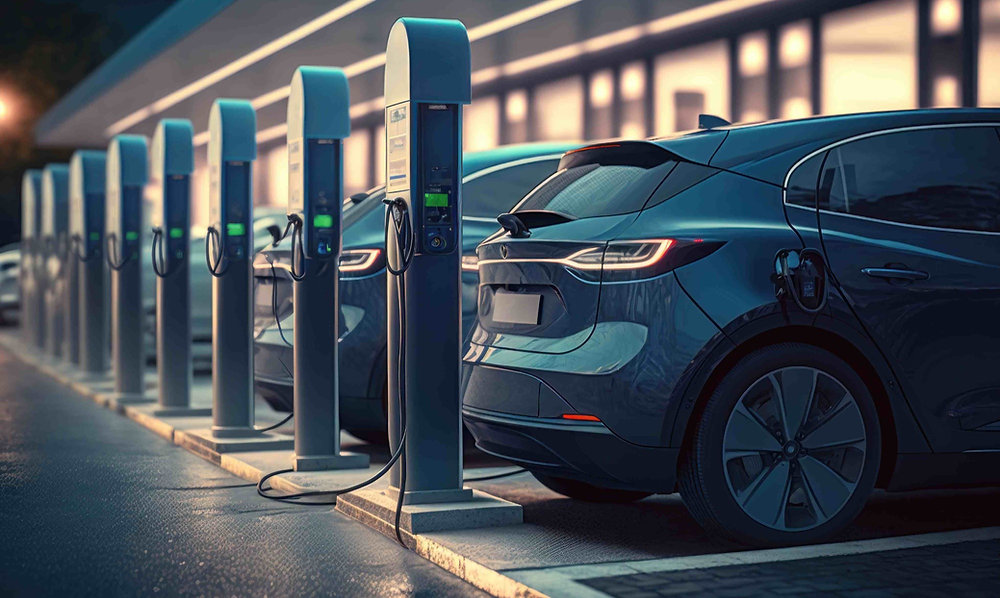
If your company is scoping a commercial EV charging project, zoning is often the first thing that can stall it before a permit application even gets filed. EV charging station zoning requirements determine where a charger can go, whether it counts as an accessory use, and how many spaces a site needs to set aside. Handle these charging station requirements early, and EV charging station planning stays on schedule. Skip that step, and even a routine electric vehicle charging station requirements review can turn into a multi-month zoning appeal.
This guide breaks down what trips up installers and developers most: use classification, parking counts, accessibility, design standards, and the approval process itself. It’s built for solar and EV installers who already handle interconnection and permitting work and want a direct answer on the zoning side before quoting a project. Two real jurisdiction examples are included further down, since zoning rules vary widely by city and state.
Need help scoping the zoning and permitting side of a project? GreenLancer’s EV charging engineering services deliver load calculations, one-line diagrams, and permit-ready plan sets from an in-house team of licensed engineers.
EV Charging Station Zoning Checklist for Contractors
Zoning is only one of several approvals a commercial EV charging project needs, and it gets confused with the building, electrical, and utility review that comes later. Zoning and planning departments answer whether a charger can go on the site at all. Building, electrical, and fire officials answer how it has to be built. The utility answers whether the site’s electrical service can support it. Keeping those three questions separate saves time once an application is in front of a reviewer.
|
Determines allowable uses |
|
|
Accessory vs. primary use |
Can change the entire approval path |
|
Level 2 vs. DC fast charging |
Some codes classify them differently |
|
Equipment and access aisles can affect parking totals |
|
|
Can change stall layout and charger placement |
|
|
Setbacks and equipment location |
May affect switchgear, cabinets, and transformers |
|
May trigger a separate planning department review |
|
|
Often controlled by a separate code section |
|
|
Historic or overlay district |
Can trigger additional design review |
|
Often found in the building or energy code, not zoning |
|
|
Utility equipment footprint |
Transformer or switchgear location may affect the site plan |
Is an EV Charger a Zoning Use, Accessory Use, or Primary Use?
Most zoning codes were not written with EV charging in mind. When a code does not name Electric Vehicle Supply Equipment (EVSE) specifically, a reviewer may default to whatever category feels closest, sometimes treating a set of chargers like a gas station. That mismatch alone can push a project into a conditional use permit or a full variance process.
Classification gets murkier as a site adds more chargers. A handful of Level 2 spaces added to an existing retail lot is a clear accessory use in most jurisdictions. A site built mainly around DC fast chargers can start to look like a fueling station to some reviewers, even without pumps or a convenience store attached. A zoning analysis of EV charger classification points to sites where every parking space serves charging equipment as the clearest case for a primary-use argument.
Questions worth confirming with the zoning administrator before design work starts:
-
Does the code name EVSE as a defined term, or does it fall under a general utility or accessory-equipment category?
-
Is the property zoned for accessory EV charging, or would a stand-alone site need a conditional use permit?
-
At what charger count or site configuration does staff start treating the use as primary rather than accessory?
-
Does the jurisdiction distinguish Level 2 from DC fast charging in its use tables?
Planning and zoning guidance for EV charger deployment recommends that jurisdictions define EVSE terms clearly and default to accessory-use status in most cases, reserving primary-use review for dedicated fast-charging hubs. Not every jurisdiction has adopted that language yet, so confirming local practice before submitting plans saves a resubmittal.
Do EV Charging Spaces Count Toward Minimum Parking Requirements?
Parking counts are the second place zoning reviews stall. Converting standard spaces into charging spaces can look, on paper, like it violates a site’s minimum parking requirement, even when the total space count has not changed. How a jurisdiction treats that conversion, plus its accessibility rules, shapes how many chargers a site can realistically support.
Parking Count and Mandates
Some codes count converted EV charging spaces toward the site’s minimum parking total automatically. Others require a formal parking study or variance any time a standard space changes use, which adds weeks to a schedule. Confirm this early. Jurisdictions with updated parking ordinances that address EV charging directly tend to move faster through review than older codes that treat any parking change as a variance trigger, and California’s AB 970, covered further down, is one example of a state that settled this question directly by requiring the required parking count itself to shrink instead of triggering a study.
Charging Station Accessibility
Federal ADA standards do not currently include an EV-specific formula for how many charging spaces must be accessible. The U.S. Access Board proposed EV charger accessibility guidelines in 2024, but that rule has not been finalized as of this writing. Accessible EV charging spaces still need to connect to the site’s accessible route, and they do not replace the parking facility’s separately required ADA parking spaces.
State or local codes often fill that gap with their own EVSE-specific scoping. California, for example, sets a specific ratio of accessible chargers under its building code. Confirm what the applicable state or local code requires before finalizing a layout, since the answer varies more by jurisdiction here than in most other sections of this guide.
Accessible charging space essentials to confirm during design:
-
Whether the state or local code sets a specific accessible-charger ratio, since federal rules do not yet do so
-
Accessible EV charging spaces sit on a route to the entrance, not tucked behind the building
-
Clear floor space and reach range at the charger meet the applicable accessibility standard
-
Access aisle width, slope, and cross slope meet code
-
Signage clearly identifies accessible spaces, including van-accessible spaces where required
EV-Capable, EV-Ready, and EVSE-Installed: What New Construction Codes Require
New construction is where readiness requirements show up most, often in the building or energy code rather than the zoning code itself. DOE’s EV charging code brief tracks model code language for EV-ready provisions in the International Energy Conservation Code and ASHRAE Standard 90.1, both of which a growing number of jurisdictions have adopted directly. Check both the zoning code and the adopted building or energy code before assuming a project is exempt from readiness rules.
Readiness terminology varies, but most jurisdictions use some version of these three tiers:
-
EV Capable: electrical panel capacity and raceway or conduit are in place for a future charger, but no branch circuit wiring has been pulled yet
-
EV Ready: a branch circuit is installed and terminated at the parking space, ready for a charger to be added
-
EVSE-Installed: the charging equipment itself is installed at the space
Confirm which tier a project’s local code requires and for what share of parking spaces. Some ordinances mandate a flat percentage of new spaces be EV-capable, while others scale by building type or unit count for multifamily projects.
Zoning determines where a charger can go. Once a site clears zoning, the jurisdiction’s adopted electrical, building, and fire codes determine how it gets built, and those adopted codes commonly draw from National Fire Protection Association standards like the National Electrical Code and International Code Council model codes such as the International Building Code and International Residential Code. Confirm which edition of each the jurisdiction has actually adopted, since model code language only applies once a local government adopts it.
EV Charging Station Design Standards, Aesthetics, and Signage Requirements
Design review can create substantial back-and-forth, mostly because aesthetic requirements and safety requirements often get lumped together in the same review. Height limits, screening, and signage rules written for other equipment do not always fit charging stations well, and that mismatch creates delays that have nothing to do with the electrical design.
Design and signage items worth confirming before drawings go final:
-
Whether the jurisdiction has separate design standards for EV chargers or defaults to generic equipment screening rules
-
Height and clearance limits for charger cabinets and any canopy structures
-
Signage requirements covering rate disclosure, time limits, and wayfinding
-
Lighting requirements for after-hours or public charging areas
-
Whether historic district or overlay zone rules apply additional design review
Best-practice guidance generally discourages aesthetic or screening requirements that go beyond what a standard parking area needs, but local zoning, overlay districts, and historic preservation standards still control what a jurisdiction can actually require. Where a code applies stricter design rules to charging spaces than to standard parking, flagging it early with planning staff, rather than after drawings are complete, is the faster path through review.
How to Avoid a Zoning Variance on Your EV Charger Project
A variance is not usually a dead end, but it often adds a public hearing or additional discretionary review, along with a longer timeline, compared with a straightforward accessory-use approval. Most variance triggers on EV charging projects are avoidable with the right questions asked early.
Steps that reduce variance risk on a commercial EV charging project:
-
Confirm use classification (accessory vs. primary) with the zoning administrator before finalizing the site plan
-
Check whether parking space conversion triggers a parking study under local code
-
Review design and signage standards against the actual site conditions, not just a generic template
-
Ask whether the jurisdiction has adopted expedited or administrative approval for accessory-use EV chargers
-
Document readiness requirements (EV-capable, EV-ready) separately from zoning, since they may come from a different code section entirely
Jurisdictions that have adopted clear EV charging station zoning requirements language tend to approve accessory-use projects administratively, skipping the hearing altogether. Ask this question in the pre-application meeting. It is one of the fastest ways to find out whether a project follows administrative review or a much longer discretionary approval process.
How Two States Handle EV Charging Station Zoning
Zoning rules vary enough by city and state that a general overview only goes so far. Two examples, one from Michigan and one from California, show how differently jurisdictions can approach the same set of issues.
Detroit’s EV-Capable Requirement for New Construction
Detroit’s 2023 Climate Strategy calls for the city to adopt an ordinance requiring 20 percent of parking spaces in new developments to be EV-capable, alongside a broader plan to expand public charging citywide. Confirm the current status of that ordinance with the city before applying the 20 percent figure to a live project, since a climate strategy target and an enacted zoning requirement are not the same thing.
Nearby Warren, Michigan, has already enacted its own classification rule: Warren’s electric vehicle infrastructure ordinance allows Level 1 and Level 2 chargers as an accessory use in all zoning districts, while restricting Level 3 fast chargers in some single-family residential zones. Michigan’s Community EV Toolkit tracks these and other local variations across the state, useful reference material for any installer scoping projects outside a single home jurisdiction.
California’s AB 1236 and AB 970 Streamlined Permitting
California’s Assembly Bill 1236 required every city and county to adopt an expedited, streamlined permitting process for EV charging stations by September 2017, limiting review to health and safety and requiring administrative approval for qualifying projects. Assembly Bill 970 built on that in 2022, requiring jurisdictions to reduce a site’s required parking count by whatever amount is needed to accommodate the charging station and its equipment, rather than making an applicant find replacement spaces elsewhere. California’s EV charging permitting best practices guide covers both laws, along with sample ordinance language and administrative-approval criteria that other states have used as a model.
The EV Charging Station Approval Process
Zoning and design questions eventually funnel into a formal application, and that process has its own failure points separate from the substantive code questions above. Knowing what a jurisdiction expects at submittal saves a round of resubmittals later.
A typical sequence looks like this:
-
Confirm zoning and use classification
-
Hold a pre-application meeting if the jurisdiction offers one
-
Lock the site layout
-
Confirm accessibility and parking impacts
-
Complete electrical load and utility review
-
Prepare permit drawings
-
Submit planning and permit packages
-
Respond to review comments without creating conflicts across disciplines
EVSE Application Process
Inconsistent application processes are common, especially in jurisdictions without a dedicated EV charging application form or checklist. Some still require wet-signature forms, which slows down contractors who are not local to the project site. AFDC’s permitting best practices recommend that jurisdictions publish a dedicated checklist and allow administrative approval for accessory-use projects that meet it, cutting review time significantly where adopted.
EV Charger Application Review
Review delays often come from inconsistent interpretation across departments rather than the code itself. A change in parking count introduced after initial comments, for example, can restart part of the review. Projects move faster in jurisdictions that run concurrent reviews across departments and assign a single point of contact for EV charging applications.
Adding EV Charging Zoning Review to Your Project Workflow
Solar installers already have licensing, interconnection experience, and permitting relationships most electrical contractors spend years building. Zoning review for EV charging adds one more step to that workflow, not a new trade. EV charger installation requirements for electricians cover the licensing and NEC 625 side of that transition, while zoning determines where and how a project can be built in the first place.
GreenLancer supports contractors adding EV charging zoning review to their service line with:
-
Commercial EV charger load calculations and interconnection applications
-
EVSE permit drawings and PE-stamped engineering documents
-
Permit-ready plan sets built around each site’s zoning and use classification
-
Make-ready and multi-phase site planning
Ready to start your next EV charging project? GreenLancer can help with permit-ready plan sets. Complete the form below to get started.
FAQs on EV Charging Station Zoning Requirements
Is an EV charger classified as an accessory use or a primary use under most zoning codes?
Most jurisdictions treat a small number of EV chargers added to an existing site as an accessory use, similar to any other site amenity. A site built primarily around DC fast charging, especially one where charging is the sole use of every parking space, is more likely to be reviewed as a primary use. Confirm this classification with the zoning administrator before finalizing a site plan, since it determines the entire review path.
Do DC fast charging stations require special zoning approval?
Often, yes. DC fast charging sites draw more power, need more site infrastructure, and are more likely to be reviewed as a primary use than a small set of Level 2 chargers added to an existing lot. Some jurisdictions apply additional site plan review, traffic analysis, or utility coordination requirements specifically for DC fast charging. Confirm this distinction with the zoning administrator before assuming a Level 2 approval path will apply to a DC fast charging project.
Do EV charging spaces count toward a property’s minimum parking requirement?
It depends on the jurisdiction. Some codes let converted charging spaces count toward the existing minimum parking total automatically. Others require a parking study or variance whenever a standard space changes use, so confirm this before converting spaces on an existing lot.
Does EV charging equipment reduce required parking spaces?
It depends on the state and local code. California’s AB 970 requires jurisdictions to reduce a site’s required parking count by the amount needed to accommodate a charging station and its equipment, rather than requiring replacement spaces elsewhere. Other states leave this to local ordinance, so confirm the applicable rule before finalizing a site plan that converts existing parking to charging use.
What is the difference between EV-capable, EV-ready, and EVSE-installed?
EV-capable means electrical panel capacity and raceway or conduit are in place but no branch circuit wiring has been pulled yet. EV-ready means a branch circuit is installed and terminated at the parking space. EVSE-installed means the charging equipment itself is installed at the space. Jurisdictions mandate different tiers for different building types, so check which one a local ordinance actually requires.
Does installing an EV charger trigger a zoning variance?
Not automatically. A variance usually only becomes necessary when a project’s use classification, parking conversion, or design does not fit cleanly into the existing code. Confirming classification, parking treatment, and design standards with planning staff before submittal is the most reliable way to avoid one.
What ADA requirements apply to EV charging spaces?
Federal ADA standards do not yet include a finalized EV-specific formula for how many accessible charging spaces are required, though the U.S. Access Board has a proposed rule pending. Accessible EV charging spaces still need to connect to the site’s accessible route and are counted separately from the parking facility’s required ADA spaces. Many states and local codes already set their own EVSE accessibility ratios, so check the applicable state or local formula before finalizing a layout.
How long does EV charging zoning approval typically take?
Timelines vary widely. A straightforward accessory-use project in a jurisdiction with clear EV charging ordinances can clear review in a matter of weeks. A project that triggers a variance, a parking study, or inconsistent departmental review can take several months longer, so confirming classification and parking treatment early is worth the time it takes.
Source link