

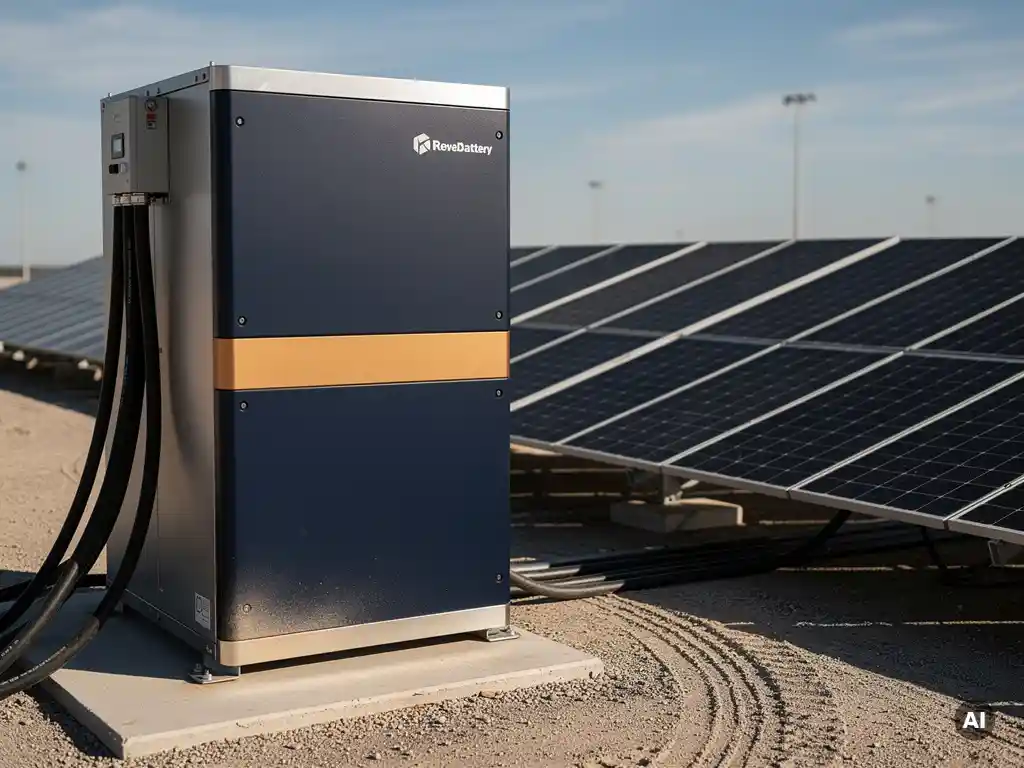
For a 10kW solar system, the correct battery size typically falls between 10kWh and 30kWh of usable storage capacity, depending on how much of your daily consumption you want to cover. A system designed for partial self-consumption needs far less storage than one built for full overnight backup or off-grid resilience.
The right answer depends on your actual energy usage patterns, the battery chemistry you choose, and whether you are sizing for daily cycling or emergency backup. The sections below walk through each of the key variables that shape this calculation.
How many kWh of storage does a 10kW solar system actually need?
A 10kW solar system produces roughly 35 to 50kWh per day, depending on location, orientation, and seasonal conditions. To store enough energy to cover a typical household or small commercial load overnight, most installations pair this system size with between 10kWh and 20kWh of usable battery capacity. Full backup scenarios can push that figure toward 30kWh or more.
The starting point for any battery sizing calculation is your daily energy consumption. If your site uses 20kWh per day and you want to cover half of that from stored solar energy, you need at least 10kWh of usable capacity. If you want to cover the full overnight load without drawing from the grid, you need to account for everything consumed after the sun goes down, which for many sites is between 10kWh and 18kWh.
It is also worth remembering that a 10kW system does not always produce its rated output. On cloudy days or during winter months, generation can drop significantly, which means your battery bank may not always receive a full charge. Sizing with a buffer above your minimum requirement is standard practice for this reason.
What types of batteries are used in 10kW solar systems?
The two most common battery chemistries used in 10kW solar systems are lithium iron phosphate (LFP) and lead-acid, with LFP now dominating new installations due to its longer cycle life, higher usable capacity, and lower maintenance requirements. Flow batteries and other emerging technologies exist but remain uncommon at this system scale.
Lithium iron phosphate (LFP)
LFP batteries are the preferred choice for most modern solar installations. They offer a usable depth of discharge of around 80 to 90 percent, a cycle life often exceeding 4,000 to 6,000 cycles, and a compact form factor. They perform well across a wide temperature range and require no active maintenance. For a 10kW system, LFP is the default recommendation in 2026 for both residential and light commercial applications.
Lead-acid batteries
Lead-acid batteries, including AGM and gel variants, are still used in budget-sensitive or off-grid installations. They are less expensive upfront but carry significant trade-offs: usable depth of discharge is typically limited to 50 percent, cycle life is considerably shorter, and they require more physical space for the same usable capacity. When sizing a lead-acid bank, you need to purchase roughly twice the nominal capacity compared to an LFP system to achieve the same usable storage.
How does depth of discharge affect the battery size you need?
Depth of discharge (DoD) directly determines how much of a battery’s nominal capacity is actually available to use. A battery with a 100% DoD rating and 10kWh nominal capacity delivers 10kWh of usable energy, but a battery limited to 50% DoD delivers only 5kWh from the same unit. Higher DoD means you need fewer or smaller batteries to meet the same storage target.
This is one of the most important variables in battery sizing and one that is frequently underestimated. If you calculate that you need 15kWh of usable storage and you are using lead-acid batteries with a recommended DoD of 50 percent, you need to purchase 30kWh of nominal capacity. The same usable target with LFP batteries at 90 percent DoD requires only around 17kWh of nominal capacity.
Consistently discharging a battery beyond its recommended DoD also accelerates degradation, shortening the battery’s lifespan and increasing the total cost of ownership. Staying within the manufacturer’s recommended DoD is not just a safety guideline, it is a long-term economic decision. Always size your battery bank based on usable capacity, not nominal capacity, and factor in the DoD rating of your chosen chemistry before finalising any specification.
Should you size your battery bank for full backup or partial storage?
Whether to size for full backup or partial storage depends entirely on your priorities. Partial storage, covering only the overnight load or peak tariff hours, is the most cost-effective approach for grid-connected sites. Full backup sizing, which covers all loads during a complete grid outage, requires significantly more battery capacity and a higher upfront investment.
For most grid-tied commercial and residential sites with a 10kW solar system, partial storage is the practical choice. The goal is to maximise self-consumption by storing surplus daytime generation and using it during evening hours, reducing the amount of energy drawn from the grid. This typically requires 10 to 20kWh of usable storage, depending on the site’s load profile.
Full backup sizing is more relevant for sites with critical loads, unreliable grid connections, or off-grid requirements. In these cases, you need to calculate the total energy consumption during the longest expected outage period, add a safety margin, and size the battery bank accordingly. For a site consuming 30kWh per day with a target of 24-hour autonomy, you would need at least 30kWh of usable capacity, and likely more to account for reduced solar generation on overcast days.
The decision also has implications for inverter and charge controller sizing, so it is worth defining your backup strategy before specifying any other component in the system.
What other factors change the battery size calculation?
Several additional variables influence how much battery storage a 10kW solar system actually needs beyond the basic consumption and DoD calculation. Temperature, round-trip efficiency, system losses, and future load growth all affect the final specification.
- Temperature: Battery capacity decreases in cold conditions. LFP batteries can lose 10 to 20 percent of their effective capacity at low temperatures, which matters for installations in colder climates or unheated enclosures.
- Round-trip efficiency: No battery stores and releases energy at 100 percent efficiency. LFP systems typically achieve 95 to 98 percent round-trip efficiency, while lead-acid systems are closer to 80 to 85 percent. The energy lost in each charge-discharge cycle means you need slightly more nominal capacity than your usable target suggests.
- System losses: Wiring losses, inverter inefficiencies, and charge controller losses all reduce the effective energy available from your battery bank. A realistic system efficiency figure of 85 to 90 percent is a sensible planning assumption.
- Load growth: If the site’s energy consumption is expected to increase, sizing the battery bank with headroom for future expansion avoids the cost and disruption of retrofitting additional units later.
- Tariff structure: Sites on time-of-use tariffs may benefit from larger battery banks that can store energy during off-peak periods and discharge during peak pricing windows, changing the economic optimum for storage capacity.
How many battery units does a typical 10kW solar system require?
The number of individual battery units required depends on the capacity of each unit and the total usable storage target. For a typical 10kW solar system targeting 10 to 20kWh of usable storage, most installations use between 2 and 5 battery modules, assuming a common unit size of 5kWh usable capacity per module.
Many popular LFP battery products are available in modular formats with individual units ranging from 5kWh to 10kWh of usable capacity. A system targeting 15kWh of usable storage might use three 5kWh modules or two 10kWh modules, depending on the product selected. Modular designs make it straightforward to expand storage capacity later without replacing existing equipment.
For lead-acid systems, the unit count is typically higher because individual battery capacity is lower and the usable DoD restriction means more nominal capacity is needed. A lead-acid bank targeting the same 15kWh of usable storage might require six to eight individual batteries wired in series and parallel configurations, along with a battery management system to balance the bank.
When specifying the number of units, always confirm that the inverter or hybrid inverter supports the intended battery configuration, including the voltage range and maximum charge and discharge current. Mismatches between battery bank voltage and inverter input specifications are a common source of commissioning problems that are entirely avoidable at the design stage.
If you are working through the engineering detail of a solar project and want to move faster without sacrificing accuracy, Virto Solar builds tools specifically designed to automate these calculations within the CAD environment engineers already use. For project-specific guidance, you can also get in touch with our team directly.
Frequently Asked Questions
Can I start with a smaller battery bank and expand it later as my needs grow?
Yes, most modern LFP battery systems use modular architectures that allow you to add capacity incrementally. However, it is important to confirm upfront that your hybrid inverter supports the expanded battery configuration you plan to reach, including its maximum battery voltage and current limits. Mixing battery modules from different production batches or manufacturers is generally not recommended, so selecting a product with a clear expansion path from the start will save you complications down the line.
What happens to my battery if my 10kW solar system generates more energy than the battery can absorb?
When your battery reaches full charge, the charge controller or hybrid inverter will automatically curtail or redirect excess generation, either exporting it to the grid (if grid-tied) or simply clipping the output. This is normal system behaviour and does not damage the battery. If you find this happening frequently, it may indicate that your battery bank is undersized relative to your system’s generation capacity, and adding storage could improve your overall self-consumption rate.
How do I calculate the right battery size if my daily energy consumption varies significantly between seasons?
The safest approach is to size your battery bank based on your highest-consumption period, typically winter months when both load demand is higher and solar generation is lower. Pull at least 12 months of energy consumption data from your utility bills or monitoring system, identify your peak daily usage figure, and use that as your baseline for the usable storage calculation. Sizing to your average consumption rather than your peak will leave you undersupplied during the months you need storage most.
What are the most common mistakes made when sizing a battery bank for a 10kW solar system?
The most frequent errors are confusing nominal capacity with usable capacity, failing to account for the battery’s depth of discharge rating, and ignoring system losses such as inverter inefficiency and wiring losses. Another common mistake is sizing purely for current consumption without leaving any headroom for load growth. Always work from usable capacity figures, apply a realistic system efficiency factor of around 85 to 90 percent, and build in at least 10 to 20 percent additional capacity as a buffer against degradation over the battery’s lifespan.
How long will the batteries in a 10kW solar system typically last, and how does that affect sizing decisions?
LFP batteries paired with a 10kW solar system typically last 10 to 15 years under daily cycling conditions, with most manufacturers guaranteeing 70 to 80 percent of original capacity after 4,000 to 6,000 cycles. Because capacity degrades gradually over time, it is good practice to size your battery bank slightly above your current usable storage target so the system still meets your needs in year 10 when capacity has declined. Lead-acid batteries have a significantly shorter lifespan of 3 to 7 years, which must be factored into the total cost of ownership comparison.
Do I need a special inverter to pair with a battery bank on a 10kW solar system?
Yes, you will need either a hybrid inverter or a separate battery inverter that is compatible with your chosen battery chemistry and configuration. A standard string inverter designed for grid export only cannot manage battery charging and discharging. When selecting a hybrid inverter for a 10kW system, verify that its continuous power output, battery voltage range, and maximum charge and discharge current ratings all align with your intended battery bank specification before purchasing either component.
Is a 10kW solar system with battery storage sufficient to go completely off-grid?
It is technically possible but requires careful load analysis and conservative battery sizing, typically toward the upper end of the 20 to 30kWh range or beyond, along with a backup generation source for extended low-sunlight periods. Full off-grid operation means your battery bank must cover all consumption during nights, cloudy days, and seasonal dips in generation with no grid fallback available. For most residential and light commercial sites, a grid-tied system with battery backup offers a more reliable and cost-effective outcome than a fully off-grid configuration.
Related Articles
This content was generated with the help of AI — it may contain mistakes
Source link