

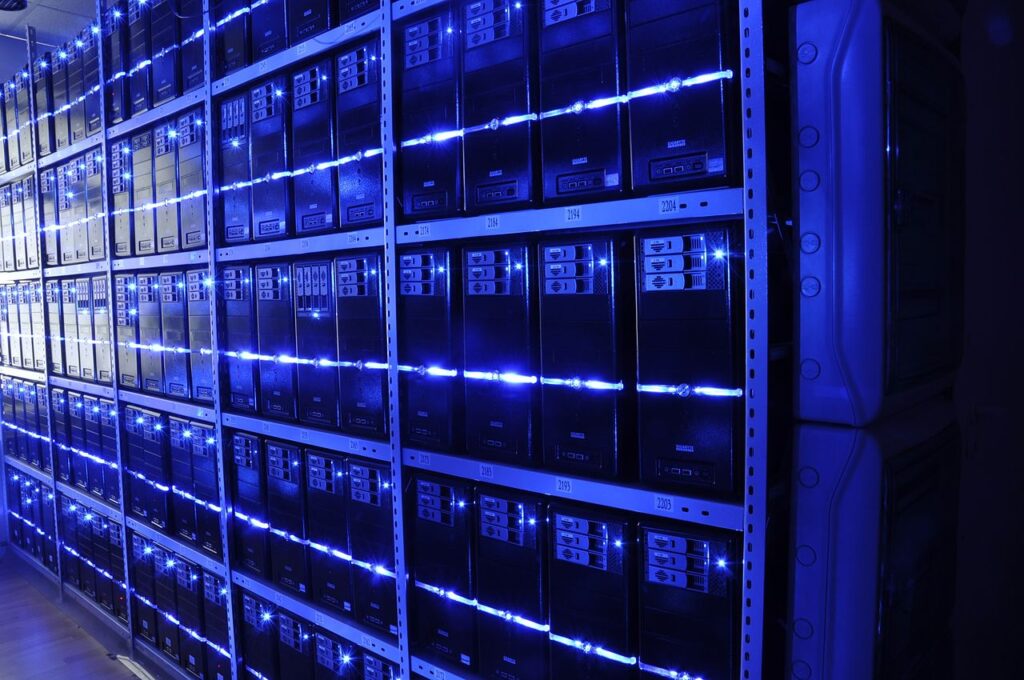
India’s digital economy is entering a phase in which computing growth and power infrastructure can no longer be planned separately. Artificial intelligence, cloud services, digital payments and data localisation are increasing demand for computing capacity, while data centres are becoming larger and more power intensive.
India illustrates the scale of this shift. Data-centre capacity increased fourfold from about 375 MW in 2020 to around 1,500 MW by 2025. The Economic Survey 2025–26 cites industry estimates of around 4 GW by 2030. The IEA also expects India’s electricity demand to grow by an average 6.4% a year between 2026 and 2030. Data centres will therefore expand within a power system already responding to industrialisation, cooling demand and wider electrification.
The clean-energy imperative is becoming central to where data centres are located, how quickly they can be commissioned and whether they can operate reliably at scale.
Power is becoming part of the investment case
A data-centre asset creates value only when sufficient, reliable power is available to support computing capacity. That makes time-to-power a strategic investment variable alongside land, fibre connectivity and construction economics.
Grid capacity, connection timelines, substation requirements, transmission constraints, renewable sourcing and future load growth need to be assessed before development assumptions become fixed. A location that appears attractive can become commercially difficult if network reinforcement takes years or if the power architecture cannot scale with demand.
Renewable generation and storage can often be deployed modularly and, under suitable conditions, on shorter timelines than large conventional generation or major network reinforcement. Actual delivery schedules, however, still depend on site readiness, permitting and grid connectivity.
From renewable procurement to integrated power architecture
Annual renewable-energy procurement can reduce the carbon intensity of electricity consumption, but it does not guarantee clean power every hour. Solar output is concentrated during daylight; wind varies by location and season; and grid congestion can emerge when reliability matters most. Data centres operate continuously and have very limited tolerance for interruption.
The requirement is an integrated portfolio: renewable generation, battery energy storage systems, firm grid supply, substations, transmission capacity and backup arrangements. Depending on the facility’s criticality, renewable energy supported by storage can form a significant part of the supply mix, while firm grid supply and standby generation provide additional resilience.
Data-centre technology is also changing rapidly. Higher-density computing, evolving cooling requirements and compressed development schedules mean power planning must begin earlier.
Reliability and decarbonisation must be designed together
Battery energy storage can improve resilience while shifting renewable generation, managing demand peaks and supporting power quality.
The engineering challenge is to ensure these technologies operate as one system. Storage duration, degradation, dispatch strategy, protection settings, backup architecture and grid-code compliance influence performance and investment returns. Decisions taken in isolation can create costly interface problems later.
Engineering confidence and independent technical assurance
The scale and speed of data-centre development can create pressure to commit capital before energy risks are fully understood. That makes independent engineering and technical advisory important.
The approach starts with the investment question rather than the equipment list: what power is required, how quickly can it be connected, how should renewable generation and storage be configured, where are the interface risks, and can the system expand without compromising reliability?
Independent technical oversight helps keep these decisions aligned with long-term availability, bankability and asset performance. Technical due diligence, Owner’s Engineering, grid studies, EPCM, quality assurance and operational performance review are most effective when they operate as one connected lifecycle framework.
India can build a cleaner digital advantage
India combines renewable resources with a deep engineering base and capability to execute digital and power infrastructure at scale. Developers, utilities, investors and technology companies need credible demand forecasts so grid connections, renewable supply, storage and network infrastructure can be planned ahead of congestion.
India’s digital economy will ultimately be supported by physical systems: substations, transmission lines, renewable plants, batteries and control platforms. If these systems are planned with the same precision and urgency as the computing infrastructure they serve, data-centre growth can strengthen both economic competitiveness and the clean-energy transition.
The clean-energy imperative is becoming part of the core engineering and investment logic of India’s digital economy for the decade ahead.
Source link