

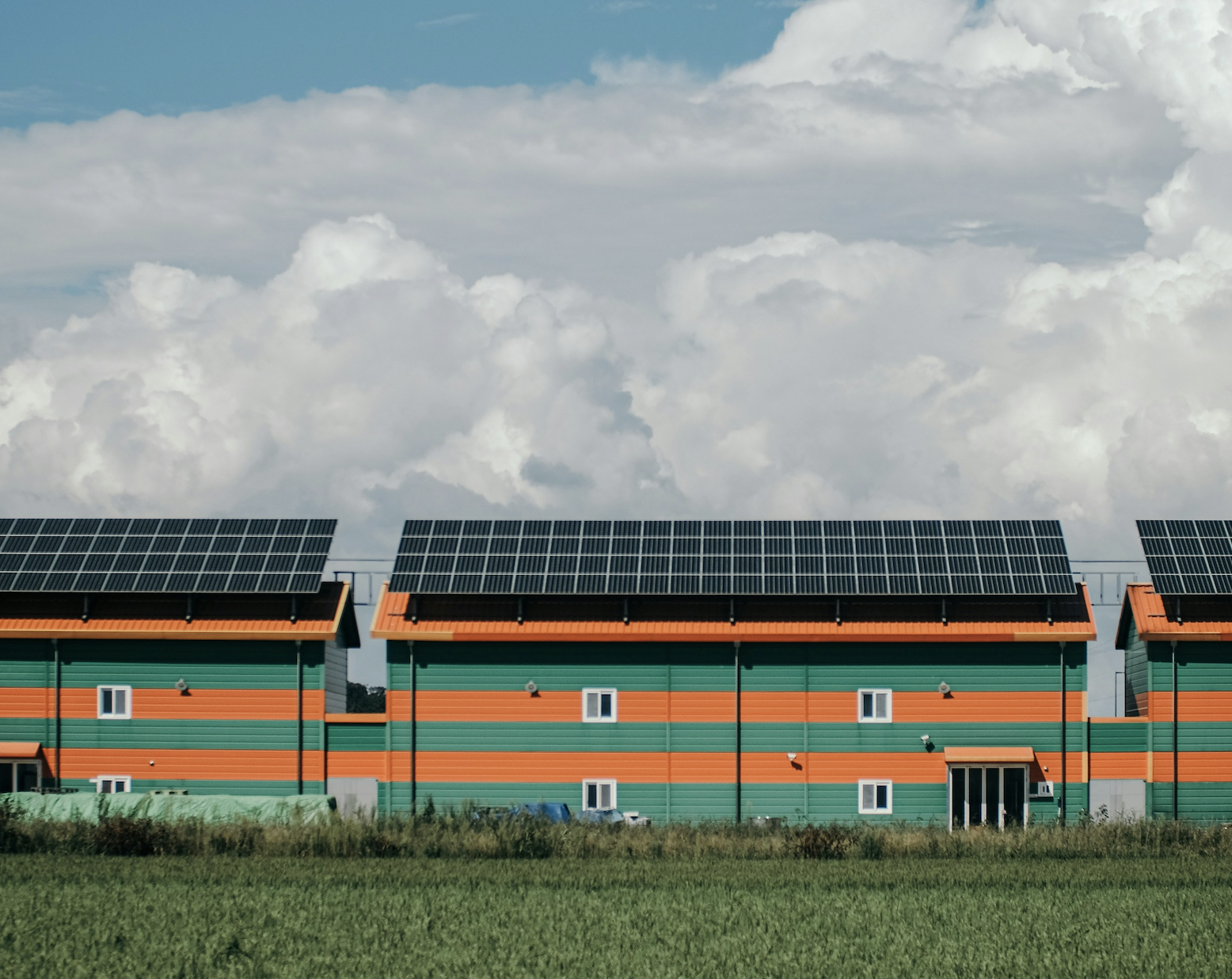
South Korea’s Ministry of Agriculture, Food and Rural Affairs (MAFRA) has unveiled a 2027 budget proposal that includes expanded support for factory rooftop solar and agrivoltaics, while separate government budget materials indicate related spending will rise to KRW 1.8 trillion.
MAFRA Vice Minister Kim Jong-gu presented the ministry’s 2027 budget proposal of KRW 22.2215 trillion, an increase of KRW 2.0853 trillion, or 10.4% over the 2026 budget, in a briefing following a Sept. 1 Cabinet meeting.
According to associated government budget materials, funding for factory rooftop solar and agrivoltaics is set to rise from KRW 900 billion in 2026 to KRW 1.8 trillion in 2027.
The Solar Income Villages program, under which rural communities form cooperatives to install and operate solar plants on idle local land and share the resulting revenue, is set to expand from 700 to 2,200 villages, alongside a new guarantee scheme for the cooperatives. The same budget materials show KRW 1.4 billion allocated for agrivoltaics education and system-building to help farmers participate in the technology.
South Korea’s National Assembly passed the country’s first dedicated agrivoltaics law in May, along with amendments to South Korea’s Farmland Act, formalizing a legal framework for combining crop production and solar generation on the same land. The law, which takes effect Dec. 17, treats agrivoltaic installations as a temporary change of farmland use for up to 23 years and applies to self-cultivating farmers, tenant farmers, and resident-owned cooperatives.
Only the footprint of support structures is considered converted land under the law. The cultivated area beneath panels remains subject to farmland regulations. According to Seoul-based nonprofit Solutions for Our Climate, the law excludes zones covering nearly half of the country’s farmland.
Agrivoltaics deployment in South Korea remains at an early stage. Industry tracking of agrivoltaics projects identified 29 documented cases totaling approximately 12.4 MW of planned or confirmed capacity, with only about 537 kW verified as operating and roughly 1.3 MW at installation or completion stage as of August 2026.
The most advanced resident-led project is a 1 MW cooperative installation in Anseong, Gyeonggi province, which began construction in July. A larger 10 MW agrivoltaics array is being developed as part of the 400 MW Haenam solar complex, South Korea’s largest single-site solar project to date, scheduled for completion in 2028.
Source link