
Ask most PV installers in Germany, and they will say they are broadly satisfied with 2026. Some even describe it as their best year in a long time. At the same time, reports of insolvencies among major solar companies are mounting. Project developer Enerparc and manufacturer RCT Power are only the most prominent German examples.
Such news is causing concern, particularly among industry veterans who remember the period from 2012 to 2014. After three consecutive strong years, drastic subsidy cuts championed by then-Federal Environment Minister Peter Altmaier (CDU) pushed more than half of Germany’s solar companies into financial distress and, sooner or later, out of the market. The resulting collapse in installations became known as the “Altmaier effect.” Are we now facing a “Reiche effect,” named after Katherina Reiche, Germany’s federal minister for economic affairs and energy?
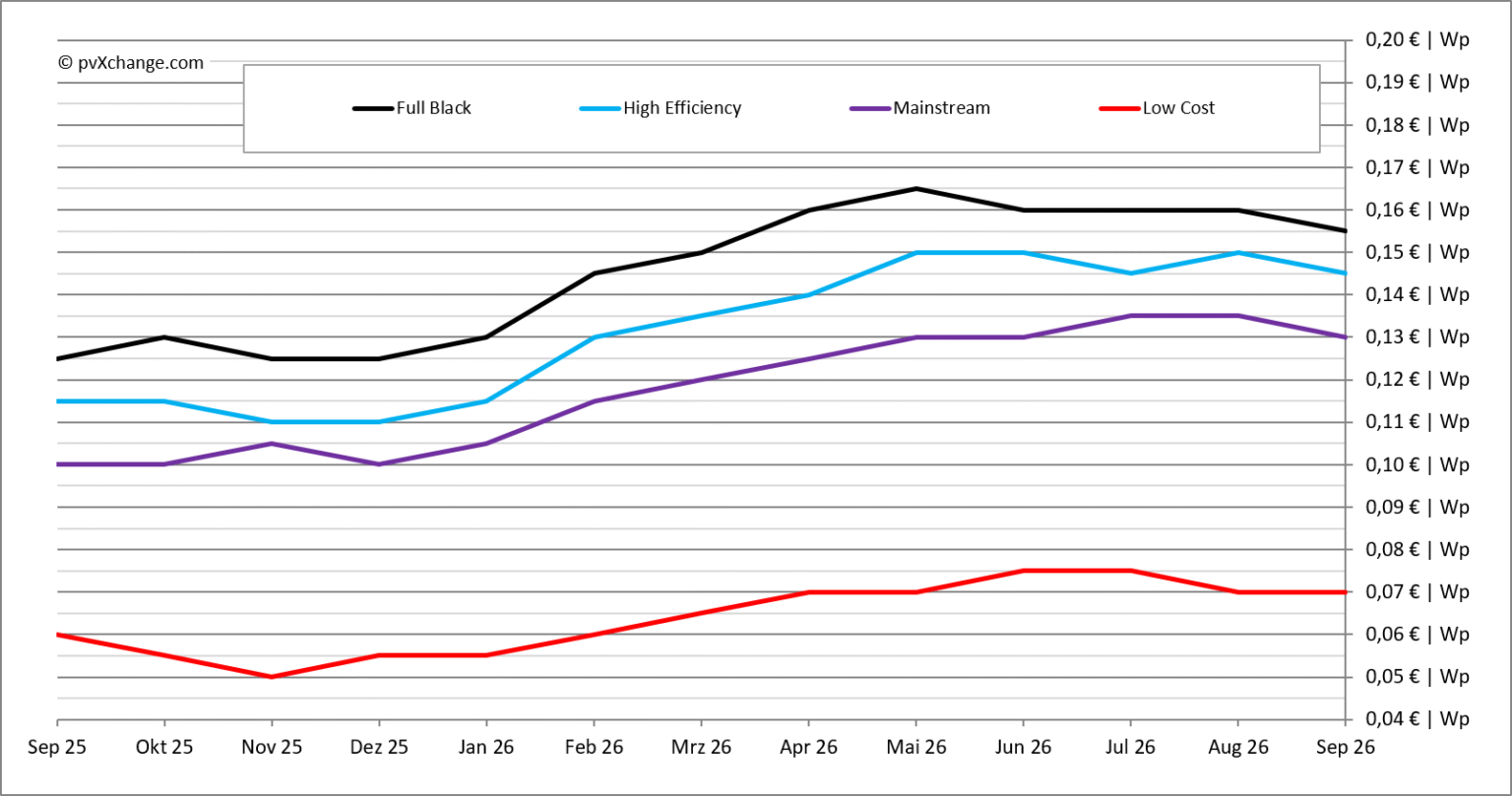
There are currently no significant changes in module prices. PV component costs are declining moderately, although price increases have already been announced in the battery segment. Whether these increases can be implemented – and how long they might last – remains to be seen. The high cost of fossil fuel-based energy and supply chain disruption along some shipping routes to Europe must also be taken into account. Ultimately, however, market prices are determined by supply and demand.
Demand in Germany remains high. Established installation companies have full order books through the end of the year and little capacity to take on new projects. The question is how long this favorable situation can last, particularly under the shadow of the so-called Reiche effect.
The relevant bills have yet to pass the Bundestag and Bundesrat, which are Germany’s lower and upper houses of parliament, respectively. However, there are concerns that provisions considered harmful to the PV sector will survive the legislative process and become law. Some German PV companies are invoking worst-case scenarios to attract customers, which may partly explain the current strength of demand. Many customers want to complete their projects this year to secure the existing conditions under the Renewable Energy Sources Act (EEG), fearing that commissioning at a later date could make their systems economically unviable.
That outcome is not inevitable and will depend on the business model, but it appears to reflect prevailing market sentiment. The rush to bring projects forward may already be distorting the market to an unhealthy degree.
Large project developers and PV suppliers are also feeling the effects. The temporary market upswing is creating strong demand for financing, but uncertainty – whether tolerated or politically induced – means that this demand cannot be met, or can be met only inadequately. Banks are becoming increasingly cautious about new financing requests and are tightening the terms of existing loans.
Removing the security that the EEG has historically provided as a backstop will inevitably create problems unless carefully designed transitional measures are introduced. This cannot be emphasized strongly enough. Unfortunately, such measures are largely absent from the legislation currently under consideration.
If the proposals – particularly the 50% cap on grid feed-in – remain unchanged in the coming weeks, the insolvencies already announced may mark only the beginning of a wave of closures reminiscent of the Altmaier era. In that scenario, even falling component prices would provide little relief.
If the feared market downturn materializes in 2027, only companies flexible enough to adopt alternative business models are likely to survive. Minister Reiche and the CDU-led government could then claim the dubious distinction of having driven an entire sector into crisis for a second time. In doing so, they would also have curtailed the inconvenient decentralization that, in their view, merely creates additional work and reduces profits for the traditional energy industry.
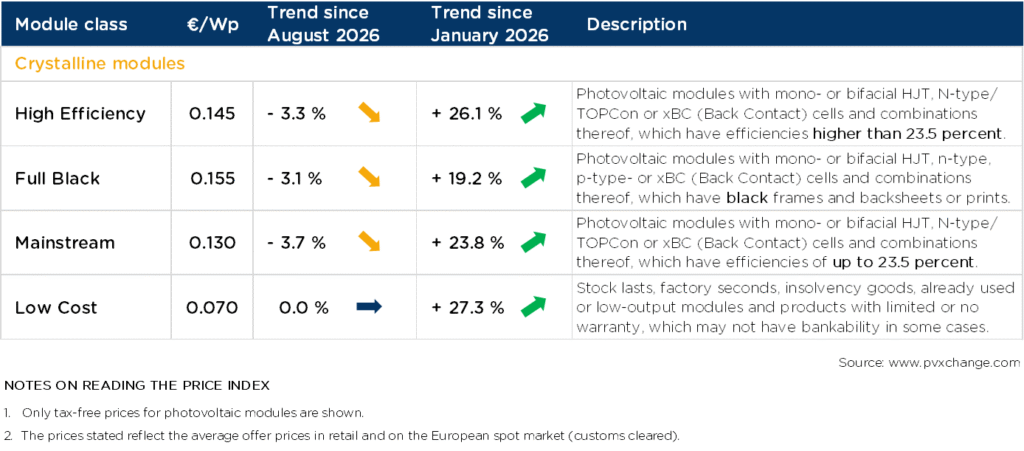
Module prices by technology as of September 15, 2026, including monthly variations:
About the author: Martin Schachinger has studied electrical engineering and has been active in the field of photovoltaics and renewable energy for almost 30 years. In 2004, he set up the pvXchange.com online trading platform. The company stocks standard components for new installations and solar modules and inverters that are no longer being produced.
Source link