

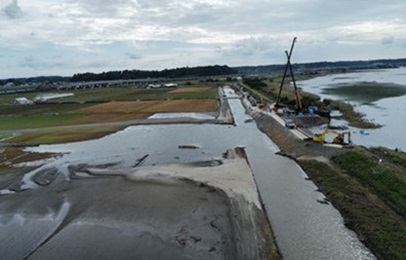
Firefighters held back from a burning solar plant east of Tokyo because of the risk of electrocution after floodwater from a breached lake embankment submerged its electrical equipment.
A ground-mounted solar plant in Otake, Narita, in Chiba prefecture, caught fire on Sept. 24 in an area flooded after the North Inba-numa lake embankment breached. Local fire officials told the Mainichi Shimbun that combiner boxes submerged in the flood may have short-circuited once falling water levels exposed them again. A passerby reported flames and black smoke at several points at about 8:35 a.m. (GMT+9), according to the newspaper.
The plant sits about 120 meters from the lake, and the surrounding area had flooded after Typhoon No. 25 breached the lake’s embankment on Sept. 22. The panels repeatedly caught fire and burned out, and more than 10 explosions were heard. The plant has about 30 combiner boxes.
Firefighters tried to approach by boat but did not carry out suppression efforts, citing the risk of electrocution and the low risk of the fire spreading. No injuries have been reported.
Hiroshima Kensetsu, part of Senario Hiroshima GHD, said the plant was installed after 2015 and was operating normally until the flood. The company said three group companies – Senario U Eco Village, Shinkoiwa Energy, and Misato Kogyo – hold lease contracts for the plant. Once pumping lowered the water, crews began cutting wiring on the evening of Sept. 28 to prevent re-ignition and electrocution. Because panels generate high voltage in daylight, the company said the work is being done only at dusk. It apologized to residents and said it is investigating the cause.
Japan’s Ministry of Economy, Trade and Industry (METI) advised the public not to approach submerged panels, combiner boxes, inverters, or substations, because panels keep generating power in sunlight and water left inside equipment can cause electrocution or fire even after floods recede.
Typhoon No. 25 breached embankments at four points around North Inba-numa, an agricultural drainage channel that feeds it, and the Nagato River, according to the Ministry of Land, Infrastructure, Transport and Tourism (MLIT). The ministry reported five deaths and one person missing in Chiba prefecture. Emergency repairs at the drainage channel and the Nagato River were completed on Sept. 30, Chiba prefecture said, and pumping to lower the lake continues.
Flood-related risks at Japanese PV plants are not new. After the 2018 floods in western Japan, METI warned that flooded PV equipment, including combiner boxes and power conditioners, could pose electrocution and fire risks after waters receded. In 2019, Typhoon Faxai damaged a 13.7 MW floating solar plant at Yamakura Dam, also in Chiba, where damaged equipment later caught fire. The plant was later rebuilt with smaller floating islands to reduce stress on its structure.
The fire comes as Japan tightens rules on large ground-mounted solar. The government adopted a Mega Solar Countermeasure Package in December 2025, including stricter environmental oversight, and METI has said it will end feed-in tariff and feed-in premium support for ground-mounted commercial solar from fiscal 2027.
Source link