

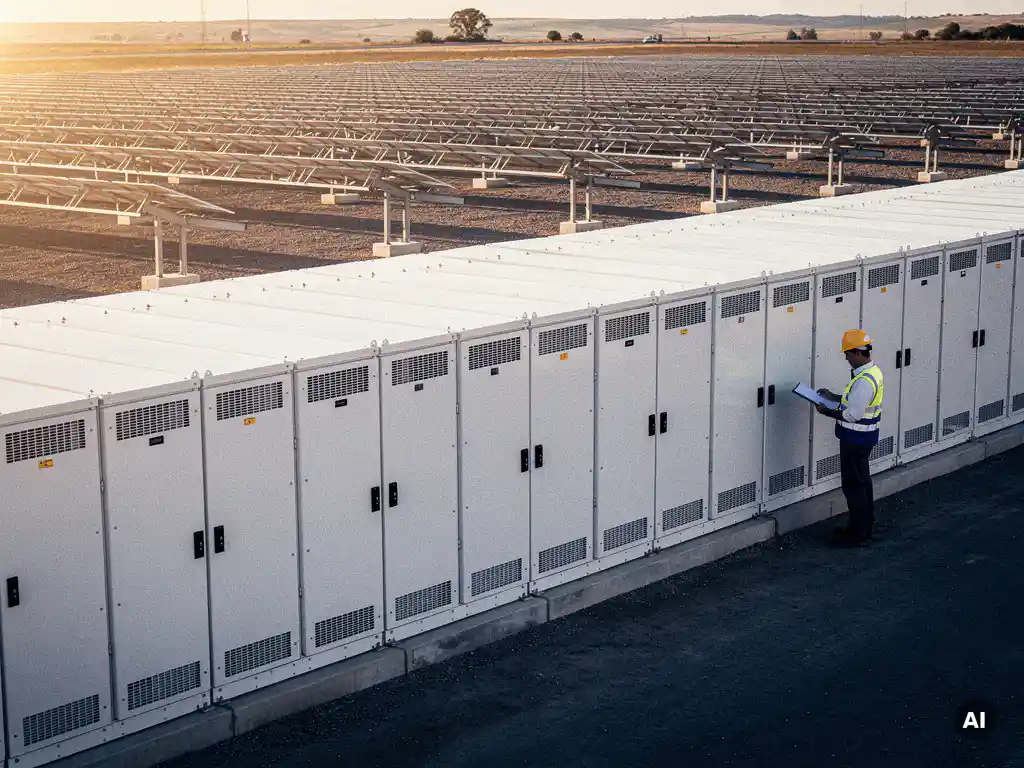
A battery energy storage system (BESS) typically lasts between 10 and 20 years, depending on the battery chemistry, operating conditions, and how well the system is managed. Lithium-ion systems, which dominate the market today, generally fall in the 10 to 15-year range under standard cycling conditions, while some chemistries and well-maintained systems can push toward 20 years. The sections below break down the key questions engineers and project developers ask when evaluating BESS longevity.
How many cycles does a BESS typically last?
Most lithium-ion BESS units are rated for 3,000 to 6,000 full charge-discharge cycles before capacity degrades to around 80% of the original rated value. At one full cycle per day, that translates to roughly 8 to 16 years of operational life. Some lithium iron phosphate (LFP) systems are rated for 6,000 cycles or more, making them a popular choice for daily-cycling applications.
Cycle count is one of the most reliable indicators of remaining useful life, which is why manufacturers publish cycle ratings prominently in their datasheets. However, a “cycle” is not always a full 100% depth of discharge. Partial cycling, where the battery is only charged or discharged to 50% of its capacity, causes less wear per cycle. Systems that operate with shallower depth of discharge can accumulate far more cycles before reaching end-of-life thresholds.
Different chemistries carry very different cycle ratings. Lithium nickel manganese cobalt oxide (NMC) batteries typically offer 3,000 to 4,000 cycles, while LFP batteries often reach 4,000 to 6,000 or beyond. Flow batteries, though less common in commercial solar applications, can exceed 10,000 cycles. Choosing the right chemistry for the expected cycling profile is one of the most consequential decisions in BESS system design.
What factors affect the lifespan of a battery energy storage system?
The lifespan of a BESS is shaped by temperature, depth of discharge, charge rate, cycling frequency, and battery chemistry. No single factor operates in isolation, and the interaction between them determines how quickly a system ages in real-world conditions.
Temperature and thermal management
Heat is one of the most damaging forces acting on a battery. Operating consistently above the manufacturer’s recommended temperature range accelerates chemical degradation inside the cells, shortening both cycle life and calendar life. Effective thermal management systems, whether active cooling or passive ventilation, are essential for maintaining longevity, particularly in utility-scale installations where heat buildup is a genuine engineering concern.
Depth of discharge and charge rate
Repeatedly discharging a battery to its absolute minimum state of charge puts significantly more stress on the cells than shallower cycling. Similarly, charging at very high rates (fast charging) generates more internal heat and mechanical stress than slower, controlled charging. Systems designed to operate between 20% and 80% state of charge, rather than 0% to 100%, tend to age more slowly and retain capacity longer over their operational life.
How does BESS degradation work over time?
BESS degradation is a gradual, irreversible reduction in the battery’s ability to store and deliver energy. It occurs through two parallel mechanisms: cycle aging, caused by repeated charge and discharge, and calendar aging, which happens simply with the passage of time regardless of how often the battery is used.
At the cell level, degradation involves physical and chemical changes, including lithium plating, electrolyte decomposition, and the growth of a solid electrolyte interphase layer on the anode. These processes reduce the number of active lithium ions available for energy storage, which is why usable capacity declines progressively rather than suddenly.
In practical terms, a BESS that starts at 100% capacity might retain around 90% after two to three years of daily cycling, dropping to 80% by the time it reaches its rated end-of-life cycle count. This 80% threshold is the industry-standard definition of end of useful life for most BESS applications, though the system continues to function below that point, just with reduced output. Project developers and engineers should factor this capacity fade into yield simulations and financial models from the outset.
What’s the difference between BESS lifespan and warranty period?
The lifespan of a BESS is how long the system can physically operate before it no longer meets performance requirements. The warranty period is the contractual commitment from the manufacturer to repair or replace the system if it fails to meet specified performance thresholds within a defined timeframe. These two figures are related but not the same.
Most BESS manufacturers offer warranties of 10 years, sometimes extendable to 15, with performance guarantees tied to a minimum capacity retention, typically 70% to 80% of original capacity at end of warranty. The actual operational lifespan of the hardware can extend well beyond the warranty period, particularly for LFP systems with robust thermal management.
For project finance and bankability purposes, the warranty period is often treated as the conservative baseline for revenue modeling. Engineers and developers should read warranty terms carefully, paying attention to conditions that can void coverage, such as operating outside specified temperature ranges, exceeding maximum charge rates, or failing to perform required maintenance. A warranty that looks generous on paper can be narrow in practice if the operating conditions are tightly constrained.
How can you extend the lifespan of a BESS?
The most effective ways to extend BESS lifespan are limiting depth of discharge, maintaining optimal operating temperatures, avoiding high charge rates, and implementing a proactive maintenance schedule. Each of these measures reduces the cumulative stress placed on battery cells over time.
- Limit depth of discharge: Configuring the battery management system (BMS) to operate between 20% and 80% state of charge significantly reduces cycle wear, even if it reduces usable capacity per cycle.
- Maintain thermal control: Keep the system within the manufacturer’s recommended temperature range. In hot climates, active cooling is not optional; it is a longevity requirement.
- Use moderate charge and discharge rates: Avoid sustained operation at maximum C-rate. Slower charging and discharging generate less heat and cause less mechanical stress on the cells.
- Monitor and act on BMS data: A well-configured BMS provides early warning of cell imbalance, temperature anomalies, and capacity fade. Acting on this data before problems escalate prevents minor degradation from becoming a major failure.
- Schedule regular maintenance: Physical inspections, connection checks, and firmware updates keep the system operating within design parameters and catch issues before they compound.
Operational strategy also matters. If a BESS is used for peak shaving rather than daily full cycling, the lower cycling frequency extends calendar life significantly. Matching the dispatch strategy to the battery’s design profile is as important as the hardware decisions made at procurement.
When should a BESS be replaced or repurposed?
A BESS should be evaluated for replacement or repurposing when its usable capacity falls below 70% to 80% of the original rated capacity, when maintenance costs begin to outweigh operational savings, or when the system can no longer meet the performance requirements of its application. These thresholds are not always reached simultaneously, which is why ongoing monitoring is essential.
Replacement is the straightforward option when the system has reached end of life and the site still requires storage capacity. However, repurposing is increasingly viable and economically attractive. Batteries that no longer meet the performance standards for grid-connected solar applications may still be suitable for less demanding uses, such as backup power for non-critical loads or off-grid applications where capacity requirements are lower.
Second-life battery programs are an active area of development across the industry. Before committing to full replacement, it is worth assessing whether the existing cells retain enough capacity for a lower-intensity application, as this can recover residual value and reduce disposal costs. If you are evaluating storage options for a new or existing solar project and want guidance on system sizing and integration, speak with our team to discuss the specifics of your project.
The decision to replace or repurpose should always be grounded in measured performance data rather than age alone. A system that has been well-maintained and operated conservatively may still deliver strong performance at year 15, while a poorly managed system could reach end of life well before its rated cycle count. Virto Solar’s design tools help engineers model storage performance from the earliest project stages, so these decisions are informed by accurate data rather than guesswork.
Frequently Asked Questions
How do I know if my BESS is degrading faster than expected?
The most reliable indicator is a measurable drop in usable capacity relative to the original rated value, which your battery management system (BMS) should track continuously. If your system is losing more than 2–3% of capacity per year under standard cycling conditions, that is a signal worth investigating. Look for patterns in BMS data such as increasing cell voltage imbalance, rising internal resistance, or temperature anomalies during charge and discharge cycles — these are early warning signs that degradation is accelerating beyond the expected rate.
Does a BESS degrade even when it’s not being used?
Yes — this is what the post refers to as calendar aging, and it occurs regardless of how frequently the system cycles. Chemical processes inside the cells, such as electrolyte decomposition and SEI layer growth, continue slowly over time even when the battery sits idle. To minimize calendar aging during extended periods of low use, most manufacturers recommend storing the system at a partial state of charge (typically around 50%) and within the recommended temperature range rather than leaving it fully charged or fully depleted.
What happens to a BESS after it reaches the 80% capacity threshold — does it stop working?
No, the system does not stop functioning at 80% capacity — it simply means the battery has reached the industry-standard definition of end of useful life for its primary application. The system will continue to operate and deliver energy, just with progressively reduced output. Whether to keep running it below that threshold depends on whether the reduced capacity still meets your project’s performance requirements and whether the economics of continued operation make sense compared to replacement or repurposing.
Is LFP always the best chemistry choice for maximizing BESS lifespan?
LFP is often the strongest choice for applications that involve daily full cycling, thanks to its superior cycle ratings of 4,000 to 6,000-plus cycles and its inherently more stable chemistry. However, the best chemistry depends on your specific application profile — NMC batteries offer higher energy density, which may be more important in space-constrained installations even if cycle life is somewhat shorter. For projects with infrequent cycling or where energy density is a priority, NMC can still be the right fit, provided thermal management and depth-of-discharge limits are properly configured.
Can upgrading the battery management system (BMS) extend the life of an existing BESS?
Yes, in many cases a BMS upgrade or reconfiguration can meaningfully extend system life, particularly if the original settings were not optimized for longevity. Adjusting state-of-charge operating windows, refining charge rate limits, and enabling more granular cell-level monitoring can all reduce ongoing stress on the cells without requiring hardware replacement. This is often one of the most cost-effective interventions available for aging systems that are otherwise in good physical condition.
How should BESS degradation be factored into a project’s financial model?
Capacity fade should be modeled as a gradual annual reduction in energy throughput — typically 1–3% per year depending on chemistry, cycling frequency, and operating conditions — rather than treated as a binary end-of-life event. This affects revenue projections for applications like peak shaving or grid services, where the value delivered is directly tied to how much energy the system can dispatch. Conservative financial models often use the manufacturer’s warranted capacity retention curve as a baseline, then apply a sensitivity analysis to account for scenarios where degradation is faster or slower than expected.
What should I look for in a BESS warranty to make sure it actually protects my project?
Beyond the headline warranty duration, focus on three things: the minimum guaranteed capacity retention at end of warranty (70% vs. 80% is a significant difference in revenue terms), the conditions that can void coverage (operating temperature limits, maximum C-rate restrictions, and maintenance requirements are common exclusions), and how the manufacturer defines and measures capacity for warranty claim purposes. A warranty that guarantees 80% capacity retention but measures it under ideal lab conditions rather than real operating conditions offers less protection than it appears — always request clarity on the measurement methodology before signing.
Related Articles
This content was generated with the help of AI — it may contain mistakes
Source link