

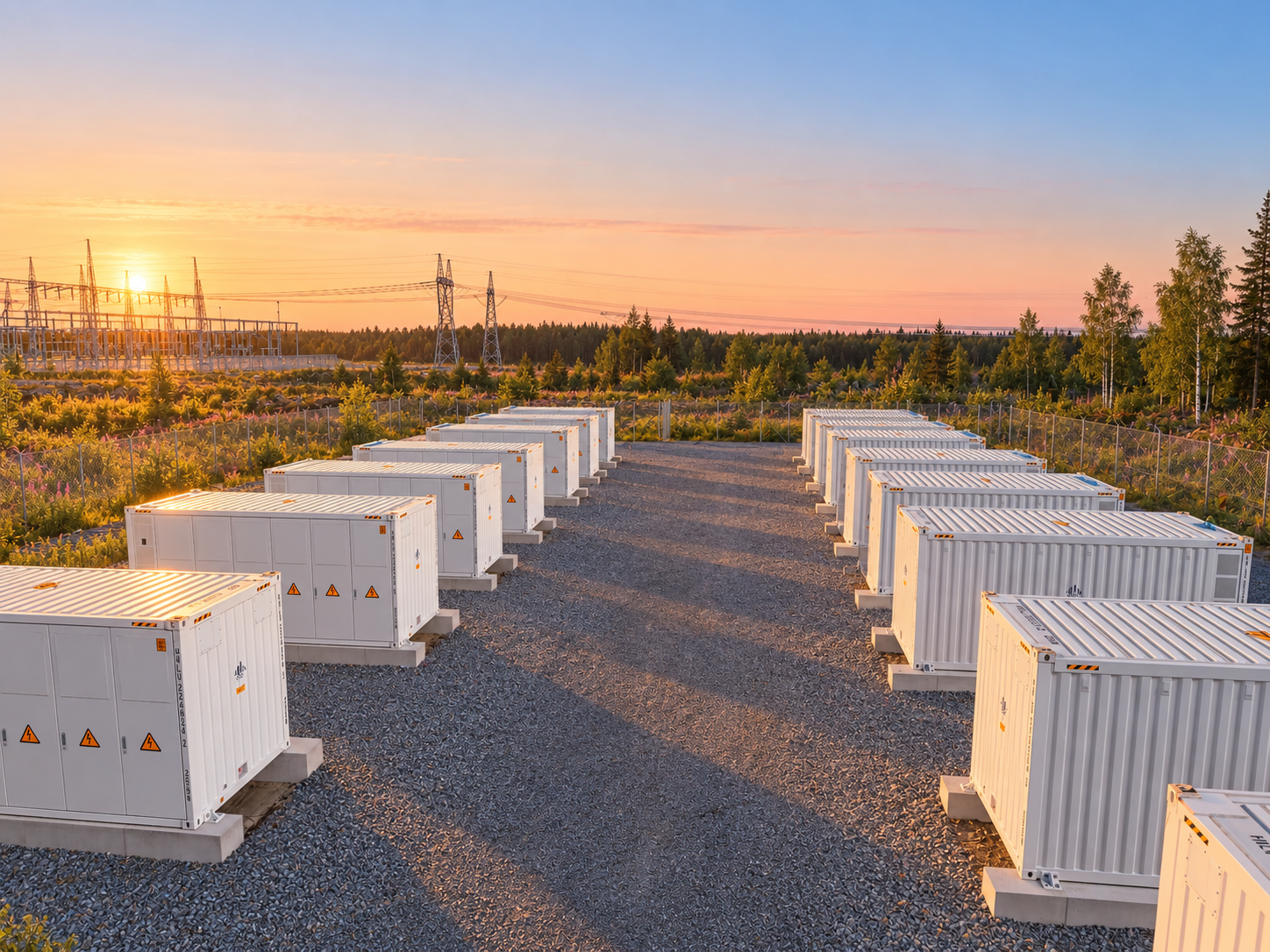
Belgian transmission system operator Elia Transmission Belgium has published the results of three capacity remuneration mechanism (CRM) auctions, covering the 2027-28, 2028-29 and 2030-31 delivery periods. In line with the volumes set by the energy minister, it contracted the capacity required to help ensure Belgium’s security of supply. Supply exceeded demand in all three auctions, while batteries accounted for a significant share of contracted capacity for 2028-29 and 2030-31.
Introduced in the context of Belgium’s partial nuclear phaseout, the CRM provides financial support to market participants that make electricity capacity available. Open to the entire market and technology-neutral, it contributes to the country’s security of supply.
A total of 6.5 GW was contracted for 2027-28 through the various CRM auctions, at a total cost of around €200 million ($223.7 million) and a weighted average price of €30.944/MW/year. No additional capacity was contracted in the Y-1 auction. The scenario adopted by the energy minister had changed compared with previous auctions for this delivery period. After accounting for cross-border contributions and capacity available on the electricity market but not seeking to participate in the auction, the required volume fell to zero.
The Y-2 auction contracted 1.6 GW for 2028-29, bringing the total volume already secured for the delivery period to 5.8 GW. New batteries accounted for around 0.5 GW of the selected capacity. Some of these battery projects will enter operation earlier than stipulated in their multiyear contracts and will therefore be able to contribute capacity sooner.
Two-hour batteries accounted for just 5.98% of selected volumes, while four-hour batteries were favored, representing 31.74% of volumes, behind combined-cycle gas turbines. The auction cost around €34 million, at a weighted average price of €21.643/MW/year.
The Y-4 auction contracted 0.8 GW for 2030-2031. Including previously awarded long-term contracts, the total volume secured for this delivery period now stands at 4.9 GW. New batteries accounted for around 0.5 GW of the selected capacity, split between one-year and multiyear contracts. Following the same trend as in the 2028-29 auction, no two-hour batteries were selected, while four-hour batteries represented 61.75% of volumes, well ahead of other technologies.
Supply exceeded demand by 3.1 GW. The auction cost around €14 million, at a weighted average price of €18.143/MW/year.
From ESS News
Source link