


By Jonathan D’Antonio | Residential solar projects can lose days or weeks because of incomplete permit applications, delayed material deliveries, scheduling conflicts, and repeated site visits. A study published by the National Renewable Energy Laboratory found that typical U.S. residential solar projects took 10-22 weeks from initial customer contact to system operation, based on project data from 2017–2021.
More recently, a 2026 review of 2024 data found that projects using automated permitting were permitted and inspected a median of 12 business days sooner than projects using traditional processes. These findings show why improving solar installation workflow efficiency requires better planning, documentation, and coordination — not simply installing panels faster.
1. Streamline solar permitting and approvals
Permitting delays can hold up an installation even when the design, materials, and crew are ready. Missing documents, incorrect technical details, and incomplete applications can lead to revisions and additional waiting time.
A 2024 data review found that automated permitting processes eliminated more than 100,000 business days in permitting-related delays during that year. Although results depend on the jurisdiction and process, this demonstrates the potential value of reducing unnecessary administrative steps, according to the National Laboratory of the Rockies
Installers can improve their own permitting process by:
- Creating a checklist for each local authority’s requirements.
- Checking drawings, equipment specifications, and application forms before submission.
- Assigning one person to track applications, revisions, and approval status.
- Recording submission dates, responses, and outstanding requirements.
- Preparing standard document templates for recurring project types.
Submit complete and accurate applications from the start. Also, track the time between submission and approval so the team can identify recurring delays.
2. Improve project planning and crew scheduling
Poor scheduling can leave installation crews waiting for materials, site access, design approvals, or other teams to finish their work. These gaps waste labor hours and can disrupt the schedules of other residential projects.
Before confirming an installation date, check that the project is ready for work. This includes confirming site access, approved plans, required permits, equipment availability, crew assignments, and any necessary safety arrangements.
A practical pre-installation checklist should include:
- Site readiness: Confirm roof access, site conditions, customer availability, and safety requirements.
- Crew planning: Assign workers based on the project’s needs, skills, and expected duration.
- Material availability: Verify that the required panels, mounting equipment, inverters, wiring, and other components are available.
- Schedule dependencies: Confirm that approvals and earlier tasks are complete before committing to the next stage.
Use a shared calendar to coordinate site surveys, deliveries, installations, and inspections. Review the schedule regularly and update it when a dependency changes.
3. Standardize solar installation workflows
An inconsistent installation process makes it harder for teams to complete jobs on time. When each crew follows different steps or relies on verbal instructions, important checks can be missed and mistakes may go unnoticed until later.
Create a standard workflow for every residential project, from site assessment and design approval to installation, inspection, and handover. Each stage should have a clear owner, required documents, completion criteria, and approval status.
For example, divide the installation process into these five stages:
| Stage | Required action | Ready-to-proceed check |
| 1. Planning | Review site information and project requirements | Site assessment completed |
| 2. Design and permits | Finalize approved drawings and required permissions | Required approvals received |
| 3. Preparation | Confirm materials, tools, and crew availability | Installation package ready |
| 4. Installation | Complete work using the approved design | Quality checks passed |
| 5. Inspection and handover | Complete inspections and prepare final records | Outstanding issues resolved |
Use the same process for similar projects, while allowing for differences in local regulations, roof conditions, and system design. This makes it easier to train new staff, identify bottlenecks, and compare performance across jobs.
4. Control documents and verify materials before installation
Outdated drawings, incorrect equipment, and missing technical information can cause costly delays. A crew may arrive at the site only to discover that the equipment does not match the approved design or that an important document is missing.
Maintain one controlled location for the latest approved drawings, equipment lists, permits, site photographs, and installation instructions. Clearly label revisions so field teams can identify which version they should follow.
Before dispatching a crew, verify that delivered materials match the approved equipment list. Check quantities, specifications, accessories, and any substitutions that require review.
A simple material verification process can prevent avoidable return visits. Assign responsibility for checking deliveries and recording shortages before the installation date, rather than discovering problems after the crew arrives.
5. Improve team communication and manage changes
Residential solar projects often involve office staff, designers, electricians, installers, suppliers, inspectors, and customers. Poor communication between these groups can leave teams working with outdated instructions or waiting for decisions.
Use a shared project management system or a clearly maintained project tracker to record responsibilities, deadlines, progress updates, and unresolved issues. Every task should have an assigned owner and a clear next action.
When a site condition differs from the approved plan, document the issue and send it to the person authorized to make the decision. Do not allow informal messages or unapproved drawing changes to replace the required review process.
Daily updates should highlight three things: completed work, current blockers, and the next planned activity. This simple practice helps project managers respond to delays before they affect the wider schedule.
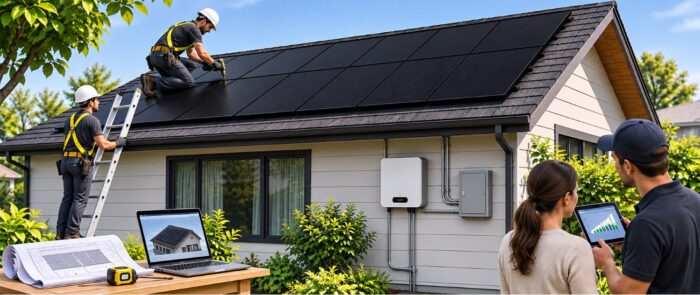
A clearly defined solar installation process helps keep site preparation, installation activities, and final checks aligned with the project plan.
6. Reduce installation errors and repeat site visits
A repeat visit may be necessary when a required component is missing, an installation defect needs correction, or an inspection identifies a problem. Each unnecessary visit adds travel, labor, scheduling pressure, and potentially higher project costs.
Use quality-control checklists at important stages, including mounting, electrical work, equipment setup, and commissioning. Record inspection results and photographs where required by the project process.
Before closing an installation, check that the completed work matches the approved plans and that required tests and records are complete. Escalate defects promptly rather than carrying unresolved issues into the final inspection.
Track the repeat-visit rate to measure progress. For example, if 20 projects are completed in a month and four require an avoidable repeat visit, the repeat-visit rate is 20%. Reducing that rate over time can help improve crew utilization and project costs.
7. Use project data to measure efficiency
Improving solar installation workflow efficiency requires more than introducing new software or adding checklists. Project managers need to measure whether these changes actually reduce delays, improve quality, and control costs.
Start with a small set of key performance indicators (KPIs). Record a baseline before changing the process, then compare results over time using the same definitions.
| KPI | How to measure it | What it reveals |
| Permit approval time | Days between submission and approval | Administrative bottlenecks |
| Installation duration | Working hours from installation start to completion | Crew productivity |
| On-time completion rate | Projects completed by the planned date ÷ total projects × 100 | Scheduling performance |
| First-pass inspection rate | Projects passing the first inspection ÷ projects inspected × 100 | Installation quality |
| Repeat-visit rate | Projects requiring avoidable repeat visits ÷ completed projects × 100 | Rework and coordination issues |
| Budget variance | Actual project cost minus planned project cost | Cost control |
Review these measurements weekly or monthly, depending on project volume. Compare similar project types and account for factors such as weather, system size, permitting rules, and site complexity.
Use the findings to improve the workflow. For example, repeated material shortages may indicate a purchasing problem, while long approval times may point to incomplete submissions or jurisdiction-specific requirements.
Conclusion
Improving residential solar installation project efficiency starts with identifying where time, labor, and resources are being wasted. Better permitting processes, realistic scheduling, standardized workflows, accurate documentation, and reliable communication can help contractors reduce delays and avoid unnecessary work.
Project managers should also monitor installation duration, first-pass inspection rates, repeat visits, and budget performance. By measuring these results consistently and improving the processes that cause bottlenecks, solar installation businesses can deliver residential projects more reliably, control operating costs, and make better use of their crews.
Jonathan D’Antonio is a solar industry veteran with over 30 years in contracting, having worked in solar since 2010. He holds electrical licenses in multiple states as well as the NABCEP PV Installation Professional Certification. Jonathan has extensive experience in the field, as well as in business, operations, and project management. An accomplished PV designer, installer, and technician, he has worked with a wide variety of products across a broad range of applications and settings.
— Solar Builder magazine
Source link