

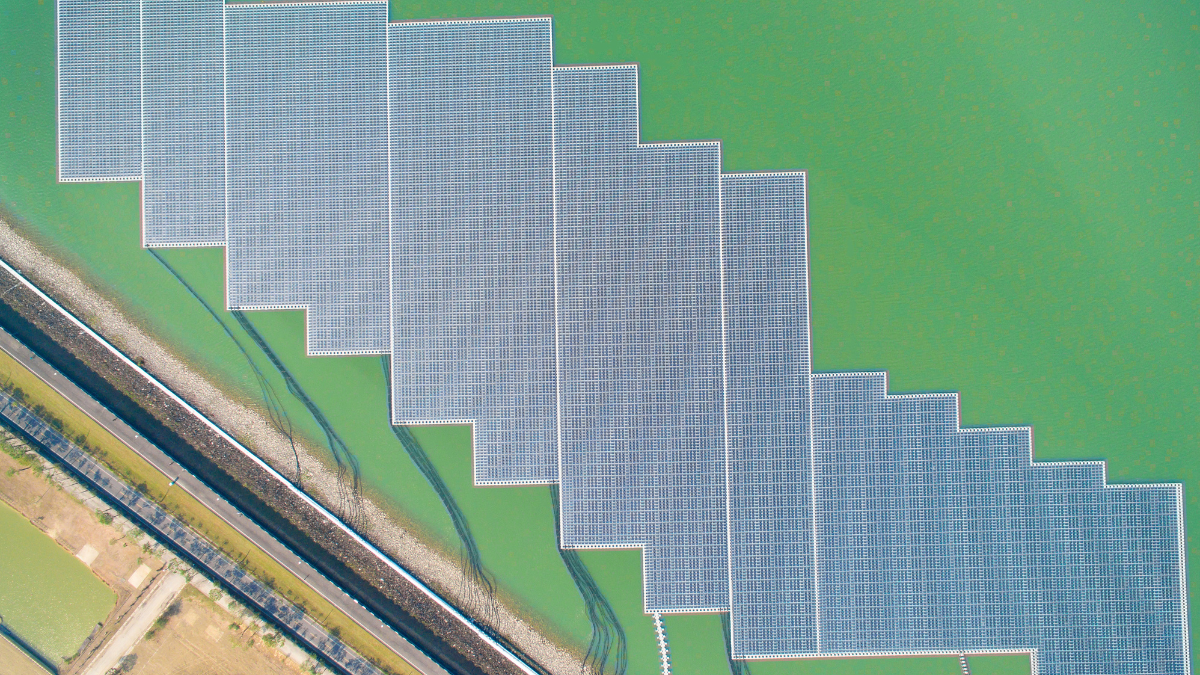

Thailand’s Electricity Generating Authority of Thailand (EGAT) is advancing its renewable energy ambitions by integrating solar and hydropower technologies through Hydro-Floating Solar Hybrid projects, with the goal of achieving 2,725 megawatts (MW) of clean energy generation by 2030.
Implemented under the Ministry of Energy’s “Quick Big Win” policy, the initiative combines the strengths of sunlight and water to deliver continuous, sustainable electricity while optimizing the use of the nation’s reservoirs.

Combining Solar and Hydropower for Round-the-Clock Clean Energy
The Hydro-Floating Solar Hybrid model installs solar panels on floating pontoons across large water bodies. These panels convert sunlight into electricity, which is then integrated with existing hydropower systems to ensure stable energy supply even during non-sunlight hours.
This hybrid configuration not only supports 24-hour renewable power generation but also enhances overall system efficiency. The water’s natural cooling effect boosts solar panel performance by 10–15% compared with traditional ground-mounted systems. Additionally, the panels help reduce water evaporation, conserving water resources critical for energy generation and agriculture.
Operational Success and New Project Pipeline
EGAT has already completed and commissioned two Hydro-Floating Solar Hybrid projects:
- Sirindhorn Dam in Ubon Ratchathani, with a capacity of 45 MW, and
- Ubolratana Dam in Khon Kaen, generating 24 MW.
Both projects are now fully operational, serving as benchmarks for Thailand’s clean energy integration efforts.
Building on this success, the Ministry of Energy plans to accelerate three additional large-scale projects in 2025 at EGAT’s key hydropower sites:
- Sri Nakarin Dam (Phase 1) – 140 MW
- Bhumibol Dam (Phase 1) – 158 MW
- Vajiralongkorn Dam (Phase 1) – 50 MW
Together, these projects will contribute 348 MW of installed capacity and are expected to achieve commercial operation (COD) by 2027.
Powering Thailand’s Clean Energy Future
EGAT’s Hydro-Floating Solar Hybrid initiative demonstrates Thailand’s innovative approach to renewable energy generation — one that maximizes natural resources while reducing carbon emissions and preserving environmental balance.
As the country moves toward its carbon neutrality goals, these hybrid projects mark a significant milestone in Thailand’s clean energy roadmap, ensuring that the light reflected on water becomes a source of continuous, sustainable power for generations to come.
Related
Discover more from SolarQuarter
Subscribe to get the latest posts sent to your email.
Source link