

From ESS News
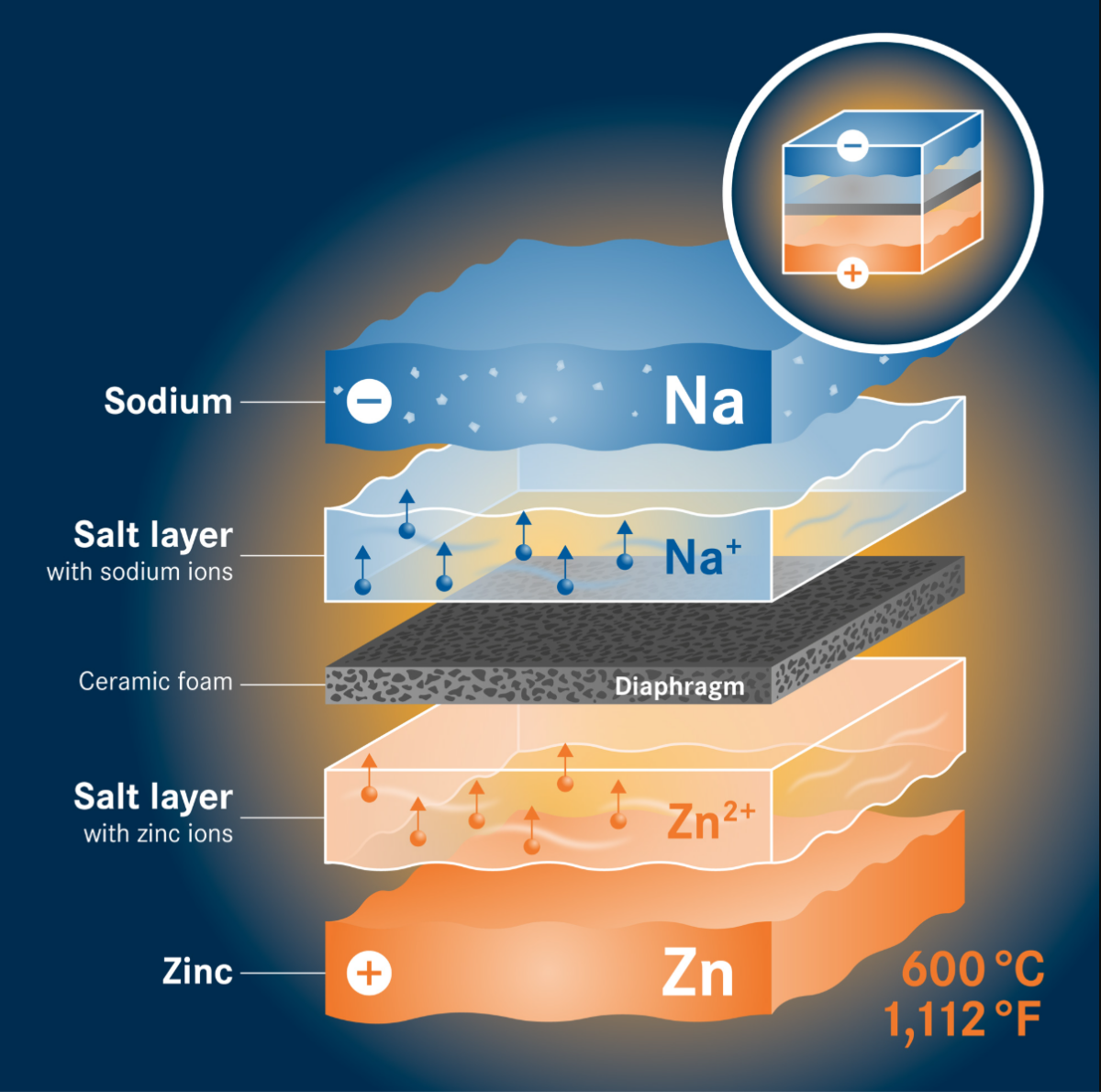
Aresearch team at HZDR in Germany has directly observed, for the first time, previously hidden aging processes in sodium-zinc molten-salt batteries, using operando X-ray radiography to image the cells while actively operating at around 600 C.
The technology has long been regarded as highly promising for stationary energy storage, given the low cost and availability of its raw materials, but it has so far failed to achieve the stability needed for real-world deployment.
The extreme operating temperature is an asset in one sense, as the metals are liquid at those temperatures and can be transported quickly within the cell. But that same dynamism makes the systems difficult to control, and until now there has been “no clear understanding of why the cells lose so much of their performance during operation,” according to HZDR researcher Norbert Weber, who coordinates the EU project SOLSTICE, under which various sodium-zinc storage concepts are being systematically investigated.
To continue reading, please visit our ESS News website.
This content is protected by copyright and may not be reused. If you want to cooperate with us and would like to reuse some of our content, please contact: editors@pv-magazine.com.
Popular content