
March 19, 2026
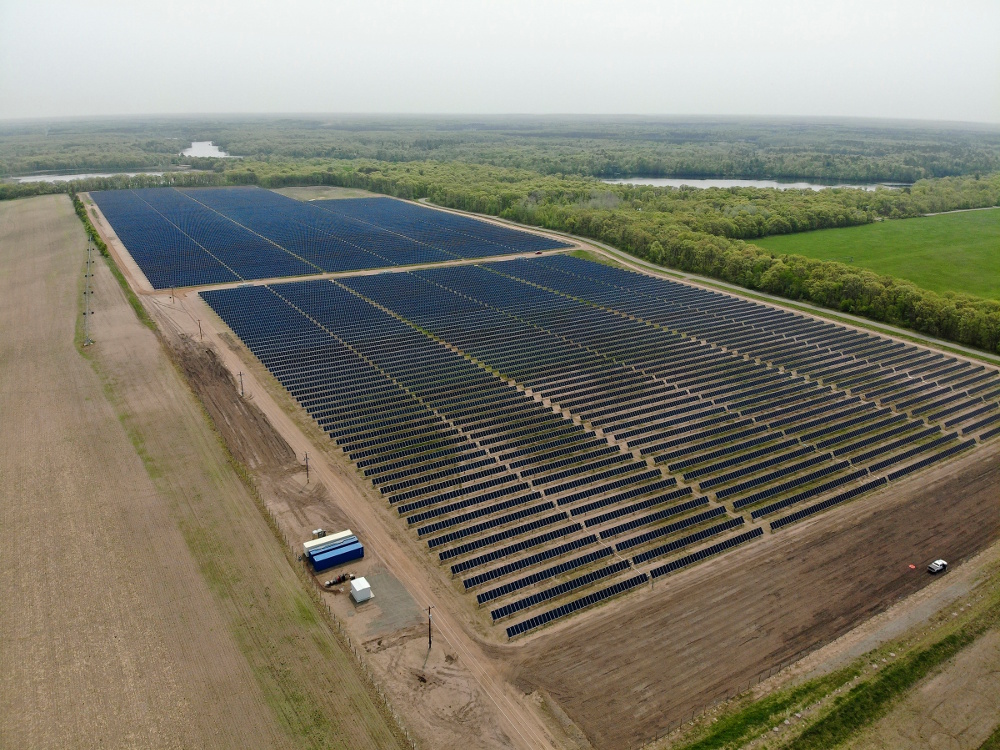
A new report shows that Minnesota’s Low- and Moderate-Income Accessible Community Solar Garden Program (LMI Accessible CSG Program) is benefiting residents as intended. In fact, the program acts as a kind of “price shield” for energy consumers in a volatile market, according to Logan O’Grady, executive director of the Minnesota Solar Energies Industries Association (MnSEIA), which helped design the solar program.
“With a community solar project, you’re locking in your energy costs, so you’re kind of immune from the volatile electricity prices, and we’re certainly seeing that now,” he explains. “When you’re a subscriber, you’re locking in your energy costs because you know how much you’re going to get credited in the production of that.”
The LMI Accessible CSG Program gives developers a longer timeline for companies to take advantage of tax credits being eliminated by the federal government, O’Grady adds.
“In the Community Solar Garden program, there is a longer runway on when that federal tax incentive ends, so we have a number of solar garden developers that are still developing projects that will qualify for the 30% ITC,” he says. “Now is the time really to subscribe to a solar garden if you can, because those developers and you as a subscriber are going to see that federal policy that just went away for rooftop solar.”
O’Grady explains that even when the solar garden tax credit goes away, Minnesota will continue to see community solar development, “because people are still going to want to get more predictability and lock in their energy prices.”
Minnesota’s original Community Solar Garden program was created by the state legislature in 2013. However, the program was revamped in 2023 to focus on LMI households in Minnesota, which O’Grady explains led to cap on participating solar installations over the next 10 years.
“In the compromise around that revamp language, we had to go from what was an uncapped community solar garden program here in Minnesota, which was quite unique, and is what led to over 1 GW of solar being deployed to Minnesota in a 10-year period,” he says. “In the actual legislation, it tells us each year how much the utilities can do, and so we’re anticipating about 800 MW or so over the next 10-year period.”
As part of the 2023 legislation that reconfigured the program, the state mandated a cost-benefit analysis of the program, which showed that participants benefited $2 for every $1 spent.
Report shows benefits to LMI households
The Minnesota Department of Commerce released a new report that confirms that the state’s community solar program is having the intended effect of helping LMI residents access renewable energy.
According to the report, the LMI Accessible CSG Program is driving equitable access to renewable energy, while maintaining the state’s leadership in community solar deployment.
The revamped program was launched on Jan. 2, 2024, with the express goal of expanding solar access to households typically left out of renewable energy participation. The study shows that the program is demonstrating that community solar can deliver on both climate and equity objectives.
According to the 2026 annual report on the LMI Accessible CSG Program, the majority of capacity is serving the Minnesotans it was designed to reach.
Key findings of the report include:
- 90% of the program participants are low-income, residential or public interest customers.
- 77% of the program is made up of residential subscribers, of which 47% are LMI.
- 62% of subscribers in the LMI category, exceeded set program goal of 55%.
The third largest subscriber group is public interest organizations, such as schools, religious institutions, municipal governments and other non-profits
“For years, MnSEIA staff and members worked to design and advance the LMI Accessible CSG Program with a clear goal: expand access to affordable clean energy. This report confirms the program is delivering measurable savings to low- and moderate-income households while strengthening Minnesota’s leadership in community solar,” O’Grady says. “By embedding equity into policy design from the start, Minnesota is proving that the clean energy transition can lower costs, expand opportunity, and deliver real value to the families who need it most.”
Achieving fast deployment while reaching critical community organizations, the program made 100 MW available in both 2024 and 2025, and as of Dec. 16, 2025, 179 MW of projects had been approved across a total of 133 gardens. This deployment pace maintains Minnesota’s ranking as one of the top community solar states in the United States.
“Minnesota has long been a leader in community solar, and this report highlights how that leadership translates into meaningful access for historically underserved communities,” says Kevin Cray, VP of existing markets and regulatory affairs for Coalition for Community Solar Access (CCSA). “When lawmakers design equity-focused policy, we get results that have real impact on people’s lives. Minnesota is setting a national example that community solar is both scalable and equitable.”
Even though the program is only two years old, these early results demonstrate that Minnesota’s policy framework is aligning clean energy growth with affordability and access.
“This program proves that when intentionally designed, the clean energy transition is equitable,” says Pouya Najmaie, policy and regulatory director at Cooperative Energy Futures, who emphasized the broader significance of the report’s findings. “Solar is the most democratizing form of energy on the planet so it is essential that it is accessible to working families. With the overwhelming majority of capacity serving residential customers, public interest groups, or low-income participants, Minnesota’s LMI Accessible CSG Program is showing the rest of the nation exactly what the energy transition can achieve.”
As energy prices skyrocket across the nation and state clean energy policies fill in the gap left from the overturning of the Inflation Reduction Act, Minnesota’s equitable clean energy program provides compelling evidence that well-crafted policy, paired with industry excellence, produces measurable and meaningful results.
Honoring a solar advocate
On March 12, the Minnesota House of the Representatives passed a bill 133-0 to rename the LMI Accessible CSG Program in honor of Melissa Hortman, former Speaker of the Minnesota House of Representatives who was killed last June and was the original author of the legislation. The bill now moves to the state Senate.
Tags: CCSA, Community Solar, LMI, Minnesota, MnSEIA
Source link