

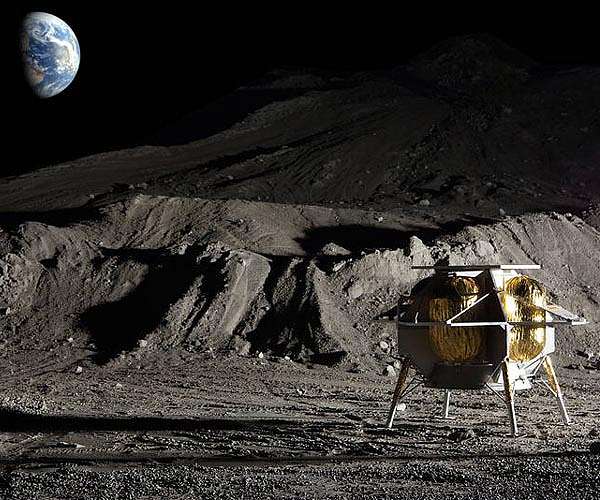
Scalable lunar power study launched by Honda and Astrobotic
by Clarence Oxford
Los Angeles CA (SPX) Sep 30, 2025
Honda Motor Co. and Astrobotic Technology have entered a joint development agreement to investigate scalable lunar power solutions that combine Honda’s regenerative fuel cell (RFC) system with Astrobotic’s Vertical Solar Array Technology (VSAT) and LunaGrid service. The collaboration aims to deliver continuous and reliable power for extended lunar surface operations, particularly during the two-week lunar night.
Honda’s RFC system, a circulative renewable energy cycle, uses solar energy and water to produce oxygen, hydrogen, and electricity. During the lunar day, solar power is stored as hydrogen, which the system converts back to electricity at night. The process yields water as the sole byproduct, which is recycled into Honda’s high-pressure electrolysis system to close the energy loop.
Astrobotic’s LunaGrid service is being developed as a modular power infrastructure for a broad customer base. At its core is the deployable, sun-tracking VSAT. Current designs include a 10 kW VSAT system and a larger 50 kW VSAT-XL to meet growing power needs for future missions.
The feasibility study will target three main goals: assessing illumination conditions at potential LunaGrid sites, evaluating the scalability of Honda’s RFC system, and defining integration requirements between Honda and Astrobotic hardware and software.
By pairing the RFC with VSAT, Honda and Astrobotic expect to ensure uninterrupted energy supply across lunar day-night cycles. This capability would enhance mission resilience, support permanent human presence, enable infrastructure construction, and open opportunities for lunar industries.
As part of the study, both companies will model one-year solar illumination profiles at candidate South Pole landing sites. Simulations will guide the scaling of the RFC to match the energy storage needed for various mission architectures, ensuring sufficient power for electrolysis and sustained nighttime electricity.
Related Links
Astrobotic Technology Inc.
Mars News and Information at MarsDaily.com
Lunar Dreams and more