

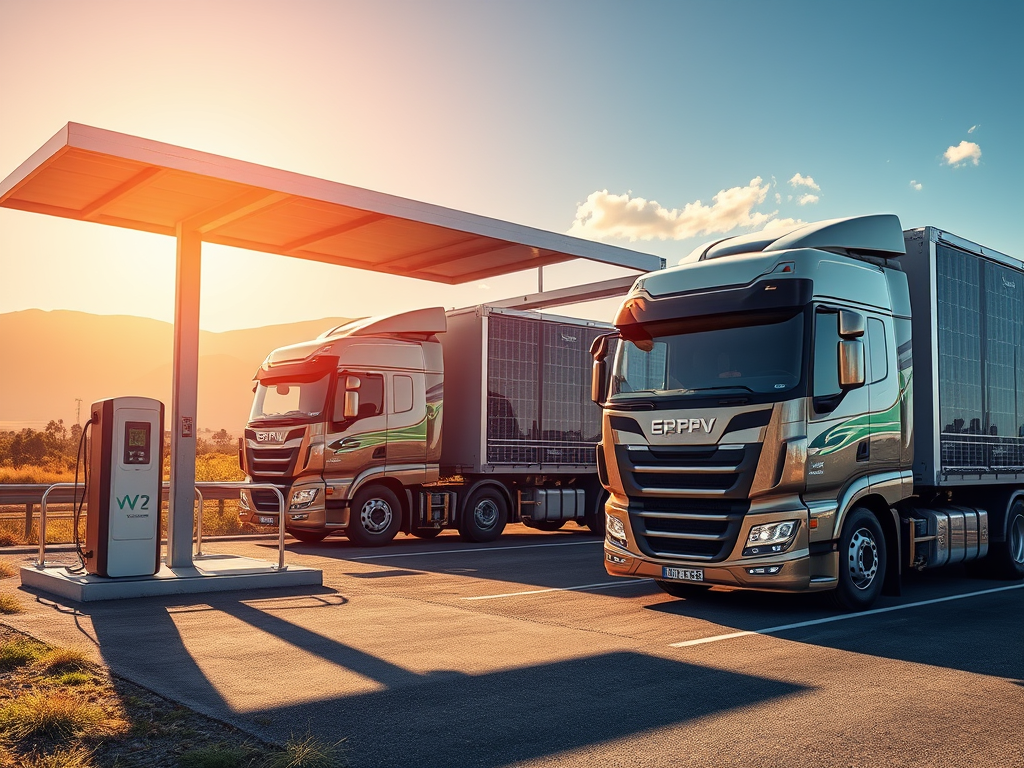

South Africa’s key freight corridors are beginning to see a major shift as solar-powered charging stations for heavy-duty electric trucks are introduced. For decades, long-distance transport in the country has depended almost entirely on diesel. However, the move toward cleaner logistics is now gaining pace, supported by new off-grid energy solutions that avoid the country’s unreliable national power supply.
A leading role in this transition is being played by Zero Carbon Charge, a Cape Town-based company also known as Charge. The company has started rolling out two fully off-grid, solar-powered charging stations along the N3 highway. The N3 is a vital 570-kilometer route connecting Johannesburg to the port city of Durban and serves as one of the busiest freight corridors in the country. These new charging stations are specially designed to meet the high energy needs of heavy-duty electric trucks, a segment that has so far faced serious infrastructure gaps.
The project has received strong financial backing from the Development Bank of Southern Africa (DBSA). The bank has provided an equity investment of US$6.2 million to support the expansion. As part of the funding agreement, Charge must build off-grid charging infrastructure every 150 kilometers along major national roads. This condition aims to make long-distance electric trucking practical and commercially viable. The two N3 charging stations are expected to be completed by June 2026.
Earlier this year, the company demonstrated the strength of its model by successfully charging two heavy-duty electric trucks and four passenger vehicles at the same time using only solar power. Each site operates independently from the national grid, combining large-scale solar panels with advanced battery storage systems. This setup ensures a stable power supply even during grid failures. The cost of building each station is estimated at about US$1.25 million.
After completing the N3 installations, Charge plans to expand its network to the N1 corridor, which connects Johannesburg and Cape Town. This expansion could further strengthen clean freight movement across the country.
While other African companies have focused mainly on electric motorbikes and small vehicle solutions, Charge is targeting heavy freight transport, one of the largest sources of carbon emissions. However, challenges remain. High import duties on electric vehicles, regulatory approvals, and limited availability of certified electric trucks could slow progress.
Despite these obstacles, the development marks an important step toward energy security and lower emissions. By using solar-powered infrastructure, South Africa is showing how emerging economies can modernize transport systems while reducing dependence on fossil fuels.
Related
Discover more from SolarQuarter
Subscribe to get the latest posts sent to your email.
Source link