

As German hydrogen strategy takes shape, the European Union selected 61 technology projects, including 8 focused on hydrogen throughout the continent: Czech Republic, Denmark, Estonia, Finland, Italy, Norway, and Spain.
The European Union’s Innovation Fund’s call for NetZero Technologies has selected 61 net-zero technology projects, totaling €2.9 billion in funding. Among the selected project, eight are focused on hydrogen: the Endor project in Denmark will build large commercial Sustainable Aviation Fuel (eSAF); the Luxia project in Spain will demonstrate integrated production of renewable hydrogen, methanol and ammonia; H2CWAY in Czech Republic aims to develop and manufacture two types of hydrogen‑fuel‑cell intercity buses to decarbonise suburban and regional public transport; the PP2XH aims to establish a fully sustainable e-methanol value chain in Estonia; the H2EAT project in Italy should launch a production line for manufacturing a 25 kW wall‑mounted hydrogen boiler in Italy; the MAGHYC project in Finland should demonstrate the onboard hydrogen generation with carbon capture on a newbuild cruise ship; the ODIN project in Norway will retrofit 15 Cessna 208B Grand Caravans with hydrogen electric powertrain and operate them on cargo routes across 15 Norwegian regional airports; the RjukanLH2 project in Norway should demonstrate a Renewable Fuel of NonBiological Origin (RFNBO) liquid -hydrogen (LH2) supply chain for fuelling four novel LH2 -powered shortsea container vessels in Norway. “The Commission is preparing to launch the next Innovation Fund calls in early December 2025,” said the European executive body. The funding comes from the Innovation Fund, which utilizes revenues from the EU Emissions Trading System (EU ETS).
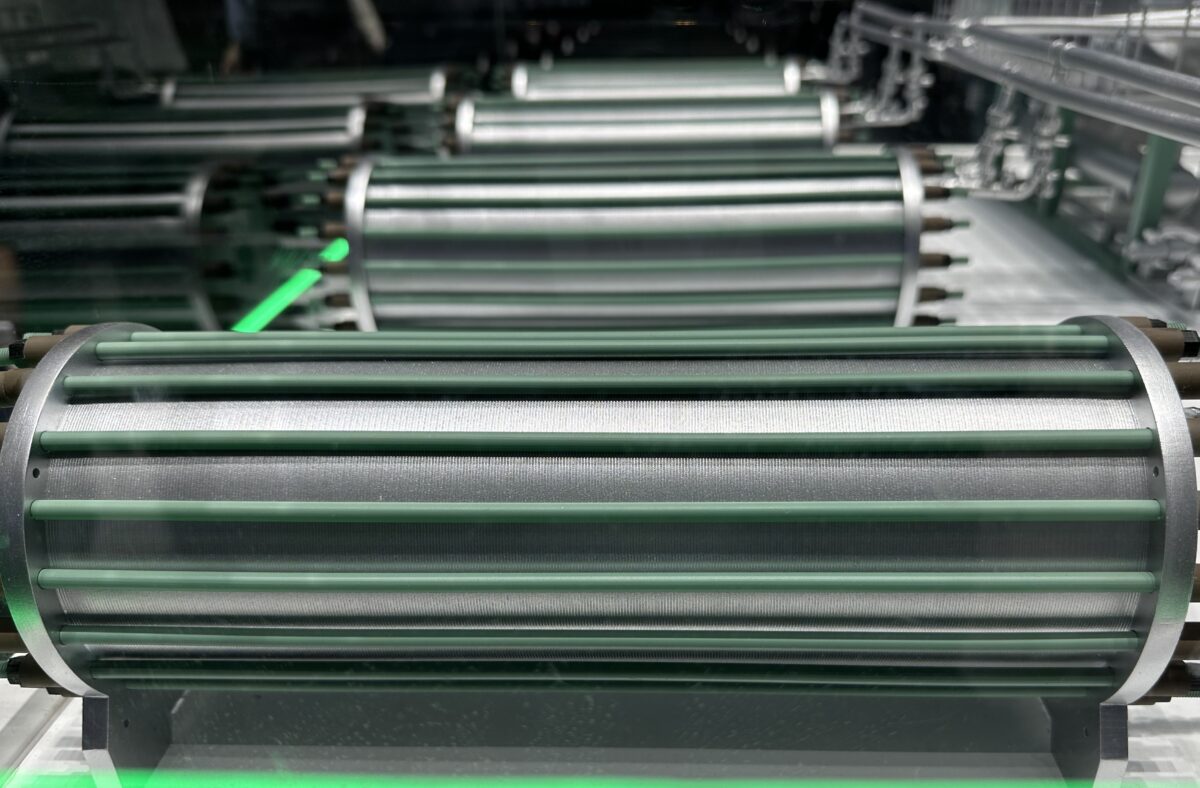
Germany-headquartered Bosch has commissioned its first self-operated hydrogen electrolyzer, comprising two proton exchange membrane (PEM) electrolysis stacks with a combined capacity of 2.5 MW. The stacks are manufactured at its Bamberg site in southern Germany, where the German company has put them into operation. “Each of these stacks with a rated power of 1.25 megawatts produces around 23 kilograms of hydrogen per hour from water and electricity. At full load, the electrolyzer can produce more than 1 metric ton of hydrogen daily,” said the German company.
Lhyfe signed an offtake agreement with a service-station operator in Germany. “Under this new contract, Lhyfe will supply around 90 tons of RFNBO-certified hydrogen over a 15-month period to a service-station operator based in Germany. These service stations will fuel a fleet of several dozen buses,” said the French company in a press release.
Everfuel and Crossbridge Energy Fredericia inaugurated the HySynergy plant in Fredericia, Denmark, before sending the first filled hydrogen trailer to Germany. “This is the first time that RFNBO-certified green hydrogen produced in Denmark is being exported abroad, where market conditions for green hydrogen are more favorable,” said the Danish company, underlining that the plant is one of Europe’s first large-scale electrolysis facilities to produce certified green hydrogen. Everfuel aims to establish over 2 GW of electrolysis capacity in Denmark by 2035.
Topsoe, which has recently inaugurated in Denmark what it calls Europe’s largest Solid Oxide Electrolyzer Cell (SOEC) stack manufacturing facility, has been selected to deliver its dynamic ammonia loop technology for Synergen Green Energy’s ammonia project in the United States.“The dynamic ammonia process plant will enable the ramping up/down of the ammonia production bidirectionally at a rate of at least 3% per minute in response to the fluctuating supply of hydrogen to the ammonia plant”, said the Danish company, adding that the technology should lead to siignificant reduction in capital expenditure and operational expenditure “since hydrogen storage systems can be reduced substantially, or otherwise eliminated.”
This content is protected by copyright and may not be reused. If you want to cooperate with us and would like to reuse some of our content, please contact: editors@pv-magazine.com.
Popular content
Source link