
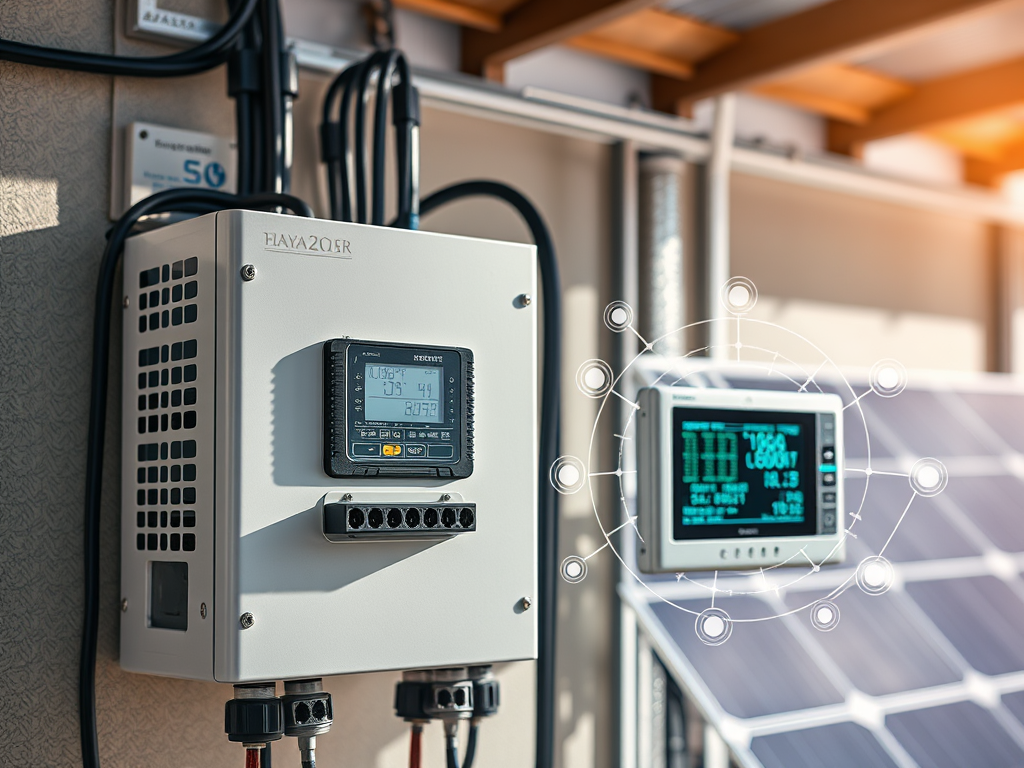

The Ministry of New and Renewable Energy (MNRE) has issued a new set of testing guidelines for Inverter Remote Monitoring Systems (RMS) and dataloggers as part of the government’s ongoing push to strengthen rooftop solar deployment under the PM Surya Ghar: Muft Bijli Yojana. The memorandum, dated March 27, 2026, builds on earlier compliance requirements released in July and December 2025 and aims to standardize how solar systems communicate and report data.
The latest guidelines focus on creating a uniform framework that ensures all inverters and related devices can seamlessly connect to a future centralized national portal. This step is important for improving transparency, monitoring system performance, and enabling better policy implementation across the country. To support this transition, the government has introduced an interim testing platform where manufacturers and solar EPC companies can test their equipment and software before the final system goes live.
This testing platform allows Original Equipment Manufacturers (OEMs) to verify whether their devices meet the required communication and data standards. It also allows them to make necessary changes early, reducing the chances of non-compliance later. The move is expected to help the industry align with national digital infrastructure goals while ensuring smooth integration of rooftop solar systems.
A key part of the guidelines is the focus on security and device identification. MNRE has made it mandatory for devices to use hard IMEI-based identification, ensuring that each unit can be uniquely tracked. In addition, devices must use Transport Layer Security (TLS) certificates for authentication, which helps protect data from unauthorized access and ensures secure communication between devices and the central system.
The communication protocol has also been standardized using MQTT (Message Queuing Telemetry Transport), which is widely used in Internet of Things (IoT) applications due to its efficiency and reliability. This protocol enables devices to transmit data in a lightweight and consistent manner, making it suitable for large-scale solar deployments.
The guidelines also define how devices should function in daily operations. RMS units must be able to display device information through QR codes or readable strings, making registration and identification easier. They should support multiple communication methods, including periodic data transmission, event-based alerts for faults or alarms, and on-demand data access when requested by the central system.
From a hardware perspective, the requirements are quite comprehensive. Devices must support serial communication interfaces such as RS485 or RS232, along with LAN and Wi-Fi connectivity options. They should also be capable of working with 4G or 5G networks to ensure reliable data transmission in different environments. To handle connectivity interruptions, devices must include internal storage like Flash or EEPROM, allowing them to store time-stamped data and upload it once the connection is restored.
Another important requirement is the inclusion of a Real-Time Clock (RTC), which ensures that all recorded data is accurately time-stamped. This feature is essential for monitoring system performance and maintaining reliable records.
Manufacturers interested in testing their products can apply by submitting company details, model information, and a signed OEM declaration to the ministry. Although the current testing platform is temporary, it provides a crucial opportunity for stakeholders to prepare for the upcoming centralized system.
Overall, these guidelines mark a significant step toward building a more connected, secure, and transparent solar ecosystem in India. By standardizing communication and ensuring data reliability, MNRE is laying the foundation for efficient monitoring and long-term growth of rooftop solar installations under the national program.
Related
Discover more from SolarQuarter
Subscribe to get the latest posts sent to your email.
Source link