

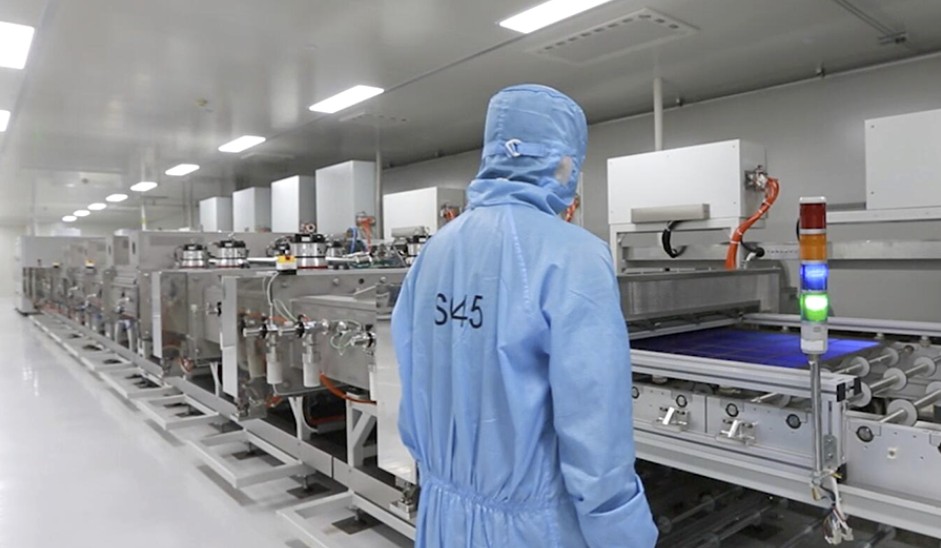
Chinese PV manufacturer JA Solar and China-based PV equipment supplier Gold Stone Energy have reported a 28.2% conversion efficiency for a hybrid back-contact (HBC) solar cell developed under their HBC industrialization project.
The result was certified by Germany’s TÜV Rheinland and, according to the companies, sets a new world record for back-contact (BC) solar cell efficiency. The previous record for the BC architecture was held by Longi, which reported 28.13% efficiency for its hybrid interdigitated back-contact (HIBC) cell.
HBC technology combines a back-contact electrode structure with passivation technologies used in mainstream high-efficiency crystalline silicon cell architectures. The cell front side has no metal gridlines, reducing optical shading losses, while the rear-contact design improves current collection. The technology is also intended to provide an upgrade path for existing TOPCon manufacturing assets.
Gold Stone Energy and JA Solar were previously linked through a 4 GW HBC upgrade and retrofit project. In a Hong Kong Stock Exchange filing, Golden Solar said its subsidiary Golden Solar New Energy Technology would license HBC patent technology to a joint venture established by JA Solar’s unit Yiwu JA Solar and Gold Stone Energy. The project aims to produce HBC cells by retrofitting existing production capacity.
The announcement follows several recent back-contact efficiency gains by Chinese PV manufacturers. In late April, Trina Solar said its TOPCon-compatible hybrid back-contact (THBC) cell achieved 28.0% efficiency, certified by Germany’s Institute for Solar Energy Research Hamelin (ISFH). The company said the result was achieved using a large-area 210R cell and added that it is accelerating THBC module industrialization.
The series of announcements highlights growing competition around back-contact architectures, as leading Chinese manufacturers pursue higher conversion efficiencies and improved module power density following the rapid commercialization of TOPCon technology.
This content is protected by copyright and may not be reused. If you want to cooperate with us and would like to reuse some of our content, please contact: editors@pv-magazine.com.
Popular content