

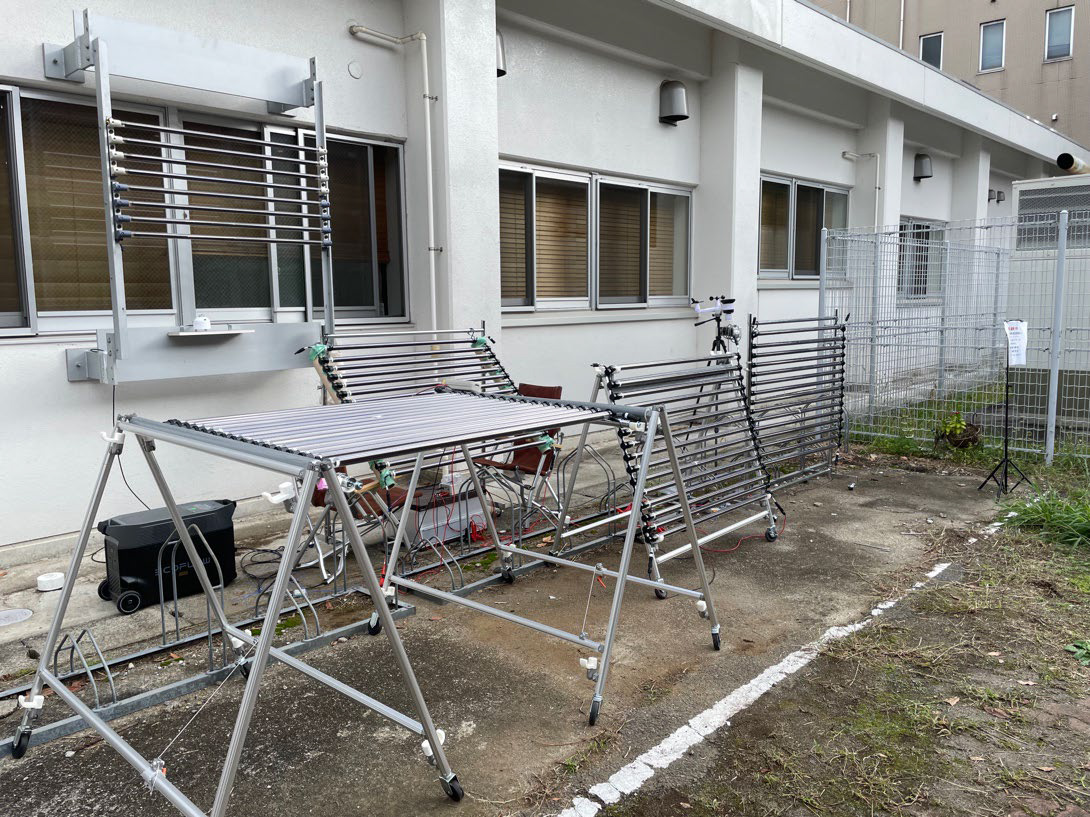
Few companies in the history of photovoltaics have embodied both the promise and the risks of solar innovation as clearly as Solyndra. Founded in California in 2005, the company emerged with a radically different vision of how solar modules could be designed: instead of conventional flat panels, it developed cylindrical photovoltaic tubes coated with copper-indium-gallium-diselenide (CIGS) thin-film cells. The concept aimed to create a three-dimensional solar surface capable of capturing direct, diffuse and reflected sunlight from multiple angles, while enabling lightweight, low-profile installations on large commercial rooftops.
The technology attracted significant attention from investors and policymakers alike, receiving strong financial backing from the U.S. government, including a $535 million loan guarantee from the Department of Energy under the Obama administration’s clean-energy initiatives. Once regarded as a symbol of American leadership in solar innovation, Solyndra ultimately filed for bankruptcy in 2011 as rapidly falling prices for conventional silicon modules and intensifying global competition undermined its ability to compete. The company’s rise and fall remains a landmark case in the challenges of bringing disruptive photovoltaic technologies from the laboratory to large-scale manufacturing.
Despite this historical failure, a group of researchers at the University of Electro-Communications (UEC) in Japan has continue to develop photovoltaic tubes for building applications on the basis that these devices experience less temperature rise due to solar radiation compared to flat-plate solar cells. “We identified optimal installation conditions for use on urban rooftops and building facades,” they specified.
In the study “Urban Solar Harvesting With Cylindrical Solar Cells: Field Performance and Optimal Installation,” published in IEEE Access, the research group never metioned the Solyndra case, but said cylindrical modules’ advantages over conventional flat panels are limited to building-integrated applications.
The main advantage of cylindrical panels lies in their enhanced cooling capability, as their curved geometry promotes natural airflow around the module surface and improves passive heat dissipation compared with conventional flat designs. By limiting thermal accumulation, cylindrical structures may reduce temperature-related efficiency losses and improve PV performance, particularly in building-integrated applications where ventilation is often restricted. However, their thermal behavior under real-world urban conditions remains insufficiently characterized, with limited understanding of the interaction between geometry, airflow, irradiance, and operating temperature.
Against this background, the Japanese researchers investigated how environmental and geometric factors influence the electrical and thermal performance of cylindrical solar cells under outdoor conditions. They developed and validated a regression-based model incorporating irradiance, incidence angle, and surface temperature to predict daily power output, while also evaluating optimal tilt and orientation configurations for wall-mounted and rooftop applications.
Cylindrical and flat PV modules were monitored simultaneously to compare power generation, irradiance response, and thermal behavior. Measurements were carried out at the UEC campus in Tokyo under a range of tilt and orientation configurations. Solar position and incidence angles were calculated to quantify the impact of module geometry on energy generation. Data were synchronized, screened for shading effects, and analyzed at 10-minute intervals without temporal averaging. Thermal performance was assessed using thermocouples and infrared thermography to evaluate differences in heat dissipation between cylindrical and flat modules. Fixed installation scenarios were then assessed using representative clear-sky conditions and modeled energy generation.
The results showed that cylindrical PV modules exhibit distinct seasonal generation profiles depending on tilt and orientation, driven by their curved light-receiving geometry and variations in solar position. Unlike conventional flat modules, cylindrical designs can reduce angular losses by continuously presenting different surface orientations to incoming sunlight, enabling more balanced energy capture under fixed installations. Thermal measurements also showed that cylindrical modules operated at lower temperatures than flat modules under comparable conditions, resulting in reduced temperature-related power losses.
The researchers attributed these thermal advantages to geometry-driven airflow and improved convective heat transfer around the curved surface. They noted that cumulative energy production alone is not sufficient to evaluate cylindrical PV performance, as seasonal stability and thermal behavior also play an important role in determining their suitability for urban applications.
“The results indicate that cylindrical solar cells can achieve stable and competitive cumulative energy production under appropriately selected tilt and orientation conditions, even in configurations where flat-plate modules experience angular and thermal penalties,” the researchers stated. “Fixed installation strategies optimized for cylindrical geometries offer a practical approach for solar harvesting on building façades and other constrained urban surfaces.”
The researchers concluded that cylindrical solar cells represent a technically promising option for building-integrated photovoltaics. By reducing sensitivity to the angle of incidence and limiting temperature-related performance losses, cylindrical PV technologies could expand the range of surfaces suitable for solar integration in urban environments.
Future work will focus on long-term durability assessments, large-scale deployment studies, and system-level optimization to further evaluate the potential of cylindrical PV systems and reduce the levelized cost of electricity in urban solar applications. The researchers also highlighted the need for additional studies incorporating real installation conditions, long-term monitoring, weather variability, and advanced thermal modeling.
Source link