

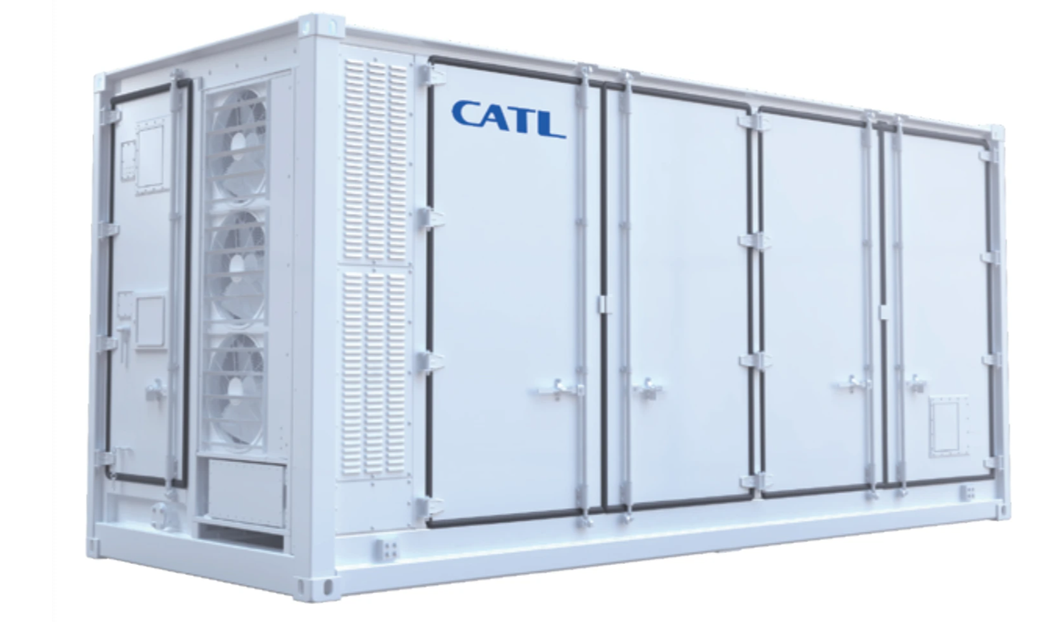
Chinese battery giant CATL is expanding the footprint of its battery energy storage system (BESS) solutions, quietly securing major project deals even for its less heavily marketed products.
As ESS News reported in mid-August, CATL has supplied its Tener S BESS to at least two major developers. In May, Grenergy announced a deal for 252 Tener S units, totaling 1.5 GWh, for its Oviedo and Escuderos projects in Spain. The third stage of Quinbrook’s massive Supernode project in Australia will also use the Tener S.
Neither announcement, nor a subsequent CATL press release, provided sufficient detail about the Tener S and its two-hour duration to establish the product’s full specifications.
The Tener S has not received the same high-profile launch treatment as the Tener Stack or the company’s more recent sodium-ion products.
Official datasheet specifications obtained by ESS News now provide a clearer picture of the Tener S and its evolution from CATL’s earlier products. While the EnerC remains listed in the company’s product portfolio, the Tener S represents a significant step up from the 3.72 MWh EnerC, designed for one-hour storage, and the later EnerC Plus, a 4.073 MWh system designed for two-hour applications.
Adding some complexity, CATL documentation and brochures refer to the product as both Tener S and EnerS, reflecting changes in the company’s product lineup and naming conventions.
Specifications
The official specification sheet confirms that the CATL Tener S, also referred to as EnerS, is a liquid-cooled, DC-connected system with 6.017 MWh of rated energy capacity. It achieves that capacity within a standard 20-foot container footprint and weighs 45 metric tons.
By comparison, the original EnerC has a rated capacity of 3.72 MWh and weighs 36 metric tons, while the EnerC Plus has a rated capacity of 4.073 MWh.
The Tener S operates at 1,500 V and has a typical charge and discharge rate of up to 0.5P. CATL also lists zero degradation, an IP55 enclosure rating and an operating temperature range of -35 C to 55 C among the system’s specifications.
At 0.5P, the system’s 6.017 MWh capacity corresponds to approximately 3.01 MW of power for a two-hour configuration. In a four-hour configuration at 0.25P, the corresponding power rating would be approximately 1.5 MW.
From ESS News
Source link