

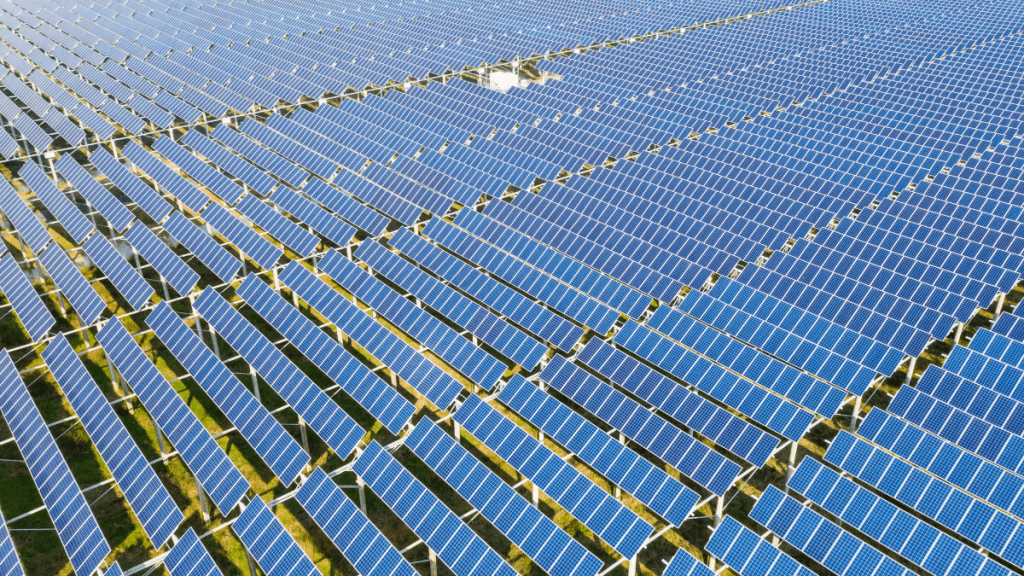
The global solar energy market is projected to nearly double from $492.7 billion in 2025 to $974.7 billion by 2031, registering a compound annual growth rate (CAGR) of 10.8% between 2026 and 2031, according to a newly published report by BCC Research.

The report, Solar Energy Markets, provides market sizing, segmentation, competitive intelligence and technology analysis across solar energy applications and technologies.
According to the report, Asia-Pacific (APAC) holds the largest share of the global solar energy market at 57.8%, supported by large-scale manufacturing capacity, national renewable energy targets and established solar supply chains across China, India and Southeast Asia.
The market is expected to benefit from declining levelized cost of electricity (LCOE), supportive government policies and the increasing integration of solar power with battery energy storage systems and electric vehicle (EV) charging infrastructure.
Policy Support and Emerging Markets
Renewable portfolio standards (RPS) and feed-in tariff (FIT) programmes are playing an important role in accelerating solar deployment by creating long-term revenue visibility and encouraging institutional investment.
The report highlighted national initiatives such as Saudi Arabia’s Vision 2030 and Brazil’s Ten-Year Energy Expansion Plan (PDE) 2035 as key programmes supporting solar market development. The EU-Latin America and Caribbean Global Gateway Investment Agenda, which includes approximately $51.5 billion in renewable energy support through 2027, is also expected to create new investment opportunities.
Solar Technology Advances
Technological developments are also reshaping the solar market, with N-type TOPCon, heterojunction (HJT) and back-contact (BC) technologies gaining market share as PERC technology faces increasing competition.
The report noted that LONGi’s two-terminal crystalline silicon-perovskite tandem cell achieved a NREL-certified conversion efficiency of 34.85%, while Jinko Solar’s perovskite tandem cell reached 33.84% efficiency in 2025.
Within concentrated solar power (CSP), solar power tower technology is projected to record the fastest growth, with a CAGR of 29.5% between 2026 and 2031.
Key Market Drivers
The report identified declining LCOE as one of the major factors supporting solar market growth. Improvements in module efficiency, manufacturing automation and low-carbon production inputs are strengthening solar’s competitiveness against conventional energy sources.
Growing EV adoption is also creating new demand for solar-powered charging infrastructure, while the increasing integration of battery storage with solar installations is expanding opportunities for both residential and utility-scale projects.
Market Challenges and Investment Outlook
Despite the strong long-term growth outlook, the solar industry continues to face near-term challenges, including manufacturing overcapacity, declining module prices, margin pressure and higher interest rates.
The report stated that the four largest China-based solar manufacturers collectively recorded net losses of more than $1.5 billion in 2025, despite achieving record shipment volumes. Canadian Solar reported a 6.6% decline in revenue in 2025, while SolarEdge faced losses associated with distributor backlog cancellations in Europe.
Against this backdrop, companies with differentiated technology portfolios and exposure to emerging, policy-supported markets could be better positioned to manage pricing pressure. Areas such as perovskite tandem cells, thin-film PV and module-level power electronics are expected to offer opportunities as the solar industry continues to evolve.
The report identified Canadian Solar, LONGi, Jinko Solar, JA Solar, Trina Solar, Enphase Energy, SolarEdge, First Solar, DAS Solar, Tongwei, Qcells, ReNew Energy Global, Enel Green Power, Scatec and Atlas Renewable Energy, among others, as key participants in the global solar energy market.
Discover more from SolarQuarter
Subscribe to get the latest posts sent to your email.
Source link