


Chilean solar began to grow properly a little over a decade ago, thanks largely to the remuneration scheme the government provided for small-scale plants. This helped developers install a lot of capacity around the center of the country, close to the capital and the main demand hub. Meanwhile, most of the utility-scale segment focused on the Atacama Desert region in the north of the country.
Since 2024, Chile has been reconfiguring its solar market to encourage more large-scale solar and storage hybrid plants in the northern region, which boasts some of the highest irradiance levels in the world. This strategy was deliberate.
Those watching the market say this hybridization focus will address one of the biggest problems the industry faces: curtailment. In 2025, Chile curtailed 6.2 TWh of solar, which corresponds to 6.9% of total system generation.
Curtailment happens because transmission infrastructure is insufficient to absorb all the energy generated. Until recently, there was also not enough storage in the system to absorb the excess generated from the approximately 12.2 GW of cumulative solar capacity Chile has installed. But that’s all changing.
“With the new regulation starting in 2034, they [small-scale solar installations] will basically receive the same payments as a utility-scale plant, so they are no longer going to be subsidized from the rest of the market,” Raúl Urtubia, research product manager for Aurora Energy Research, told pv magazine.
The policy is testing Chile to move more into utility-scale instead of small-scale projects, and this is already evident in the market, said Urtubia.
“The past year to year-and-a-half, the financing and development of small-scale projects was slowing down quite a bit, so it’s very unlikely that a high amount of small-scale solar will be developed – and by small scale, I mean below 9 MW.”
Since the regulatory change, Urtubia and others have seen “a lot of battery development” happening close to utility-scale PV plants in the north. He pointed out that before legislation was changed, capacity payments for batteries were not a good revenue source. The government’s legislation update has now established reliable, stable capacity payments until 2034.
Battery signal
“That was a signal from the government,” said Urtubia. “It really unlocked the development, investment and financing of batteries and it’s really striking: if you see the moment the decree was passed in 2024, immediately afterwards battery development started.”
He said most of the development in terms of a battery’s revenue stack comes from capacity payments, while another big component is market arbitrage. The combination of arbitrage and long-term capacity payments revenue is highly complementary to hybrid solar and storage configurations, Urtubia explained, adding that this helps alleviate Chile’s solar curtailment problem.
Chile’s exceptionally long and narrow geography – extending more than 4,185 km from its southernmost to northernmost tip and a maximum of 445 km from east to west – is a very challenging topography for transmitting electricity. Most of the industrial demand, apart from mining, is in the center of the country, near the capital Santiago. This means the solar generated in the high irradiance regions in the north must be transmitted hundreds of miles down to the demand center.
As part of a big investment in transmission infrastructure, the government is building a 1,000 km high-voltage direct current (HVDC) line from the center of the country to the solar and battery hubs in the north. The line will come online in the early 2030s and is expected to significantly reduce curtailment for solar projects.
In the meantime, “that’s where the batteries come in,” said Urtubia. “Since they are also placed in the north, they can generate their own demand during the day, the cheap solar hours, and mitigate the curtailment as the solar excess goes into the battery and then they can sell during the night when the prices are better.”
The favorable economics means the development of batteries has been quite fast.
“We got to 2 GW by the end of 2025 and now we expect 6 GW by the end of this year,” said Urtubia, emphasizing that the expected capacity is already in construction.
Most of the batteries being built are five-hour assets, followed by four-hour durations, as the capacity payments policy doesn’t incentivize durations beyond five hours, said Urtubia.
Giga-scale hybrids
Among the standout battery projects in Chile are the Black BESS Transmission Line and Storage Plant, featuring 1.4 GWh of storage and an associated transmission line, and Grenergy’s 3.5 GWh Elena BESS in the Antofagasta region, as well as Copenhagen Infrastructure Partners’ 1.1 GWh Arena BESS.
Independent power producer ContourGlobal is making Chile its main Latin American market. It acquired a portfolio from Spain’s Grenergy, including the Quillagua plant with 221 MW of PV and 1.2 GWh of storage, and the Victor Jara plant, with 231 MW of PV and 1.3 GWh of energy storage.
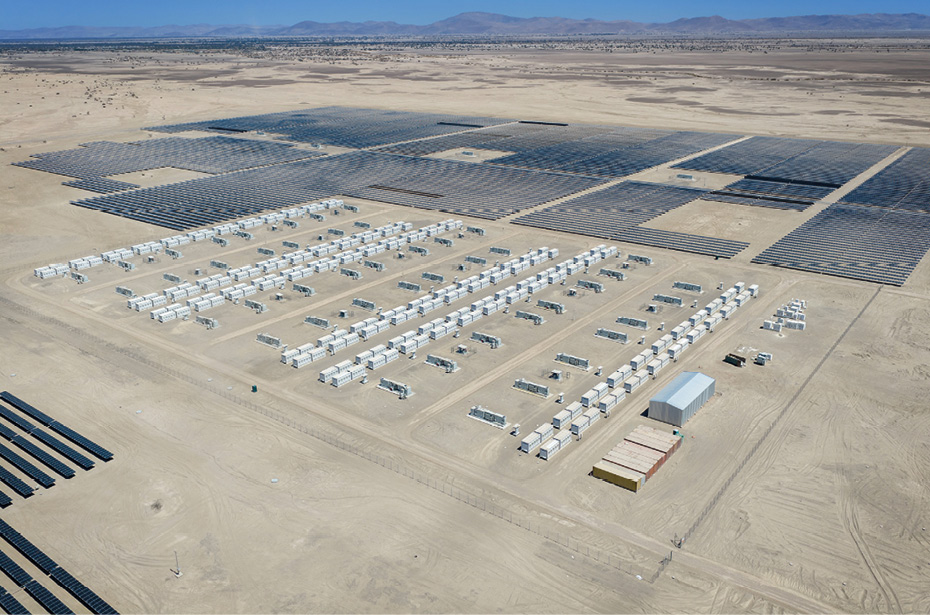
“We are betting strongly on Chile’s need for power for mining and economic growth,” said the company’s CEO, Antonio Cammisecra. “We are building up a pipeline because there are good opportunities with the regulations.”
GT4 Energía, Tambo3 and Endura Energy are developing 500 MWh of storage and 100 MW of solar in the Atacama region’s Copiapó commune. The Ibitú hybrid project will be situated next to an existing substation and 110 kV transmission line.
“The next stage of the energy transition is not simply about installing more renewable generation. It is about making renewable electricity available when consumers and the grid actually need it. Ibitú has been conceived around that principle, combining solar generation and large-scale storage to transform an intermittent resource into a more flexible, valuable and dispatchable energy asset,” said Xavier Lara, CEO of Endura Energy.
José Lobo, who is Endura Energy Chile country manager and CEO of Tambo3, explained that the Ibitú project has “a strong local dimension.”
“Copiapó sits at the heart of one of Chile’s most important mining, industrial and renewable energy regions, and the project is being developed with a clear understanding of its territory, infrastructure, and future energy demand. Our objective is to create a long-term asset that supports regional growth while making better use of Atacama’s exceptional solar resource,” he said.
The BESS will be developed first, followed by the solar. According to Urtubia, there are a lot of new players coming into the market, but interest also remains strong from existing investors.
“Chile is quite a fluid market right now for developers. There are currently minimal roadblocks and even the new government that started in March this year has been improving and making environmental assessments faster. Developers need to move fast and acquire the financing before the market moves on,” said the analyst.
As pv magazine went to press, Chile’s National Energy Commission finalized parameters for its 2,835 GWh electricity supply tender, which includes standalone and hybrid battery configurations. Bids are due by Dec. 4, 2026, with contract awards scheduled for Jan. 13, 2027.
Bolivia bets on renewables
Bolivia’s government is about to decide on a draft law that, if passed, would explicitly link energy policy to private investment and clearer offtake frameworks, making utility-scale solar more attractive to commercial lenders.
Nicolás Villarroel, power market expert at Aurora Energy Rearch’s Latin America team, believes the most likely financing model will resemble the Chichas plant. CAF Bank approved $110 million for the 120 MW Chichas plant in 2025, combining public planning alignment with multilateral support. Reform could gradually add a private power purchase agreement layer on top of that, but Villarroel said Bolivia’s macro constraints make rapid liberalization unlikely.
By 2035, Bolivia is targeting 75% of total electricity generation from renewables, which Villarroel claimed is “a meaningful but achievable stretch” from today’s roughly 34% renewable generation mix. This includes 28.4% hydropower, 3% solar and 2.5% wind. The renewable energy reform cycle is exacerbated by Bolivia’s falling gas reserves, which makes solar strategically necessary, said Villarroel.
The post Chile’s hybrid heroics appeared first on pv magazine Global.
Source link