

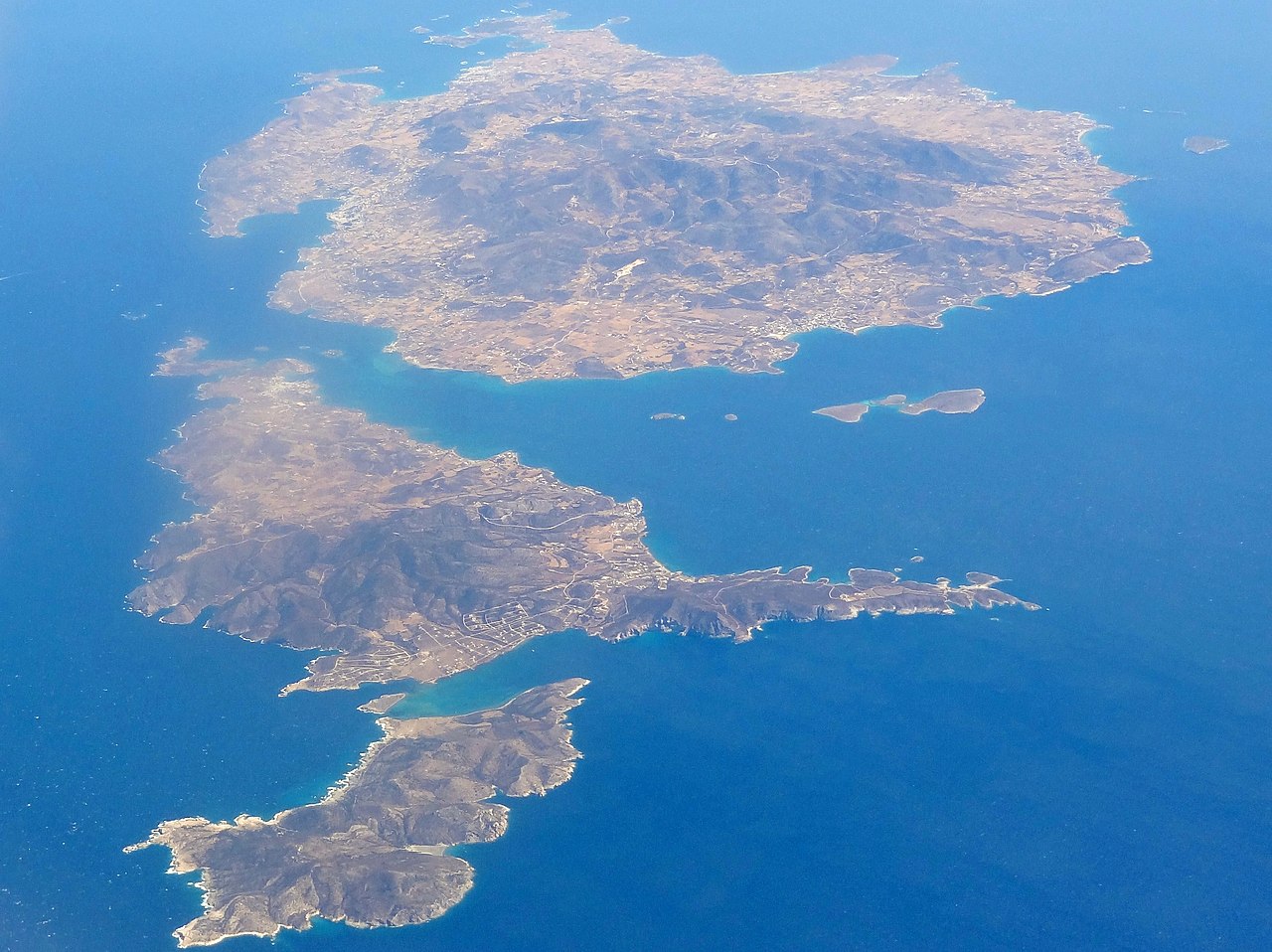
The European Commission and the European Investment Bank (EIB) have approved the investment program for a €2 billion ($2.3 billion) Islands Decarbonization Fund established specifically for Greece.
The Islands Decarbonization Fund is a financing framework developed jointly by the Greek government, the European Commission and the EIB. It will finance electricity interconnections between the Greek islands and the mainland grid, as well as clean energy, energy storage and electric mobility projects on the islands.
Greece’s Ministry of Environment and Energy said in a press release that the approved investment program includes projects and initiatives totaling about €2.3 billion.
The fund will be financed through the EU Emissions Trading System (EU ETS). The ministry said its “resources are currently estimated at approximately €2 billion, based on current emission allowance prices within the European Union Emissions Trading System. The total volume of resources will depend on the evolution of allowance prices during the Fund’s operational period.”
The approved investment program is divided into four categories.
Around €1.1 billion will be allocated to electricity interconnections and related energy infrastructure in the Dodecanese, the Cyclades and the islands of the northeastern Aegean.
Greece’s Independent Power Transmission Operator (IPTO) said last week that the electricity interconnection between the mainland and the island of Kos has entered the construction phase. IPTO awarded a contract for the design, supply and installation of the high-voltage direct current (HVDC) cable system between Corinth, on the mainland, and Kos to Fulgor, a subsidiary of Hellenic Cables.
The second category of the Islands Decarbonization Fund comprises €977 million for renewable energy and energy storage projects. The ministry said the investment plan will place particular emphasis on the installation of self-consumption PV systems at homes, hotels, restaurants, shops, offices, hospitals, care facilities, schools, public buildings and agricultural facilities.
Another €200 million will be invested in multipurpose dams and reservoirs, while the program’s fourth category allocates €56 million to electric vehicle charging infrastructure.
“These investments will play a decisive role in reducing the carbon footprint of the Greek islands, strengthening their energy autonomy and security, and accelerating the green transition of island Greece,” the ministry said.
One of Greece’s most pressing energy and environmental challenges is the continued reliance of many of its islands on diesel-fired power generation. Diesel generation is also costly, with the expense ultimately shared among electricity consumers across Greece.
The ministry has acknowledged the issue, saying that combining new electricity interconnections with island-based renewable energy and storage projects can reduce the operation of oil-fired power plants and bolster the flexibility of the electricity system.
It added that it is now working with other Greek institutions on detailed project planning for the €2 billion program.
In recent years, Greece has implemented a range of clean energy projects on its islands, often using different technological and business models.
On Tilos, for example, a privately owned hybrid power plant combines solar PV, wind power and energy storage. The project covers more than half of the island’s annual electricity demand.
Halki, by contrast, has a PV plant that operates under a net-metering model and provides local residents with solar electricity. The plant was donated to the island by private sponsors.
Other islands, including Astypalaia and Agios Efstratios, are pursuing different clean energy models. The next question is which approaches Greece will prioritize through the Islands Decarbonization Fund and how it will use the program to support projects capable of delivering lasting reductions in fossil fuel consumption on its islands.
Source link