
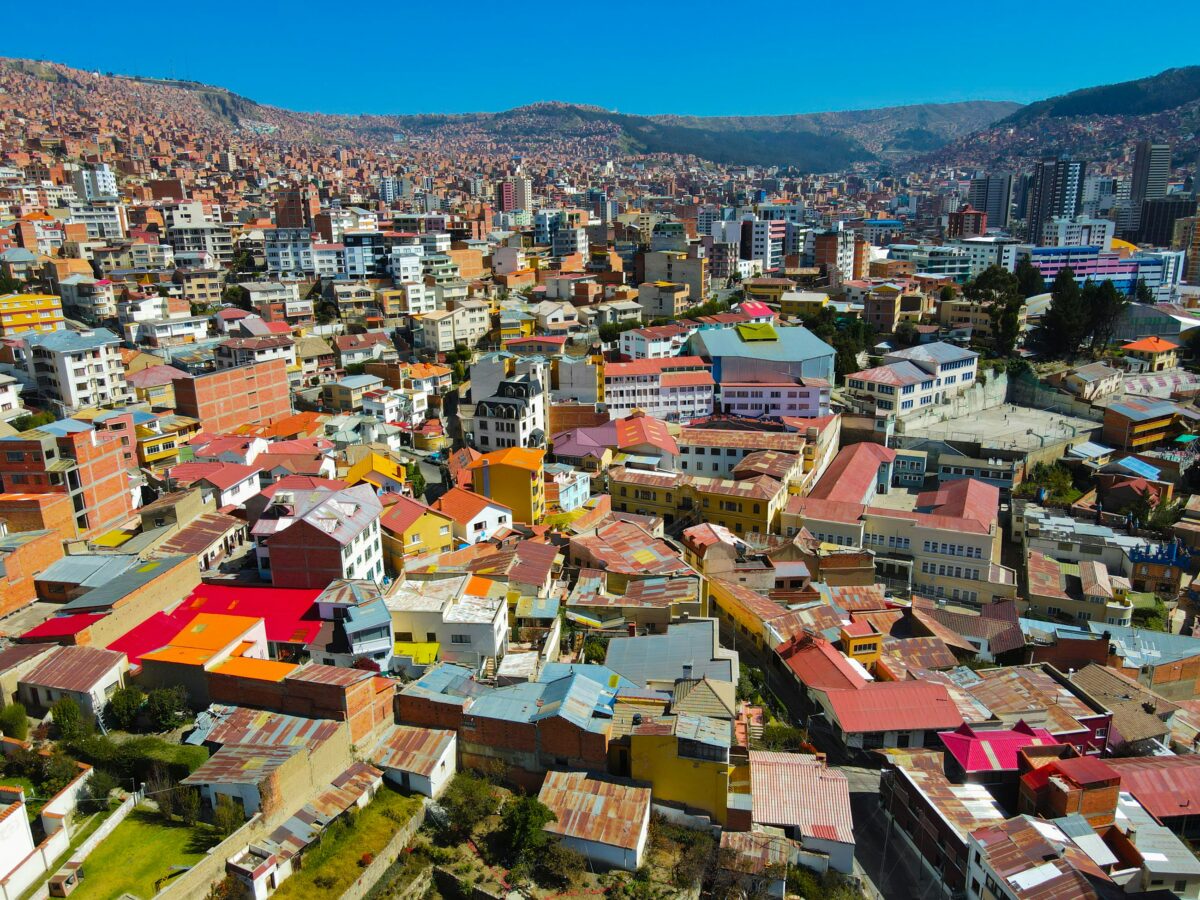
The new draft law on electricity and renewable energy, developed by the Ministry of Hydrocarbons and Energy, is entering its technical, legislative and public consultation phase, with anticipated changes to generation, transmission, distribution and regulatory frameworks.
From pv magazine Latam
Bolivia’s Ministry of Hydrocarbons and Energy has submitted the draft of the new Electricity and Renewable Energies Law to the Ministry of the Presidency, marking the start of a formal review process. The proposal will now pass through the Social and Economic Policy Analysis Unit (UDAPE), the National Economic Policy Council (CONAPE), and the Plurinational Legislative Assembly, followed by a public consultation phase involving social organizations, productive sectors and local communities.
The draft aims to reform the country’s electricity regulatory framework, which the government says has been affected by “structural deficits” over several decades, alongside limited private investment, inefficiencies in capital expenditure and operations, and declining service quality.
According to the ministry, the proposal maintains state-owned utility National Electricity Company (ENDE) as system operator but integrates it into a competitive framework alongside private-sector participants. It also opens the generation, transmission and distribution segments to private investment, subject to defined regulatory rules, long-term contracts and legal guarantees.
The draft further proposes the creation of an independent Energy Regulatory Entity (ERE) responsible for technical oversight, transparency and regulatory compliance. It also introduces competitive public auctions as a mechanism for price formation and for improving service delivery.
A key element of the proposal is the promotion of renewable energy, alongside the recognition of universal access to electricity as a fundamental right. The government also states that the new framework is intended to position Bolivia as a regional hub for electricity generation, grid interconnection and cross-border energy exchange.
With the submission of the draft, the technical and political review process ahead of legislative debate is now officially underway.
In February, the government of Bolivia has approved Supreme Decree 5549, amending the regulatory framework for distributed generation and formally creating a medium-scale distributed generation category for projects ranging from 1 MW to 6 MW. The decree modifies Supreme Decree 4477 and sets connection conditions for medium-voltage networks. It simplifies procedures by requiring authorization from the sector regulator without the need to obtain a generation concession.
Bolivia had around of 194 MW of operational PV capacity at the end of 2025, according to the latest statistics from the International Renewable Energy Agency (IRENA).
This content is protected by copyright and may not be reused. If you want to cooperate with us and would like to reuse some of our content, please contact: editors@pv-magazine.com.
Popular content
Source link