

The California legislature moved several high-profile clean energy bills through key fiscal committees before the final floor votes of the legislative session.
The legislative action comes as state energy prices continue to escalate. California electricity rates doubled over the past decade, driving interest in distributed generation, virtual power plants, and small-scale mobile hardware.
Several major bills advanced out of committee, while a data access bill stalled in the Senate.
Plug-in
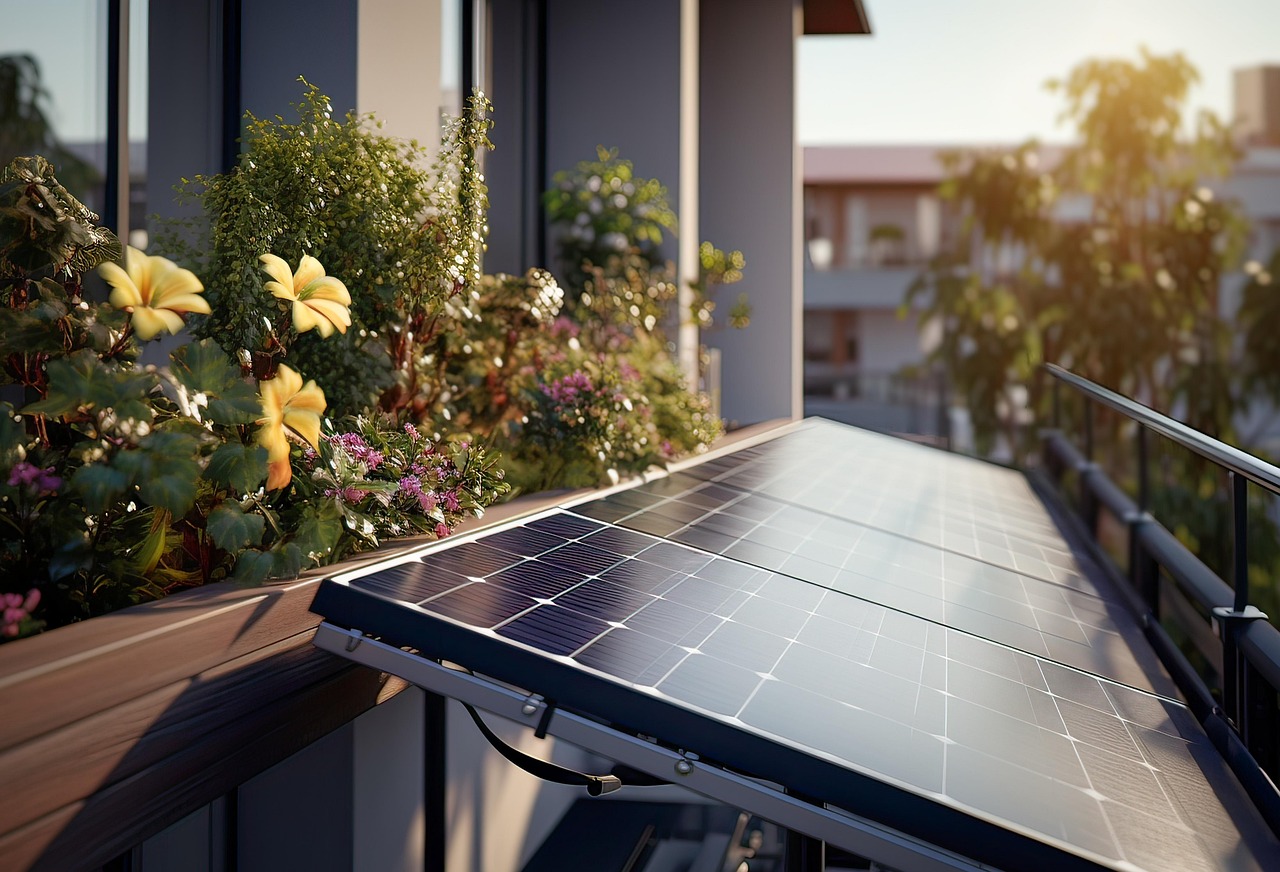
Senate Bill 868, authored by Senator Scott Wiener, advanced out of the Assembly Appropriations Committee and heads to the Assembly floor. The legislation clears regulatory hurdles for plug-in balcony solar systems up to 1,200 W. The bill allows residents to plug small systems into standard household outlets, bypassing traditional utility interconnection applications and local permits.
A single 400 W balcony system can cover roughly 14% of an average apartment’s electricity usage, saving about $250 per year, said analysis from Environmental Working Group. The bill sustained extensive amendments in committee that advocates are currently analyzing.
Community solar
Assembly Bill 1813, authored by Assemblymember Christopher Ward, passed out of the Senate Appropriations Committee and moves to the Senate floor. The bill reforms the state’s stalled community solar landscape by directing regulators to value community solar and storage using the California Public Utilities Commission’s Avoided Cost Calculator.
The calculator itself remains a focal point of industry debate. While rooftop solar installers criticized the CPUC’s use of the Avoided Cost Calculator under NEM 3.0 for slashing residential export credits, community solar advocates view applying the tool to front-of-the-meter projects as a necessary step forward. Under AB 1813, pairing solar with battery storage allows projects to discharge during peak evening hours, capturing the higher values defined by the calculator to make community solar financially viable.
A recent study from UCLA showed that the state built the calculator tool a decade ago but regulators refused to use it for community solar valuation, leaving projects without a workable compensation framework. Grid modeling from Aurora Energy Research indicates deploying 5.4 GW of community solar and storage over 20 years under this model would generate $6.5 billion in systemwide electricity cost savings.
San Diego Community Power and Peninsula Clean Energy endorsed the bill, dismantling the primary “cost shift” argument raised by investor-owned utilities. Utilities routinely claim that community solar bill credits shift grid maintenance costs onto non-participating customers. However, endorsement from two major Community Choice Aggregators, whose explicit mandate is to protect consumers from rising electricity costs, signals that the bill’s valuation model effectively protects non-subscribers while driving down systemwide rates.
Virtual power plants
Two Virtual Power Plant bills authored by Sen. Josh Becker advanced out of Assembly Appropriations. Senate Bill 913 requires the CPUC to establish a valuation framework for behind-the-meter battery storage systems exporting energy to the grid during peak stress. The bill pairs with a pending CAISO proposal that allows customer-sited batteries to qualify for Resource Adequacy based on their full export potential, rather than limiting valuation strictly to on-site load reduction.
“SB 913 is an important step because fleets of customer devices are currently only allowed to participate in the RA market to the extent those devices reduce the consumption of each individual customer,” said CALSSA Executive Director Brad Heavner. “By design, the change will ensure rate reduction because these resources would only be chosen in the market when they are available at lower cost than competing resources.”
Senate Bill 905 establishes a grid utilization metric to measure the load factor on distribution circuits, exposing where existing capacity can host additional load without physical grid expansion.
“Expanding the size of grid equipment to serve a small number of hours of higher usage wastes ratepayer dollars,” said Heavner. “Instead, we can get more out of the grid we already paid for by harnessing batteries and appliance controls in the hours when usage peaks.”
The VPP advances follow state lawmakers allocating additional funding to the Demand Side Grid Support program, extending participation through the 2026 season after available funds nearly ran out.
“Today’s votes in the Assembly Appropriations Committee are a big win for Californians,” said Brandon Garcia, California Director at Advanced Energy United. “SB 913 and SB 905 are about giving consumers more control over their energy use and making better use of the grid we already have. Californians think now is the time to get these smart, affordable solutions across the finish line, with 70% supporting the use of personal or community energy devices to lower bills and 51% supporting the state better managing the electricity it has to address electricity challenges.”
Smart meters
While four clean energy bills moved forward, Assembly Bill 1787 failed to pass out of the Senate Appropriations Committee. The bill would have required utilities to provide real-time smart meter data access to consumers.
“At the same time, it’s incredibly disappointing that the Senate Appropriations Committee failed to pass AB 1787,” said Garcia. “It’s reckless to leave consumers in the dark about how much energy they’re using and when they’re using it. 82% of voters agree and support utilities giving consumers access to their energy data, yet lawmakers just passed up an opportunity to give the voters what they want.”
The active bills face final floor votes in their respective chambers before heading to the governor’s desk.
Source link