


A family in Nashik installed rooftop solar panels. They did it to get away from the frequent power cuts of the summer. They thought the house would still work during blackouts because there was still sun light. Then in April, during a brutal heat wave the power went out and their home was plunged into darkness in seconds.
The confusion is alike for many homeowners across India. Demand for electricity is rising due to usage of air conditioners, overloaded transformers and storm-damaged power lines. At the same time, solar systems are becoming commonplace in homes and businesses.
However, most people do not know that standard solar systems usually fail during outages. The reason is system design. Some solar systems shut down automatically when the grid goes down. A few work without a hitch.
Do Solar Panels Work During a Power Outage?
The Short Answer: Usually No
Most solar-energised homes in India are connected to the local electricity grid. These houses transfer surplus electricity to the grid through net metering.
But when the utility supply fails, the solar system shuts down as well. It happens even during bright sunshine.
That surprises people because the panels themselves are still receiving sunlight. Technically, they can continue generating electricity. But the home cannot use that power directly once the system disconnects from the grid.
And that shutdown happens automatically.
Why Grid-Tied Solar Systems Shut Off
There’s an important safety reason behind this.
Imagine a heavy storm damages electric lines in Pune or Ahmedabad. Utility workers arrive to repair the problem. Before touching those wires, they assume the lines are dead because the grid has been switched off.
Now imagine nearby rooftop solar systems continue sending electricity into those same wires.
That becomes dangerous very quickly. Solar inverters have a safety feature to prevent this. It is called anti-islanding. During a grid failure, the inverter disconnects itself immediately. Electricity stops flowing.
Also Read :
What Happens to Solar Energy During a Blackout?
Here’s the odd part.
Your panels may still be producing electricity while your home remains completely dark.
But without battery backup or a hybrid inverter, the energy has nowhere useful to go. The inverter blocks power from entering household circuits once the grid connection disappears.
So the solar energy essentially becomes unusable during that period.
Can You Use Solar Power During a Power Outage?
Yes; But Only with the Right Setup
Now comes the part most homeowners actually care about.
You absolutely can use solar power during a power outage if your system is designed for backup operation. That usually means having battery storage along with a compatible inverter.
How Solar Batteries Keep the Power Running
Solar batteries store excess electricity generated during the day. It saves some inside the battery system for later use.
When a blackout happens, the inverter switches the house to battery power automatically.
In many homes, the transition feels almost instant.
Lights stay on. Fans continue spinning. Internet routers keep working.
But battery backup depends heavily on capacity. A small battery power only basic appliances for a few hours. Larger systems can power refrigerators, televisions, laptops, and several rooms overnight.
And battery technology has improved a lot recently. Lithium-ion batteries now last longer. They even charge faster, and occupy less space than older storage options.
What Is a Hybrid Solar System?
It combines three things together: solar panels, battery storage, and grid connectivity.
During daytime, solar energy powers the house. Extra electricity charges the batteries. If more energy is needed, the grid supplies the rest.
Then during a blackout, the system isolates itself safely from the utility network. It continues powering selected appliances using stored energy.
That flexibility is exactly why hybrid systems are gaining attention in India.
People still want lower electricity bills. But now they also want backup reliability during unpredictable outages.
Types of Solar Systems During Power Outages
Grid-Tied Solar Systems
These are the most affordable systems for urban homes. They work well for reducing monthly electricity costs through net metering.
But during a power outage, they usually stop functioning completely unless batteries are added separately.
So they save money, but they don’t automatically provide emergency power.
Off-Grid Solar Systems
They operate independently from utility supply and depend entirely on solar panels and batteries.
They are often installed in remote villages, farms, hilly regions, or locations where grid access remains unreliable.
But they require larger battery storage because there’s no electricity network available as backup.
Hybrid Solar Systems
Hybrid systems sit somewhere in the middle. They stay connected to the grid while also storing backup energy in batteries.
That balance makes them attractive for homes, offices, clinics, and small businesses that cannot afford interruptions during outages.
And demand for these systems is climbing steadily in many Indian cities.
How to Prepare Your Solar System for Outages
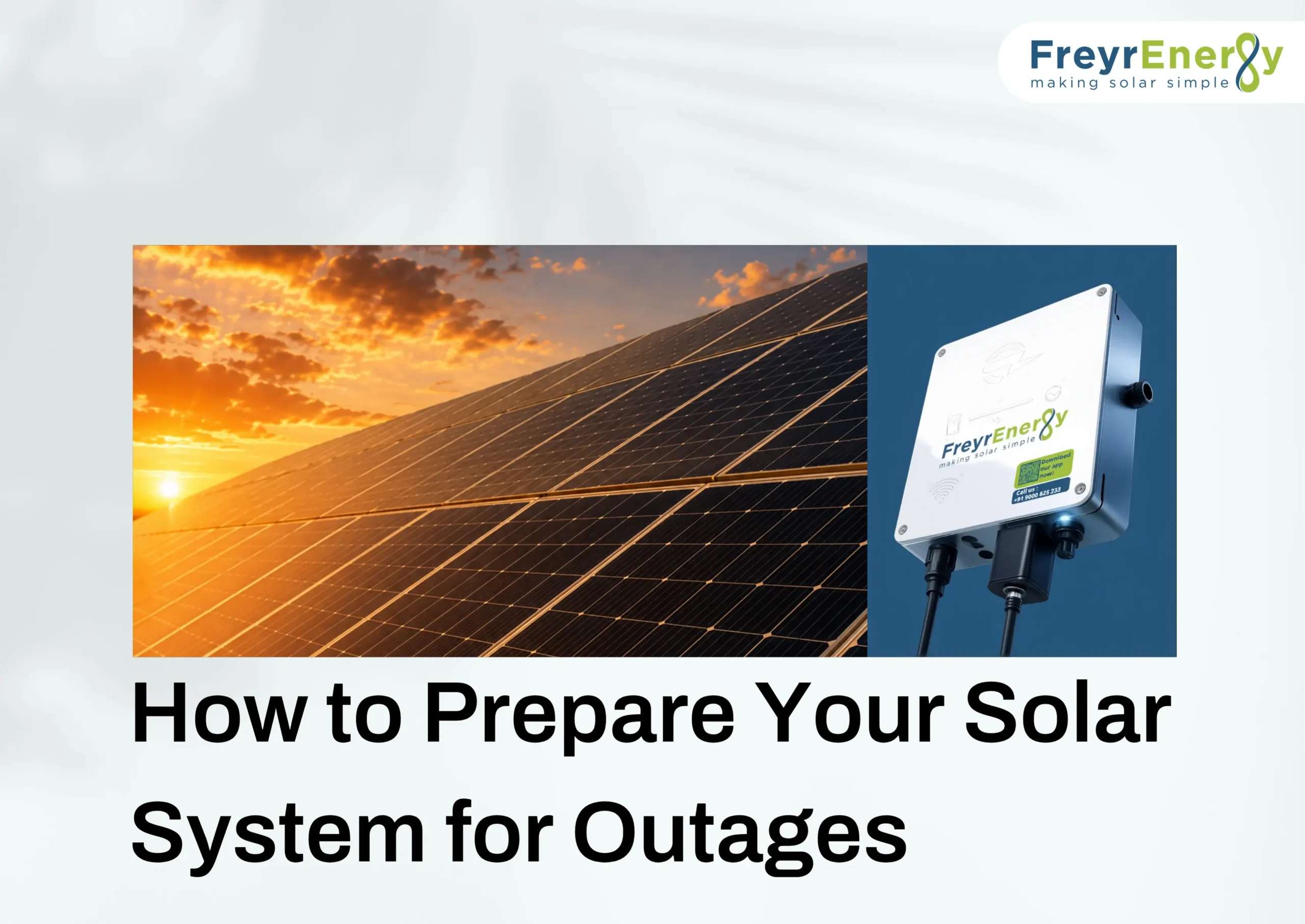
A hybrid inverter is usually the first thing needed for proper backup capability. Standard inverters often cannot continue operating safely during blackouts. Hybrid models are specifically designed to manage solar generation, battery storage, and grid interaction together.
Battery size matters too.
A household running only fans, lights, and Wi-Fi will need far less storage than a home trying to operate multiple air conditioners during an outage. So choosing battery capacity depends completely on daily energy habits.
Many homeowners now focus only on essential appliances during blackouts. Refrigerators, routers, lights, and ceiling fans generally receive priority. Heavy appliances are sometimes avoided to extend battery runtime.
Regular maintenance also helps keep systems reliable. Dust, aging batteries, or faulty wiring reduce performance over time. And in Indian weather conditions, rooftop dust buildup happens faster.
Solar Backup Trends in India
Solar backup systems in India are gaining popularity over the years.
Electricity demand keeps rising in urban India. Heatwaves push cooling requirements higher every summer. Work-from-home culture has also increased dependence on uninterrupted power supply.
Government subsidies for rooftop solar have encouraged adoption further. Net metering policies in many states help homeowners recover installation costs more quickly.
Battery prices are falling too.
That’s making solar-plus-storage systems more practical for middle-class households than they once were.
And people are beginning to see solar backup not just as a luxury, but as protection against unreliable electricity supply.
Conclusion
Solar panels alone usually can’t power a home when the power goes out. Most traditional grid-tied systems turn off when the electrical grid goes down.
But with the proper setup, solar power can definitely provide backup power during outages.
Hybrid inverters and battery storage mean homes can keep critical appliances running when buildings around them go dark. And with the cost of battery technology coming down and becoming more efficient, more homeowners are choosing systems that can deliver savings and energy security.
Because reliable electricity is just as important as affordable electricity these days