


Contributed by Jonás Rodríguez | Head of Renewables North America, RINA
Edited by Paul Gerke
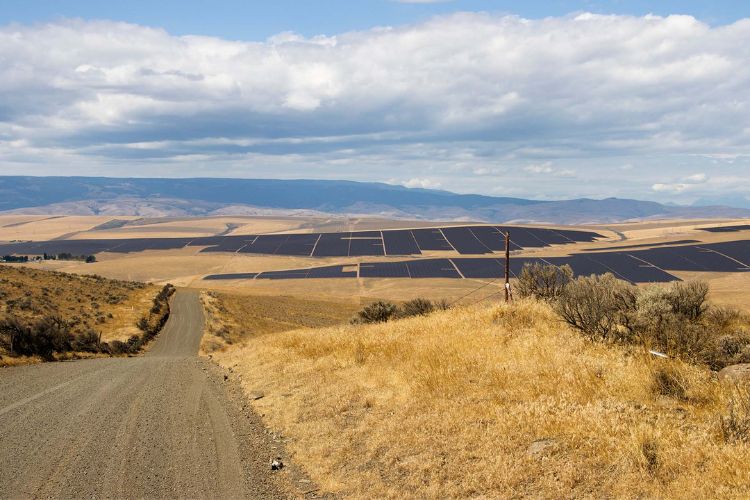
In central Washington, a significant shift is underway. Grant County, known for its access to transmission and favorable site conditions, is now the center of a new kind of energy demand, one driven by the needs of digital infrastructure. Utilities in the region are facing requests much larger than their current peak load. For developers, this creates urgency but does not remove complexity. Delivering large-scale renewable energy projects is about building reliable, dispatchable, and financeable solutions that can keep pace with demand. The Appledale Energy Center is a response to that challenge.
Global engineering consulting firm RINA was engaged by Hawthorne Renewable Energy to support the development of a planned 300 megawatt (MW) photovoltaic (PV) solar project combined with a 4-hour, 300 MW battery energy storage system (BESS). For large-load customers, such as data centers, the value of solar increases significantly when paired with storage. At full build-out, the project is designed to support both local grid needs and the growing load requirements tied to economic development in the region. However, achieving this vision requires navigating a development process that comes with uncertainty.
RINA’s scope consisted of a three-part technical study to inform early-stage development decisions, optimize the usable project area, establish a preliminary design basis, and quantify the expected energy performance of the PV facility.
Design Optimization
Initially, RINA performed a detailed design optimization exercise using topographic data, environmental constraints, permitting limitations, required setbacks, easements and other site-specific parameters. These inputs were incorporated into GIS-based tools to define the available development envelope, identify constrained areas and establish a preliminary fence line for the site. A key design requirement was compliance with Grant County’s slope limitations, which required the project layout to maintain an average slope below a predetermined value.
Once the usable area was identified, RINA used specialized PV design software and internal engineering tools to evaluate multiple layout iterations and optimize the site for DC capacity. This process considered both civil and electrical constraints, including terrain limitations, block configuration, equipment placement, and applicable electrical design limits. Through this iterative process, and following client approval, RINA identified a preliminary optimized configuration with an estimated DC capacity of approximately 400 MWp.

Preliminary Layout
Building off the results of the design optimization phase, RINA developed a preliminary project layout that translated the development envelope into a more detailed conceptual design. This layout included the placement of PV module blocks, inverter and transformer stations, internal access roads and reserved areas for the BESS facility, plus a project substation near the point of interconnection. The layout was developed with consideration of key site constraints and the need to maintain practical constructability.
Particular attention was paid to how site grading limitations and easement locations influenced the routing of internal roads, the placement of power conversion equipment and the overall arrangement of PV array blocks. The resulting preliminary layout provided the client with a technically informed basis for further project planning and evaluation of the site’s achievable capacity.
Energy Yield Assessment
Following approval of the preliminary layout, RINA completed a bankable energy yield assessment for the finalized preliminary design. The assessment was performed using RINA’s established bankable methodology and incorporated the principal technical inputs relevant to the project’s expected production profile. These included site-specific solar resource data, local irradiation conditions, project topography, selected module quantities and configuration, shading considerations, system losses and expected bifacial gain.
RINA modeled the PV system to estimate the project’s long-term energy production and associated uncertainty. The final deliverable consisted of a comprehensive report presenting the expected annual energy yield, as well as P75 and P90 probability of exceedance values. This provided the client with a bankable estimate of performance to support continued development and financing considerations.

Additional Parcel Evaluation
Following completion of the initial study, RINA evaluated additional parcels located around the existing project boundary. The purpose of this was to support the client’s assessment of whether acquiring adjacent parcels could increase the overall project capacity and improve development flexibility. RINA applied the same general methodology from the original optimization phase, including review of topographic conditions, environmental and permitting constraints and other site-specific limitations.
For each additional parcel, RINA identified the usable development area and estimated the incremental DC capacity. Once this was assessed, RINA prepared an updated overall energy yield study incorporating the potential expanded project footprint, providing the client with a clear understanding of the technical value of the surrounding parcels.
Geotechnical Survey
RINA also conducted a high-level assessment of existing geotechnical proposals to evaluate their adequacy, completeness, and alignment with project needs, including field methodologies, such as borehole depth, quantity and testing standards. Based on this review and discussions with the client, RINA developed a recommended, phased geotechnical scope of work—along with a supporting comparison tool—to guide the solicitation of revised bids from contractors with the overall objective of helping the client manage geotechnical risks and make informed procurement decisions.
Equipment Inspection
Finally, RINA delivered a comprehensive program of technical due diligence and manufacturing inspection support for transformers. This confirmed that the transformer designs were robust and generally aligned with project requirements, while proactively identifying technical gaps, specification deviations and commercial considerations that could impact performance, cost or schedule. In parallel, RINA executed factory inspections, verifying fabrication quality, compliance and effectiveness of manufacturing and quality control processes. By combining high-level engineering assessment with on the ground inspection capability, RINA de-risked procurement decisions and strengthened confidence in equipment delivery.
Future Impact
RINA partnered with Hawthorne Renewable Energy to build a sound technical foundation for the Appledale Energy Center. Acting as a trusted technical advisor, RINA translated data into actionable insights. This collaborative approach ensures the project can confidently meet investor, regulatory, and offtaker expectations across all development stages while fully maximizing site potential.
The project targets full operation by 2028 and is expected to generate over 650 GWh annually, the equivalent of powering more than 50,000 Washington households.
About the Author

Jonás Rodríguez has served as Head of Renewables North America at RINA since June 2025. With over 12 years of experience in the renewable energy sector, he has held a variety of technical and commercial roles, having worked for technical advisors, developers, and wind turbine manufacturers in LATAM, Europe, and Asia.
He joined RINA in 2022, prior to being promoted to his current role, he acted as Project Manager of Technical Due Diligence for wind and solar projects, as well as permitting, contract and financial model reviews. Previously, he was part of a Spanish developer, IPP, and EPC contractor, supporting the growth of the C&I solar PV EPC business and technical consulting services for wind and solar projects. Jonas also worked for a technical advisory firm in LATAM, where he played a strong role in sales and business development, as well as building extensive technical expertise in wind resource and energy yield assessments. In addition, Jonas completed an internship with a leading Chinese wind turbine manufacturer early in his career.
Jonas has collaborated with clients such as Acciona Energia, AES, Akuo, Aquila, Celsia, EBRD, EDF, EDPR, Enel, Ferrovial Energia, GIZ, Iberdrola, IDB, LSBP, Recurrent, RWE, Sonnedix, SUSI Partners, and Ventient. He holds a bachelor’s degree in Mechanical Engineering from Universidad de La Laguna and a master’s degree in Environmental and Energy Engineering from the University of Sheffield. Jonas is fluent in both English and Spanish.
Source link