

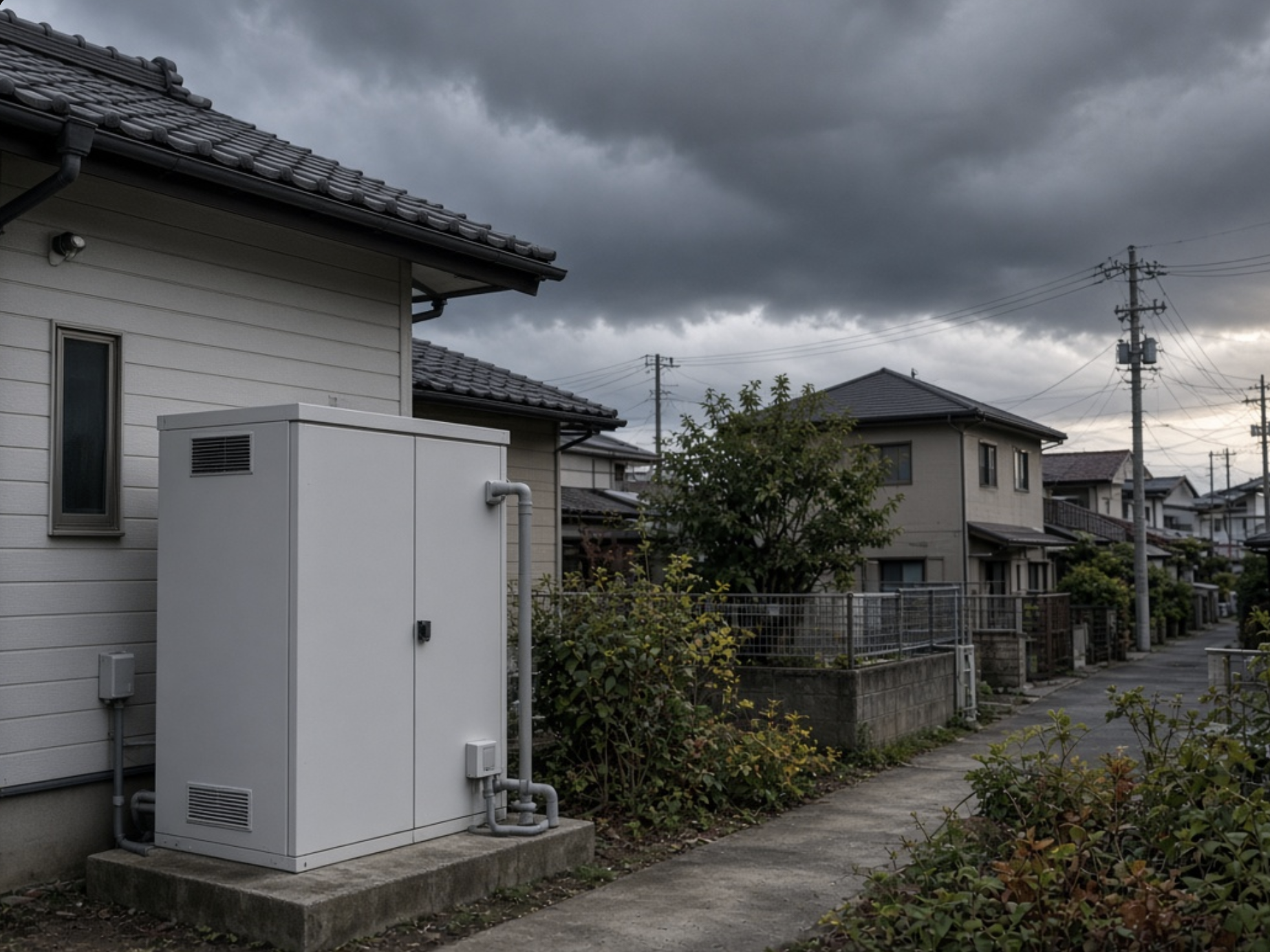
Only 19% of respondents to an August survey by iChoosr, a Japanese solar and battery group-purchasing platform, named disaster resilience as their reason for considering solar panels or home batteries, compared with 48% who cited reducing their electricity bills, the company said. The respondents were asked to select a single primary reason.
The survey covered 14,478 people across 24 prefectures who registered interest in installing solar panels or batteries through iChoosr’s “Minna no Ouchi ni Taiyoko” (“Solar for Everyone’s Home”) program between Feb. 25 and July 23. iChoosr said the results indicate that financial considerations are cited more often than disaster preparedness among respondents.
The finding comes as Japan’s original wave of residential feed-in tariff (FIT) contracts, which guaranteed fixed export payments for 10 years, continues to expire. The transition has also reshaped Japan’s utility-scale solar market as legacy FIT projects approach expiry and owners reassess revenue strategies. The Ministry of Economy, Trade and Industry (METI) said approximately 530,000 residential solar installations, representing roughly 2 GW of capacity, left the FIT scheme in November and December 2019 alone.
Once a household’s FIT contract ends, export compensation typically falls well below the retail price of electricity, making it more economical for many households to store and consume their own solar power rather than sell it back to the grid, even as Japan’s residential solar demand continues to grow.
Other recent Japanese surveys have also found cost-related motivations ranking ahead of resilience among battery buyers and prospective buyers. A poll published in March by Goodfellows, a Japanese solar and battery marketplace operator, found that 51.9% of existing solar owners considering a battery cited electricity savings in 2025, up from 39.3% in 2022, while the share citing emergency power stayed close to 30% over the same period. A separate 2025 survey by ECODA, a Japanese residential solar and battery installer, found that 76% of respondents expected solar and battery systems to reduce electricity costs, against 49.1% who expected them to provide power during disasters. However, these surveys used different methodologies and sampled different populations, meaning their findings are not directly comparable to iChoosr’s results or to each other.
Resilience concerns in Japan trace in part to Typhoon Faxai, which made landfall in eastern Japan on Sept. 9, 2019. METI reported peak outages of approximately 930,000 households across the Tepco service area, including approximately 637,100 in Chiba prefecture, and Tepco said some households continued to rely on power-supply trucks and generators for weeks after the storm as repair crews worked to clear storm damage. A survey of 486 residential solar owners affected by the storm, conducted by the Japan Photovoltaic Energy Association (JPEA) and later cited by METI, found that 79.8% reported using their system’s independent-operation function to keep essential appliances such as refrigerators and lighting running during the outage.
iChoosr’s program pools demand from participating households so installers can bid competitively for the resulting volume, a model the company says lowers costs compared with individual, one-off installations. The company reports more than 110,000 cumulative household registrations in Japan since 2019 and says it has facilitated more than 10,000 installations, though it did not specify what share of registered households went on to install a system.
Japanese utilities are also beginning to draw on residential batteries for grid balancing rather than treating them purely as a household backup or self-consumption tool. Kyushu Electric Power has run a demonstration project using Sharp home batteries, remotely coordinating charging during periods of high solar output and discharging during tighter-supply periods. Industry analysts expect Japan’s residential, commercial and industrial storage markets to keep expanding as the country builds out a national virtual power plant (VPP) program, adding a further revenue stream and dispatch use case for battery-owning households beyond the FIT-driven economics described in the iChoosr survey.
Source link