


June 30, 2026
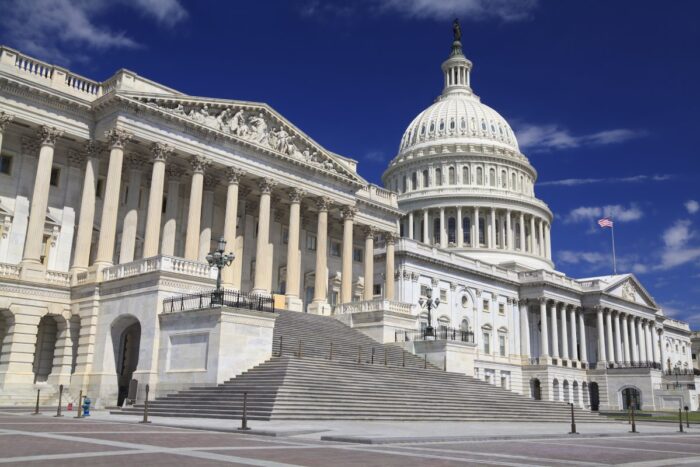
A new reports highlights how federal policies are putting more than $121 billion investment in renewable energy at risk, with solar facing the most exposure.
According to a new analysis from Wood Mackenzie, permitting changes and federal funding withdrawals directly contributed to 7 GW of project cancellations or inactivity on federal lands in 2025. Meanwhile, heightened federal oversight could expose an additional 12 GW on federal lands and 80 GW on private lands.
“Permitting risk varies by technology, though permitting for wetland areas remain the primary constraint across solar, wind and energy storage,” says Kaitlin Fung, senior research analyst at Wood Mackenzie. “Wetlands account for the majority of private land exposure, with risk concentrated in Oregon, Alabama, Maine, Minnesota and Montana.”
According to the report, “Federal Friction: Permitting Risk Across the U.S. Utility-Scale Renewables Pipeline,” a Department of Interior (DOI) memorandum issued on July 15, 2025, centralized federal review across nearly all wind and solar projects, introducing a multi-step approval process that extends permitting timelines and increases scrutiny for any project involving a federal agency.
“Since 2025, dozens of gigawatts of early-stage capacity have been cancelled or stalled across solar, wind and energy storage,” Fung says. “However, it’s important to note that not all cancellations are due to permitting challenges. Some also stem from supply chain constraints and tighter financing conditions.”
The analysis indicates that solar has the largest absolute exposure, with 30% of its pipeline at risk of additional review. Energy storage is also significantly impacted, as more than one-quarter of planned capacity faces heightened permitting scrutiny.
Following the implementation of the DOI permitting rules, 32% of the early-stage project pipeline is now subject to additional federal review. Early-stage projects include those that are announced, under development, or already permitted.
Projects scheduled for 2029 account for the largest volume of capacity at risk of additional review on federal lands, which could jeopardize their tax credit eligibility. Exposure is highest in Texas, followed by California and Arizona, where concentrated federal oversight may delay commercial operation dates beyond planned timelines.
Policy developments offer potential relief
The policy landscape is actively evolving and Wood Mackenzie is monitoring developments on two fronts that could materially affect the outlook.
In April 2026, a federal court issued a preliminary injunction blocking agency actions that imposed new restrictions and expanded review requirements for wind and solar projects, finding them likely unlawful under the Administrative Procedure Act. While the injunction does not resolve broader permitting bottlenecks, it limits further disruption and underscores the need for more coordinated and predictable federal permitting processes.
Separately, the Simplifying Permitting and Ending Endless Delays (SPEED) Act, approved by the House in December 2025 and currently awaiting Senate and Executive approval, proposes to narrow the scope of environmental reviews, reduce duplication across agencies and introduce stricter timelines for permitting decisions. If enacted, the SPEED Act could meaningfully reduce permitting timelines for infrastructure projects, including renewable energy development.
“Permitting remains one of the most critical barriers to advancing new projects, and without more coordinated and predictable processes, delays and uncertainty will continue to weigh on development timelines and investment decisions” says Gaby Ackermann Logan, research associate at Wood Mackenzie. “For storage in particular, where development is often tied to solar, permitting uncertainty has a compounding effect. The policy landscape is shifting quickly, and developers who can anticipate where the friction points are will be better positioned to protect their timelines and maintain project bankability.”
Tags: market research, policy, utility-scale, Wood Mackenzie
Source link