

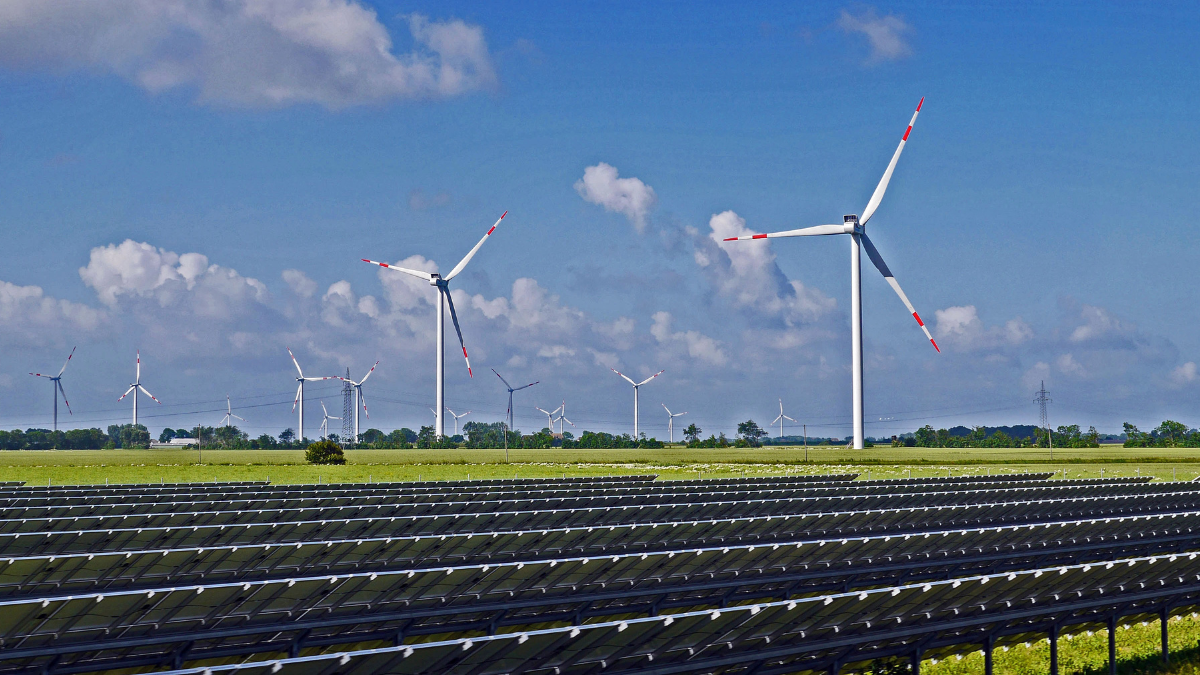
The Mediterranean region has 552 GW of utility-scale solar and wind capacity announced or under development, with an estimated investment requirement of $792 billion, according to data from the Global Integrated Power Tracker.

The prospective capacity is higher than the 548.3 GW of planned capacity across all generation sources in the United States.
Of the Mediterranean’s total prospective renewable capacity, 361.3 GW is targeted to become operational by 2030. If realised, this would increase the region’s operating wind and solar capacity by 43%, from 251.6 GW. Wind and solar currently account for around one-third of the region’s power mix.
Despite the scale of planned projects, the capacity currently under development remains insufficient to meet the region’s clean energy targets. Governments across the Mediterranean have introduced policies, programmes and strategies aimed at accelerating the energy transition, with grid infrastructure, investment and permitting identified as key challenges.
Spain leads the region in prospective utility-scale solar capacity, with 108.8 GW, and ranks third in prospective wind capacity at 56.5 GW. Its renewable energy expansion is also delivering consumer benefits, with the average household estimated to save around EUR 10 per month on electricity bills.
Meanwhile, Egypt is emerging as a major renewable energy market in Southwest Asia and North Africa, with nearly 100 GW of prospective wind and utility-scale solar capacity under development. Green hydrogen is a significant driver, with 37.7 GW of renewable capacity linked directly to green hydrogen applications.
Hailey Deres, Senior Researcher at Global Energy Monitor, said the region has already made significant progress in its energy transition but highlighted grid infrastructure, investment requirements and permitting as factors that will determine how much of the planned renewable capacity is ultimately built.
Discover more from SolarQuarter
Subscribe to get the latest posts sent to your email.
Source link