


June 23, 2026
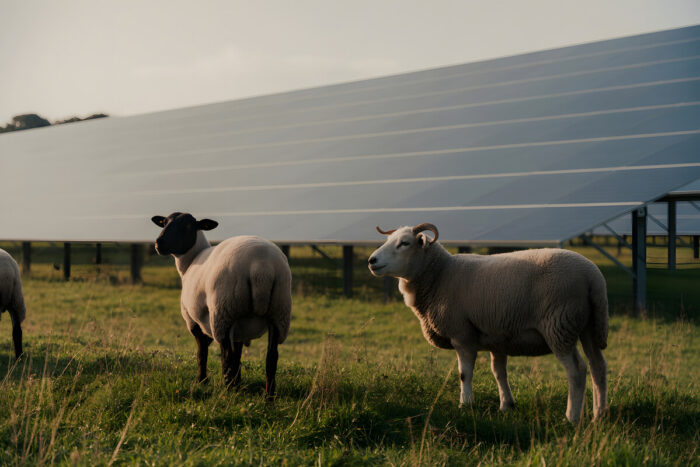
Virginia Gov. Abigail Spanberger has signed SB 340/HB 508, officially defining the term “agrivoltaics” in the law code of the Old Dominion, and paving the way for further solar farming projects across the region.
Taking place at the Piedmont Environmental Council’s (PEC) Community Farm at Roundabout Meadows, Virginia’s first crop-based agrivoltaics project, the bill is “critically important” to Virginia’s energy future. The bill is one of 12 PEC-backed energy bills that have been signed into law.
Officials from the PEC add that alongside shaping Virginia’s renewable energy for years to come, agrivoltaics can help more Virginians achieve energy independence.
“The topic of agrivoltaics is one that has been top of mind for me for years,” Spanberger says, “because it has always been a question of how is it that we can ensure that our communities–and importantly our farmers–have the ability to keep land in production, but also the option to leverage the technology that can help them offset their on-farm costs and also allow them to be leaders. By establishing clear enforceable definitions of agrivoltaics and code of Virginia, we are protecting farmers.
“We are making clear that the use of agrivoltaics prioritizes agricultural productivity, keeps land in production for the life of the solar array and is part of an existing farm business.”
Prior to June 17, the commonwealth had lacked an official definition of the term “agrivoltaics.” Not only does the new statewide definition boost visibility and incentive structures for these projects, but it safeguards against poorly designed and constructed projects in the future.
Development for the future
Now defined in Virginia as “intentional co-location of agricultural production and solar energy generation,” agrivoltaics projects in the region must also meet a number of criteria, according to the state government. Agrivoltaics projects must prioritize and sustain agricultural growth, allow production and sale of agricultural products, be part of an existing farm business, and allow those farmers to be flexible to market conditions and operational needs.
The PEC’s farm, located in northeastern Virginia’s Stone Ridge, can serve as a blueprint for projects of its ilk going forward, according to Ashish Kapoor, PEC’s senior energy and climate advisor.
“Behind me, you can see kale, lettuce, beets, broccoli, garlic and more, growing under solar panels that are generating energy to reduce this farm’s electricity bill. In fact, we have had no electric bill this year,” Kapoor said during the ceremony. “This site provides a model for other farms in Virginia, and we hope farmers who want to achieve more energy independence will consider integrating solar energy production into their crop production.”
The newly signed bill also provides a “critical foundation” to potential stakeholder groups in Virginia going forward, according to the PEC. The bill will be able to provide guidance in other solar-related areas as well, as Virginia — currently ranked ninth in the Solar Energy Industries Association’s Solar State by State rankings — continues to climb higher.
“Virginia has 39,000 farms,” Kapoor says. “If ten percent of those farms installed an agrivoltaics project that produced just 1 megawatt of power on a few acres, we could produce the equivalent power of four nuclear power plants.”
Tags: agrivoltaics, policy, solar farm, Virginia
Source link