

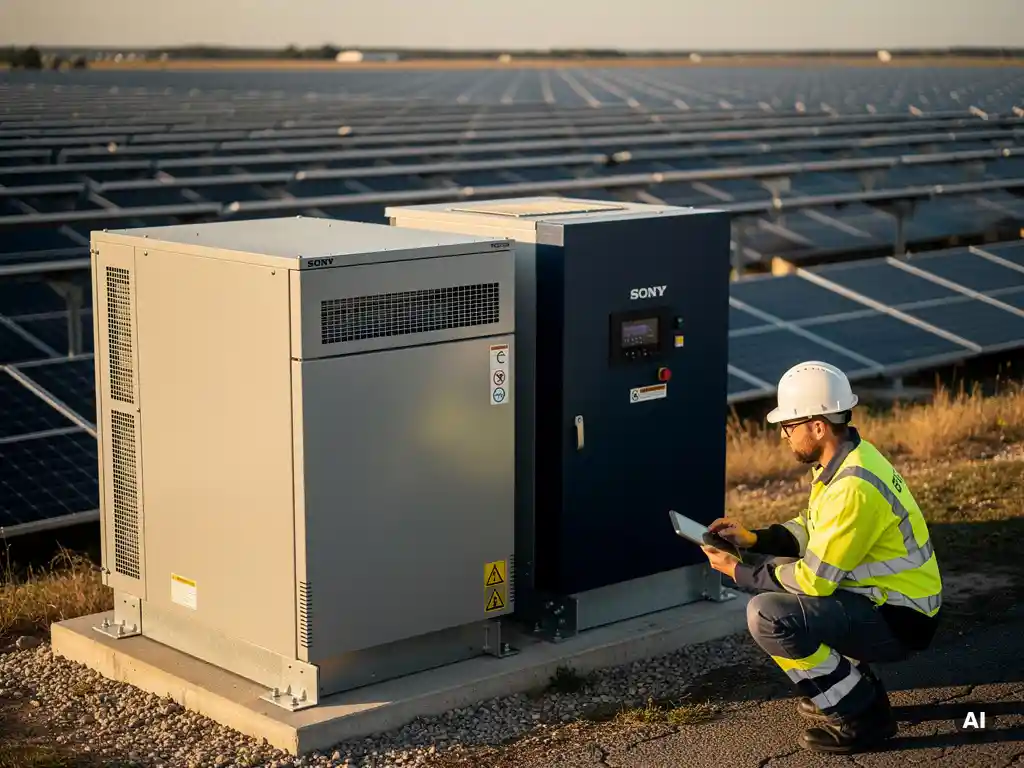
Yes, adding battery storage does affect DC/AC ratio calculations, but the extent of that impact depends on how the battery system is coupled to the inverter. AC-coupled systems leave the existing inverter sizing largely unchanged, while DC-coupled systems integrate the battery directly into the inverter’s power flow, which can meaningfully shift how you approach clipping, oversizing, and dispatch strategy. If you are designing or retrofitting a system with storage, the coupling architecture is the first decision that determines whether your DC/AC ratio needs to be revisited from scratch.
Does adding battery storage change the DC/AC ratio?
Adding battery storage can change the DC/AC ratio, but it does not always require a complete recalculation. The key variable is how the battery connects to the system. In AC-coupled configurations, the solar inverter operates independently of the battery, so the DC/AC ratio for the PV array remains the same. In DC-coupled systems, the battery shares the inverter’s capacity, which directly affects how you size the inverter and calculate the ratio.
Beyond the coupling type, battery dispatch strategy also plays a role. A battery that absorbs clipped energy during peak irradiance hours changes the effective energy loss profile of an oversized array, which in turn affects whether your original DC/AC ratio remains optimal. In short, storage does not automatically invalidate your existing calculations, but it introduces new variables that deserve a careful review before you finalize any design.
What is the difference between AC-coupled and DC-coupled battery systems?
In an AC-coupled battery system, the solar inverter converts DC power from the panels to AC, and a separate battery inverter then converts that AC power back to DC to charge the battery. In a DC-coupled system, the battery connects on the DC side of the main inverter, meaning both the solar array and the battery share a single inverter to convert power to AC. This architectural difference has significant downstream consequences for inverter sizing and DC/AC ratio decisions.
AC-coupled systems
AC-coupled systems are popular for retrofits because they can be added to an existing solar installation without replacing the original inverter. The solar inverter and the battery inverter each have their own power ratings, so the DC/AC ratio for the PV array is calculated against the solar inverter alone. The trade-off is round-trip efficiency loss, since energy is converted from DC to AC and back to DC before being stored.
DC-coupled systems
DC-coupled systems use a hybrid inverter that manages both the solar input and the battery charge/discharge in a single unit. Because the battery and the PV array both feed through the same inverter, the inverter’s AC output capacity must accommodate the combined power flows. This is where DC/AC ratio calculations become more complex, and where engineers need to think carefully about inverter sizing to avoid bottlenecks during simultaneous solar generation and battery discharge.
How does a DC-coupled battery affect inverter sizing?
In a DC-coupled system, the hybrid inverter must handle power from both the solar array and the battery simultaneously. This means the inverter’s rated AC output capacity can become a limiting factor if the combined peak output of the array and the battery exceeds it. Engineers need to account for the maximum battery discharge rate alongside the solar array’s peak DC output when sizing the inverter, rather than sizing purely against the PV array alone.
For example, if your solar array has a peak DC output of 120 kW and your battery system can discharge at 30 kW, a hybrid inverter rated at 100 kW AC could be undersized during periods when both sources are delivering power simultaneously. In practice, many system designers either upsize the inverter to accommodate combined peak flows or set battery dispatch limits to prevent simultaneous peak output from both sources. The right approach depends on the project’s load profile, grid export limits, and the specific hybrid inverter’s operating logic.
It is also worth noting that some hybrid inverters have separate maximum input ratings for the PV string input and the battery port, which adds another layer of constraint to the sizing exercise. Always verify the inverter’s datasheet for both the AC output limit and the DC input limits before finalizing your design.
What DC/AC ratio is recommended for battery storage systems?
There is no single universal DC/AC ratio recommendation for battery storage systems, because the optimal ratio depends on the coupling architecture, the battery’s dispatch strategy, and the project’s energy goals. For AC-coupled systems, the DC/AC ratio for the PV array is typically calculated the same way as a standalone solar system, often in the range of 1.1 to 1.4 depending on location and irradiance profile. For DC-coupled systems, the effective ratio needs to account for how the battery modifies the inverter’s loading.
In DC-coupled designs where the battery can absorb clipped energy, some engineers argue that a higher DC/AC ratio becomes more justifiable. If the battery captures power that would otherwise be lost to clipping, the economic case for a more aggressively oversized array improves. However, this logic only holds if the battery has sufficient capacity and charge rate to absorb that clipped energy consistently, and if the inverter’s thermal limits and warranty conditions allow sustained operation near its ceiling. Oversizing beyond what the battery can realistically absorb still results in genuine energy loss, not storage gain.
As a practical starting point, most experienced engineers working with DC-coupled storage systems stay within a DC/AC ratio of 1.1 to 1.5, adjusting upward only when detailed energy modeling confirms that the battery dispatch profile justifies the additional array capacity.
How does battery dispatch strategy affect clipping losses?
Battery dispatch strategy affects clipping losses by determining whether excess DC power that would normally be clipped by the inverter is instead redirected to charge the battery. In a DC-coupled system where the battery is set to charge aggressively during peak irradiance hours, clipping losses can be significantly reduced because the inverter’s effective load increases to include battery charging alongside AC output. This changes the energy loss profile of an oversized array in a meaningful way.
In an AC-coupled system, the solar inverter still clips at its rated AC output regardless of the battery’s state of charge, because the battery connects on the AC side and does not increase the inverter’s DC input capacity. Clipping losses in AC-coupled systems are therefore not reduced by the battery’s presence, even if the battery is actively charging from the grid or from clipped AC power through its own inverter.
The practical implication is that dispatch strategy matters most in DC-coupled systems. If the battery is programmed to prioritize self-consumption or time-of-use arbitrage rather than peak shaving during solar generation hours, it may not be available to absorb clipped energy when it matters most. Engineers should model the battery’s state of charge during peak irradiance periods and align the dispatch logic with the array’s clipping profile before assuming that storage will meaningfully reduce clipping losses.
Should DC/AC ratio calculations be redone when storage is added to an existing system?
Yes, DC/AC ratio calculations should be reviewed and often redone when battery storage is added to an existing system, particularly if the storage is DC-coupled. Adding a DC-coupled battery to an existing installation typically requires replacing the original inverter with a hybrid inverter, which introduces a new set of power ratings and constraints that the original DC/AC ratio calculation did not account for. Even in AC-coupled retrofits, it is worth revisiting the original ratio to confirm it still reflects the system’s current performance goals.
When reviewing an existing system’s DC/AC ratio for a storage retrofit, the key questions to work through are:
- Is the new inverter (or existing inverter in AC-coupled cases) rated to handle the combined peak output of the array and the battery?
- Does the battery’s maximum charge rate create any new DC input constraints at the inverter?
- Has the project’s energy objective changed, for example from maximizing yield to maximizing self-consumption or grid services?
- Does the battery dispatch strategy affect the clipping profile enough to justify a different array-to-inverter ratio?
- Are there grid export limits that now cap the inverter’s AC output, effectively changing the optimal DC/AC ratio?
Working through these questions systematically prevents the kind of late-stage design errors that surface during commissioning and are expensive to correct. Tools that automate inverter sizing and flag constraint violations as you design can significantly reduce the risk of overlooking these interactions. Our solar design software is built specifically to handle these kinds of multi-variable engineering decisions within the CAD environment engineers already work in, so recalculations triggered by design changes do not require starting over from scratch.
If you are planning a storage retrofit or designing a new system with battery integration and want to make sure your DC/AC ratio is optimized for the full system architecture, get in touch with our team to discuss how automated design tools can support your workflow.
Frequently Asked Questions
Can I use a higher DC/AC ratio in a DC-coupled system than I would in a standalone solar system?
Yes, a slightly higher DC/AC ratio can be justified in a DC-coupled system, but only when detailed energy modeling confirms that the battery has enough capacity and charge rate to consistently absorb the additional clipped energy. Simply having a battery present does not automatically make a higher ratio economically sound. The battery’s state of charge during peak irradiance hours, its maximum charge rate, and the inverter’s thermal limits all need to support the decision before you push the ratio above what you would use for a standalone array.
What are the most common mistakes engineers make when sizing inverters for DC-coupled battery systems?
The most common mistake is sizing the hybrid inverter against the PV array alone and overlooking the battery’s maximum discharge rate, which can result in an undersized inverter that bottlenecks combined peak output. A second frequent error is ignoring the inverter’s separate DC input limits for the PV string port and the battery port, which are often different from the AC output rating. Always cross-reference the inverter datasheet for all three constraints — AC output, PV DC input, and battery DC input — before finalizing any design.
Does grid export limiting affect the optimal DC/AC ratio when battery storage is involved?
Yes, grid export limits can significantly change the optimal DC/AC ratio, especially in DC-coupled systems. When a grid operator caps the inverter’s AC output, the effective ceiling on exported power is lowered, which changes how much array oversizing makes economic sense. In these scenarios, a battery that absorbs excess generation for later self-consumption or time-of-use arbitrage can partially offset the lost export revenue, but the DC/AC ratio should still be modeled against the actual export cap rather than the inverter’s full rated output.
How do I know if my existing solar inverter is compatible with an AC-coupled battery retrofit?
Compatibility depends on whether the battery inverter and the existing solar inverter can communicate and operate stably on the same AC bus, which varies by manufacturer and firmware version. Some battery systems use frequency-shift power control to signal the solar inverter to curtail output when the battery is full, and not all solar inverters support this protocol. Check the battery manufacturer’s compatibility list for your specific solar inverter model, and confirm that both devices support the same grid-forming or grid-following standards required by your local utility.
What software or modeling tools should I use to verify DC/AC ratio decisions in a system with battery storage?
Energy simulation tools that model hourly or sub-hourly dispatch — such as PVsyst with battery modules, SAM (System Advisor Model), or dedicated solar design platforms with integrated storage modeling — are essential for verifying DC/AC ratio decisions in storage systems. The key is using a tool that models the battery’s state of charge dynamically throughout the year, not just at peak conditions, so you can see how often the battery is actually available to absorb clipped energy. Tools that integrate inverter constraint checking directly into the design workflow, like purpose-built solar CAD platforms, further reduce the risk of overlooking multi-variable interactions during the design phase.
If the battery is fully charged during peak irradiance hours, does clipping loss increase in a DC-coupled system?
Yes, if the battery reaches full state of charge during peak irradiance hours in a DC-coupled system, the inverter loses the additional load that battery charging was providing, and clipping losses increase accordingly. This is why dispatch strategy and battery sizing need to be aligned with the array’s clipping profile — a battery that fills up by mid-morning offers little clipping mitigation during the afternoon peak. Modeling the battery’s typical state of charge across representative days in your location, rather than assuming it is always available to absorb excess power, gives a much more accurate picture of real-world clipping losses.
Are there any warranty or thermal considerations when running a hybrid inverter near its rated ceiling in a DC-coupled system?
Yes, sustained operation near a hybrid inverter’s rated AC output ceiling can trigger thermal derating, where the inverter automatically reduces output to protect internal components, effectively lowering your system’s real-world performance below what the nameplate rating suggests. Some manufacturers also have warranty conditions that restrict the percentage of time the inverter can operate above a certain load threshold. Always review the inverter’s derating curves in the datasheet and factor thermal derating into your energy model, particularly in high-irradiance climates where simultaneous peak solar and battery discharge is most likely to occur.
Related Articles
This content was generated with the help of AI — it may contain mistakes
Source link