


Heatwaves are becoming more frequent and intense across India. Cities like Delhi, Jaipur, Nagpur, and Ahmedabad regularly experience extremely high temperatures during summer months, increasing pressure on electricity demand across homes, businesses, and industries.
A heatwave is generally a prolonged period of unusually high temperatures, often combined with dry weather conditions. In recent years, rising temperatures and changing climate patterns have made heatwaves more severe across many parts of the country.
At the same time, solar energy adoption is growing rapidly in India. Rooftop solar systems are now common on residential buildings, commercial properties, factories, schools, and warehouses.
This raises an important question:
Do solar panels perform better during heatwaves because of stronger sunlight, or does excessive heat reduce their efficiency?
The answer is both.
Longer summer days and clear skies help improve solar generation. However, extremely high temperatures can also reduce panel efficiency and affect other solar components over time.
Do Solar Panels Generate More Electricity During Summer?
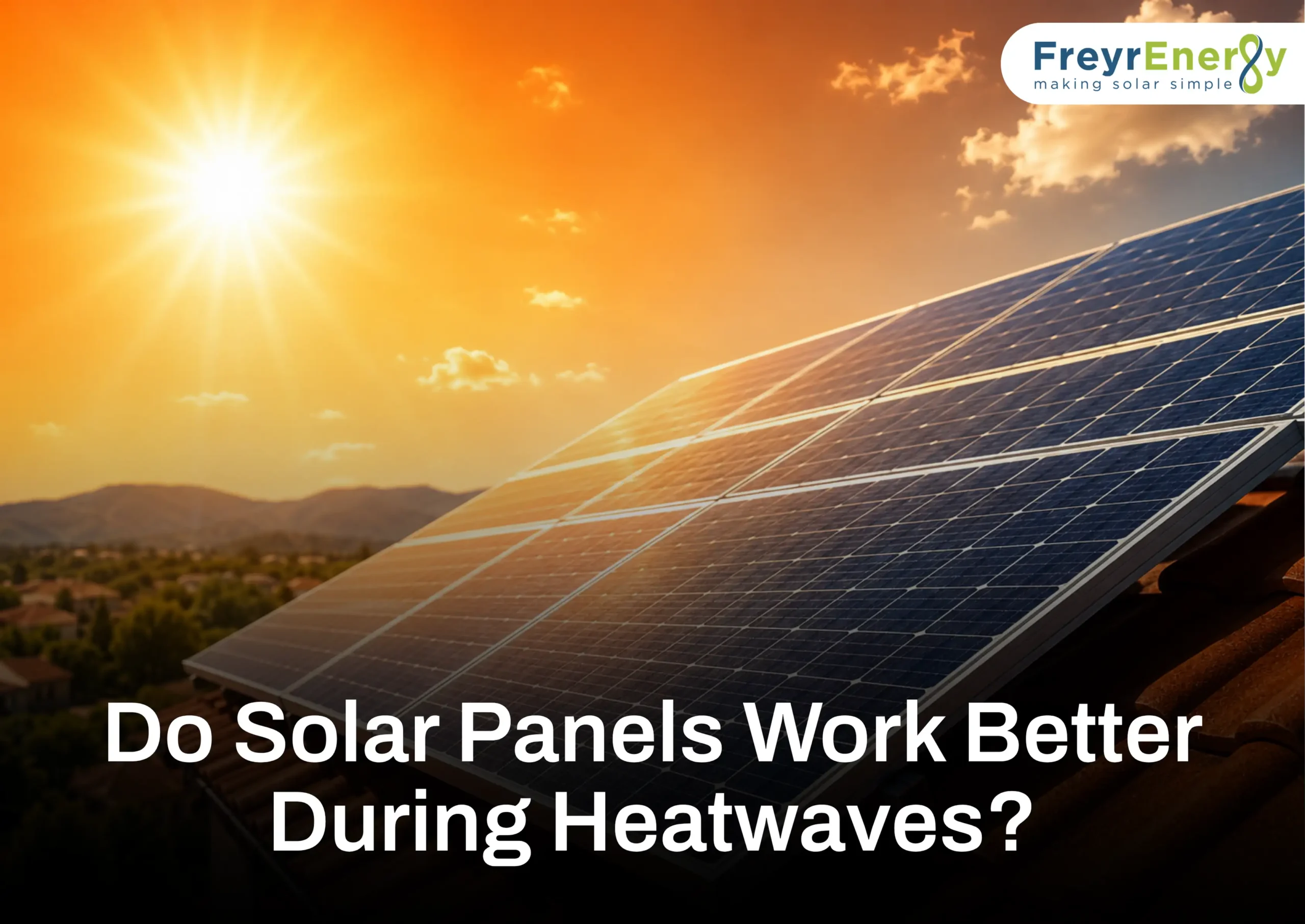
In general, solar panels produce more electricity during summer because sunlight intensity remains high for longer hours.
Summer conditions that support solar generation include:
| Factor | Impact on Solar Panels |
| Strong sunlight | Improves electricity generation |
| Longer daylight hours | Increases production time |
| Clear skies | Supports stable solar output |
| Reduced cloud cover | Enhances sunlight absorption |
| Factor | Impact on Solar Panels |
This is why solar systems often generate higher total energy during summer compared to monsoon or winter seasons.
However, sunlight and heat are not the same thing.
Solar panels require sunlight to generate electricity, but excessive temperatures can reduce their operating efficiency.
How Extreme Heat Affects Solar Panel Efficiency
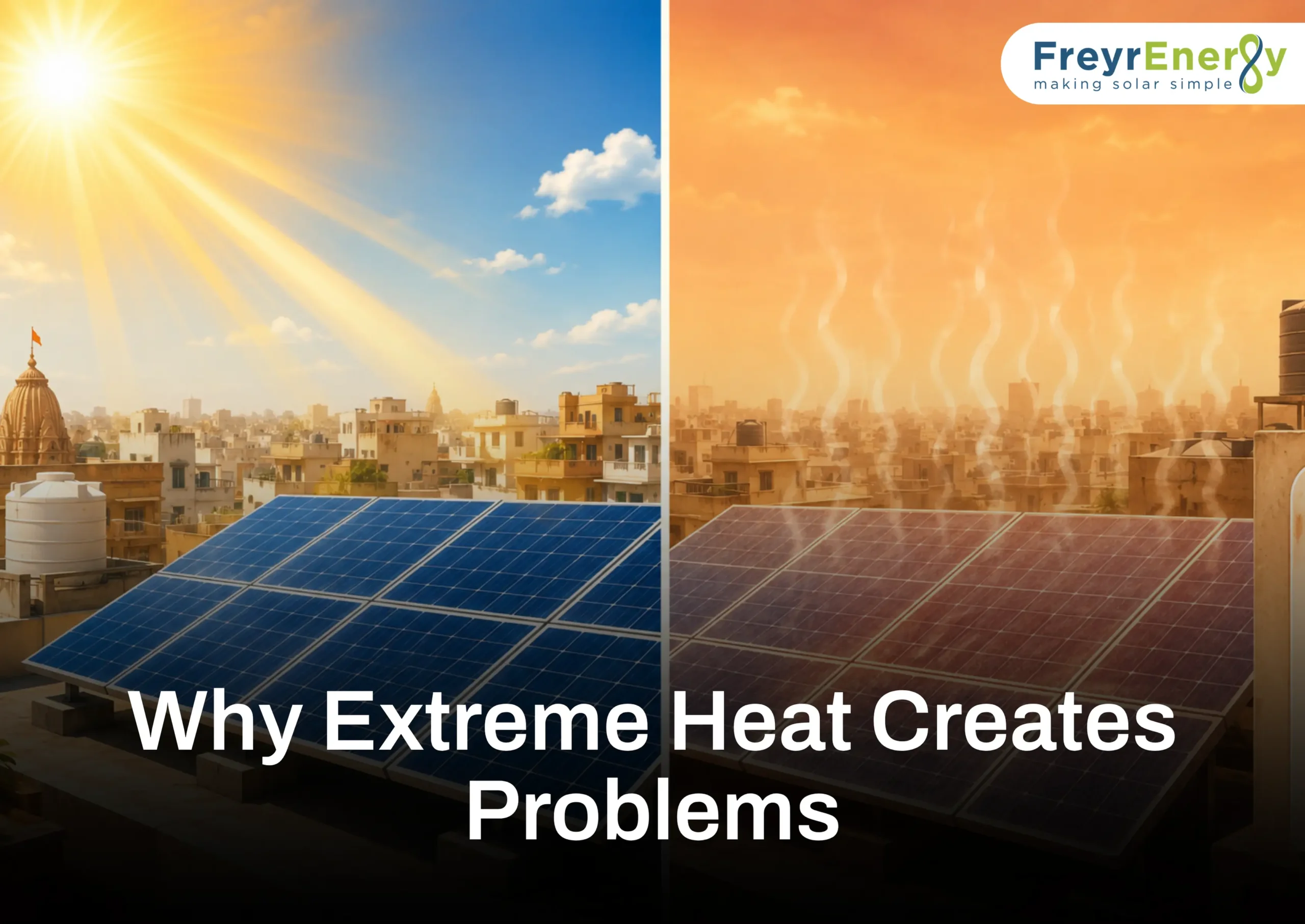
Solar panels generate electricity using semiconductor materials. As panel temperatures rise beyond optimal operating conditions, electrical resistance inside the cells increases.
This gradually reduces voltage output and overall efficiency.
Most solar panels are tested under standard conditions of 25°C. For every degree above this temperature, panel efficiency typically drops by around 0.3% to 0.5%, depending on the panel technology.
| solar Panel Temperature | Approximate Performance Impact |
| 25°C | Ideal operating condition |
| 35°C | Minor efficiency reduction |
| 45°C | Noticeable drop in performance |
| 55°C+ | Significant heat stress |
This means solar panels continue generating electricity during heatwaves, but not always at maximum efficiency.
What Usually Happens During Indian Summers
Indian summers create a combination of strong sunlight and extremely hot rooftop temperatures.
In many cities, rooftop surfaces become much hotter than the surrounding air temperature. As a result, solar panels installed on rooftops may experience significant heat buildup during afternoon hours.
This creates a mixed effect:
- Strong sunlight increases power generation
- Excessive heat reduces efficiency at the same time
The final output depends on factors such as panel quality, ventilation, solar panel installation design, dust accumulation, and ambient temperature.
This is one of the lesser-discussed effects of heatwaves on infrastructure and energy systems. Extreme heat affects roads, batteries, electrical equipment, and power networks together.
Effects of Heatwaves on Solar Infrastructure
Heatwaves do not affect only solar panels. Other components within a solar power system also experience thermal stress during prolonged high temperatures.
| Solar Component | Heatwave Impact |
| Solar panels | Reduced efficiency |
| Inverters | Higher operating temperatures |
| Batteries | Faster degradation |
| Electrical wiring | Increased thermal stress |
Heat Stress on Solar Panels
Solar panels expand during daytime heat and contract as temperatures cool at night. Repeated thermal expansion and contraction over long periods can create microscopic cracks within the panel structure.
Although these cracks are usually not visible initially, they may gradually affect long-term performance.
Inverter Heating Issues
Inverters convert solar-generated DC electricity into usable AC power. During heatwaves, inverters may operate at higher internal temperatures, especially when installed in poorly ventilated spaces.
Excessive heat can sometimes reduce inverter efficiency or trigger automatic protection mechanisms.
Battery Performance During Summer
Battery storage systems are also sensitive to high temperatures. Prolonged heat exposure may accelerate battery degradation and reduce storage lifespan.
This becomes especially important for homes and businesses using battery backup during power cuts.
Dust and Pollution Further Reduce Solar Output
Heatwaves in India are often accompanied by dry winds, dust accumulation, and air pollution.
Dust settling on solar panels blocks sunlight from reaching photovoltaic cells efficiently.
| Summer Condition | Effect on Solar Systems |
| Dust accumulation | Reduces sunlight absorption |
| Dry winds | Increase dirt buildup |
| Pollution layers | Lower energy generation |
| Lack of cleaning | Gradual output decline |
Even a thin dust layer can reduce electricity generation noticeably over time.
Many homeowners observe improved output immediately after cleaning the solar panels properly. Regular maintenance becomes especially important during summer months.
Also Read : India’s First Self-Cleaning Rooftop Solar System
Why Solar Energy Still Matters During Heatwaves
Despite some efficiency losses during extreme heat, solar energy remains highly valuable during Indian summers.
Electricity Demand Increases During Heatwaves
Heatwaves sharply increase electricity consumption due to:
- Continuous air conditioner usage
- Increased fan operation
- Higher refrigeration demand
- Commercial cooling requirements
Most of this demand occurs during daytime hours, which aligns closely with peak solar generation.
| Heatwave Situation | How Solar Helps |
| Higher daytime electricity demand | Solar supplies daytime power |
| Increased AC usage | Reduces grid dependency |
| Rising electricity bills | Offsets energy costs |
| Grid pressure and outages | Supports backup systems |
Reduced Pressure on Conventional Power Systems
Extreme summer temperatures often place heavy pressure on coal-based power infrastructure and electricity grids.
Solar energy helps support daytime electricity demand without additional fuel consumption or pollution.
Large-scale solar farms and rooftop solar systems together help reduce grid stress during peak demand periods.
Backup Support During Power Cuts
Homes and businesses with battery-backed solar systems can continue operating essential appliances during outages.
Fans, lighting systems, internet routers, and refrigerators can remain functional even during grid interruptions.
This makes rooftop solar increasingly practical in regions experiencing frequent summer power cuts.
New Solar Technologies Are Improving Heat Performance
Solar technology has improved significantly in recent years.
Modern monocrystalline panels generally offer better temperature performance compared to older technologies, while some thin-film panels handle heat more effectively under specific conditions.
Common Solar Panel Temperature Coefficients
| Solar Panel Type | Typical Temperature Coefficient |
| Monocrystalline | -0.3% to -0.4% / °C |
| Polycrystalline | -0.4% to -0.5% / °C |
| Thin-film panels | Better heat tolerance in some conditions |
Also Read :
Panels with lower temperature coefficients usually experience smaller efficiency losses during high temperatures.
Installation design also matters. Solar panels mounted slightly above rooftops allow airflow underneath, helping reduce heat buildup naturally.
In addition, smart solar monitoring systems now help homeowners track performance in real time and identify sudden output drops quickly.
Also Read : Remote Monitoring System for Solar Power System
How to Improve Solar Performance During Summer
A few maintenance and installation practices can help improve solar system efficiency during heatwaves:
- Clean solar panels regularly to remove dust and dirt
- Ensure proper airflow beneath rooftop panels
- Install inverters in shaded or ventilated areas
- Choose panels with lower temperature coefficients
- Monitor system performance using smart monitoring tools
Small maintenance practices can make a noticeable difference during peak summer months.
Future of Solar Energy in India
India’s solar sector continues to expand rapidly across residential, commercial, and industrial segments.
At the same time, climate change is expected to increase the frequency and intensity of heatwaves in the coming years. This will place additional pressure on electricity infrastructure nationwide.
Although excessive heat slightly reduces solar panel efficiency, solar energy remains one of the most effective solutions for managing rising daytime electricity demand.
Future advancements in:
- high-temperature solar cells,
- improved battery storage,
- cooling technologies, and
- smarter energy management systems
are expected to improve solar performance further in hot climates.
Conclusion
Heatwaves create both advantages and challenges for solar energy systems.
Longer daylight hours and strong sunlight help increase electricity generation, while excessive temperatures can reduce panel efficiency and place stress on solar infrastructure.
Even with these limitations, solar energy continues to play an important role in supporting India’s growing electricity needs during extreme summers.
As solar technology improves and adoption increases, solar power will remain a critical part of India’s long-term clean energy transition.