

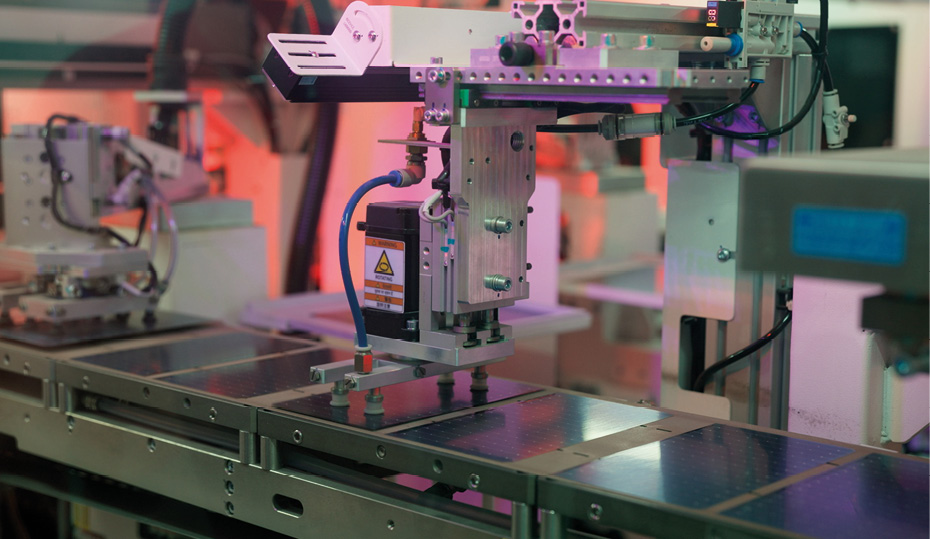
India’s module manufacturing capacity has expanded at remarkable speed, while domestic content requirements are pushing investment into the more complex cell manufacturing sector. Suppliers are also eyeing moves into wafer and ingot manufacturing ahead of further expansion to the domestic content rules. Activity has been more limited in polysilicon manufacturing, as with the development of facilities to produce solar glass and other bill of materials components. The challenge is no longer how much manufacturing capacity India can build, it’s whether that capacity can operate at high utilization, keep pace with fast-changing technologies and compete on cost.
“The next phase of expansion needs to be more closely aligned with actual demand, project pipelines and the development of the wider solar value chain,” said Bondada Raghavendra Rao, chairman and managing director at engineering, procurement and construction (EPC) supplier Bondada Group.
The scale of the imbalance is becoming increasingly visible. India had built around 233 GW of module manufacturing capacity as of June 2026, against annual domestic demand estimated at 30 GW to 40 GW. Utilization for many of these production lines is running at only 35% to 40%, compared with the 50% to 65% generally considered necessary for sustainable operations. A further 135 GW is planned or under construction.
According to Dilip Mehta, director, technical services at project developer Hexa Climate, the issue is not module capacity alone, but its relationship with the rest of the supply chain. He noted that module capacity is currently roughly seven times cell capacity and 116 times ingot and wafer capacity. Adding further module lines widens the gap even further.
Capacity pressures
Industry executives are divided on whether module additions should slow down, but there is broad agreement that investment decisions need to become more disciplined.
Vinay Rustagi, chief business officer at cell and module manufacturer Premier Energies, which recently commissioned one of India’s largest cell manufacturing facilities in Naidupeta, Andhra Pradesh, argues that market forces can automatically correct any imbalance over a period of time.
“It is true that more investment is needed on the upstream side of the business. But investment decisions are made based on their individual assessment of demand-supply conditions, pricing and competitive position. There is no need for any government intervention as the market signals automatically correct any imbalance over a period of time,” he said.
In practice, sustained overcapacity can put downward pressure on prices and squeeze industry margins, prompting consolidation among those companies best equipped to hang on in these conditions, and encouraging weaker competitors to exit the market.
Sourabh Kumar, vice president–strategic investments at module maker and project developer Ampin Energy Transition, says the objective should not be simply maximum capacity, but maximum competitive capacity. He argues that new projects should be assessed on whether the technology is competitive for the next five to seven years, whether the factory can achieve scale and maintain a high utilization rate, whether there is a credible source of raw materials, whether the product can compete with imports on a delivered-cost basis, whether there is sufficient domestic or export demand, and whether the manufacturer has the balance sheet to withstand periods of low margin.
“This is particularly important because PV technology is changing rapidly. Investing heavily in a technology that becomes commercially less relevant within a few years can create a bigger problem than having insufficient capacity,” he added.
Upstream expansion
The Approved List of Models and Manufacturers (ALMM) – a requirement for all projects backed by India’s government to use components from an approved domestic supplier – has applied to modules since 2021 and was extended to cells in June 2026. The list’s expansion to wafers and ingots is currently set for 2028 and is likely to strengthen the push toward deeper domestic manufacturing. But vertical integration will not be practical for every company. Ingot and wafer manufacturing requires significant capital, energy, process expertise and scale.
For standalone module manufacturers, Kumar suggests they can remain viable without owning the entire value chain if they build strong supplier relationships, focus on manufacturing efficiency, and differentiate themselves through quality, reliability, product design and customer service.
“Vertical integration should not become an objective by itself,” Kumar said. “Integration must improve the economics of the final product, not just increase the number of manufacturing stages under one ownership structure.”
Mehta sees cell manufacturing as a more realistic upstream step for standalone module producers than ingots and wafers, given ingot and wafer manufacturing is capital-intensive, power-intensive, and the learning curve is long. Options include backward integration into cells, long-term supply agreements with domestic cell manufacturers, or consolidation with integrated players.
The opportunity for upstream investment is clear, but the sequencing will matter. Mehta notes that the ALMM list for wafers will be issued only once at least three independent manufacturing units without common ownership are operational, with a combined annual capacity of at least 15 GW and equivalent ingot capacity. This creates a window for companies to invest in upstream manufacturing, but it also means that first movers carry the risk.
Ankit Singhania, director at Gujarat-based cell and module manufacturer Navitas Solar, said the path to integration need not be the same for every manufacturer. Depending on scale and business strategy, companies can explore a combination of organic investments, strategic partnerships, joint ventures and long-term sourcing arrangements with domestic upstream suppliers.
“For standalone module manufacturers, integration can also be complemented by investments in automation, quality systems, R&D and next-generation module technologies. Building a competitive ecosystem will require both vertically integrated manufacturers and specialized players with stronger linkages across different stages of the value chain,” adds Singhania.
Demand pathways
India’s growing solar market provides several potential outlets for excess module capacity. Utility-scale projects remain central, but demand is also emerging from rooftop solar, commercial and industrial installations, open-access projects, and agricultural applications.
India’s residential rooftop market could provide an important additional source of demand. The Indian Solar Manufacturers Association estimates annual residential rooftop installations of between 9 GW and 15 GW each year from 2026 to 2030. The PM Surya Ghar scheme, which offers subsidies and concessional financing to rooftop PV customers, is expected to remain a major driver.
Floating solar could provide another avenue (see pp.38-41). According to the National Institute of Solar Energy, there is around 102 GW of floating PV potential in India. The government has also approved the Pradhan Mantri Surya Sarovar Yojana scheme, targeting 5 GW of floating solar with co-located energy storage. The projects will be sanctioned during fiscal 2026-27 to fiscal 2030-31, with disbursement of financial support continuing up to fiscal 2032-33.
Manufacturers also have a significant opportunity to look beyond the domestic market and build a stronger export-oriented business. Singhania says that as countries diversify their clean-energy supply chains, Indian manufacturers are well placed to address emerging demand across BRICS economies as well as other markets in Asia, Africa and the Middle East. This creates an opportunity to utilize manufacturing capacity more effectively while establishing India as a dependable global source for solar modules.
Exports, however, are constrained by the higher price of Indian modules compared to those from China. Mehta estimates that Indian module manufacturers can sell comfortably at anywhere between $0.14/W and $0.25/W depending on scale and other factors, compared with about $0.11/W in China, where long-running oversupply has pushed prices even lower than that. That gap narrows only in markets that impose their own restrictions on Chinese supply, so export planning has to be market-specific rather than general.
Utilization strategies
For manufacturers with idle lines, toll manufacturing or original equipment manufacturer agreements offer another route to utilization. According to Mehta, manufacturers with idle lines can produce for another brand that holds an order book but lacks sufficient capacity. While it does not build brand value, it does convert fixed cost into revenue.
Ultimately, utilization itself could become a defining competitive advantage. “A factory operating at 85% to 90% utilization with healthy yields and strong quality can be fundamentally more competitive than a larger factory operating at 30% to 40%,” says Kumar. “This means manufacturers will need to focus much more on demand planning, procurement, inventory management, manufacturing yield, working capital and customer diversification.”
India has demonstrated that it can build solar manufacturing capacity at scale. The next test is to create capacity that is competitive, reliable, and technologically relevant.
The winners of the next phase may not be those with the largest factories, but those capable of keeping their facilities productive, upgrading them as technology evolves, and finding customers both in India and overseas.
The post Indian PV at a turning point appeared first on pv magazine Global.
Source link