

From ESS News
India-based Macsen Energy Private Limited has announced that a sodium-ion battery cell using its proprietary Prussian white cathode material exceeded 1,500 charge-discharge cycles in laboratory testing. The company did not disclose whether the results had been independently verified by a third party.
“Crossing 1,500 cycles with sustained capacity and high coulombic efficiency, and retaining 90% of the cell’s initial capacity at 1,000 cycles, is an important result for our team,” said Achal Agrawal, CEO of Macsen Group, who is also involved in the research project. “This result comes from cycling an actual sodium-ion cell in our battery research lab. It validates the promise of our cell technology for long-life energy storage and supports the potential of our Prussian White cathode material to deliver sustained performance over repeated cycles.”
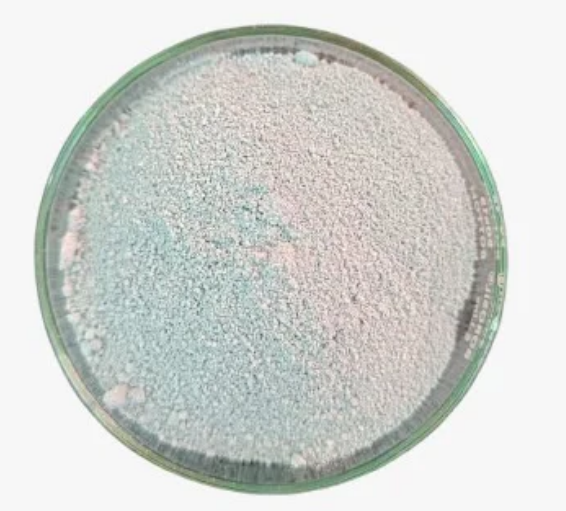
Prussian white is a sodium-rich, iron-based compound used as a cathode material in sodium-ion batteries. Its open crystal structure enables the reversible insertion and extraction of sodium ions during charging and discharging. The material offers potential advantages, including low production costs, abundant raw materials, fast charging and long cycle life. Its high sodium content can also support higher initial capacity and energy density.
“Prussian White may appear straightforward to synthesize, but producing a material that approaches its theoretical capacity and maintains strong electrochemical performance over repeated charge-discharge cycles is a much more demanding task,” Agrawal said. “We see it as an engineered battery material, and our work spans chemical synthesis, material characterization, cell fabrication and testing.”
According to its website, Macsen Energy’s primary cell-development approach combines a Prussian white cathode with a hard carbon anode, although it is also investigating alternative anode materials and anode-free configurations. The company lists an operating voltage range of 2.2 V to 4.0 V and an average discharge voltage of approximately 2.5 V to 3.6 V for its cathode material.
The company claims its production process addresses key manufacturing challenges, including moisture sensitivity, oxygen exposure and scalability, while yielding a highly crystalline, fully sodiated material with low water content and improved air stability. It reports a specific capacity exceeding 150 mAh/g, coulombic efficiency of approximately 99.9% and capacity retention of at least 90% after 1,000 charge-discharge cycles. It attributes the material’s performance to its open crystal structure, which enables rapid, reversible sodium-ion movement with minimal structural changes.
Macsen Energy has allocated 10,000 m2 of land for a facility to scale up Prussian blue analogue cathode material production to tonne-scale capacity. Construction is scheduled to begin in 2027, although the company has not disclosed the location. The site will also house a sodium-ion battery pilot line to further develop Prussian white-based cells, including electrode preparation, cell assembly, validation and performance testing under near-commercial manufacturing conditions.
The company has also initiated research and development into hard carbon synthesis to advance its full-cell technology.
Source link