

Fraunhofer Institute for Solar Energy Systems ISE, in collaboration with Hilti AG, has developed a minimally invasive method to measure the core temperature of lithium-ion battery cells during high-current operation. The research addresses a key challenge in battery testing, where temperature measurements are generally taken at the outer surface of a cell rather than inside its electrode core.

The temperature inside a battery cell is an important factor in determining its safety, performance, service life and battery management system requirements. During high-current discharge, significant heat can be generated inside the cell, while surface measurements may not accurately represent the actual thermal conditions within the battery.
For the study, researchers integrated thermocouples directly into the electrode core of a commercially manufactured and externally formed high-power pouch cell. The cell had a capacity of 4.5 Ah and used NCM/graphite chemistry. After the sensors were installed, the pouch cell was resealed. Additional temperature sensors were placed on the top and bottom of the cell housing to compare internal and surface temperatures.
The cells were subsequently tested at discharge rates of up to 22 C. At these rates, the battery can release its stored energy in less than three minutes. The results showed that the difference between internal and surface temperatures becomes measurable under high-current conditions. At a discharge rate of 20 C, the average core temperature was approximately 2°C higher than the temperature recorded at the cell surface.
Researchers also assessed whether integrating the sensors would significantly affect battery performance. The study found that the modification had only a minor impact on cell behaviour, with the deliverable capacity declining by approximately 2%. This suggests that the temperature measurements can provide useful information that is relevant to unmodified battery cells.
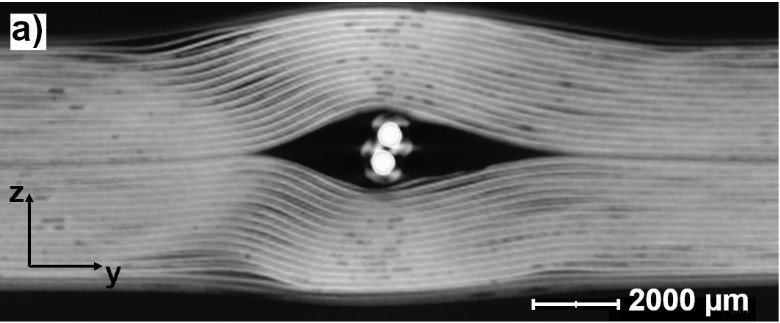
Computed tomography scans were used to verify the position of the thermocouple within the centre of the cell. The scans showed that structural changes caused by sensor installation were limited to the immediate area around the sensor. However, postmortem analysis using scanning electron microscopy and energy-dispersive X-ray spectroscopy identified chemical changes near the implantation site. Researchers said this indicates that the choice of sensor materials could be further optimized.
Daniel Nusko, who led the project at Fraunhofer ISE, said that having high-current testing, cell disassembly under inert gas and postmortem analysis at the same facility helped accelerate the development and validation of the measurement method.
The research was conducted as part of a commissioned project for Hilti AG. According to Dr. Sebastian Maletti, project manager at Hilti Entwicklungsgesellschaft, the findings provide a stronger database on the thermal stress experienced by high-performance battery cells and can support safer and more effective battery management system design.
Fraunhofer ISE said the method can potentially be adapted to different battery formats and chemistries. Researchers expect temperature differences between the core and surface to become even more significant in larger battery cells, making accurate internal temperature measurement increasingly important for next-generation energy storage and high-performance battery applications.
Source link