
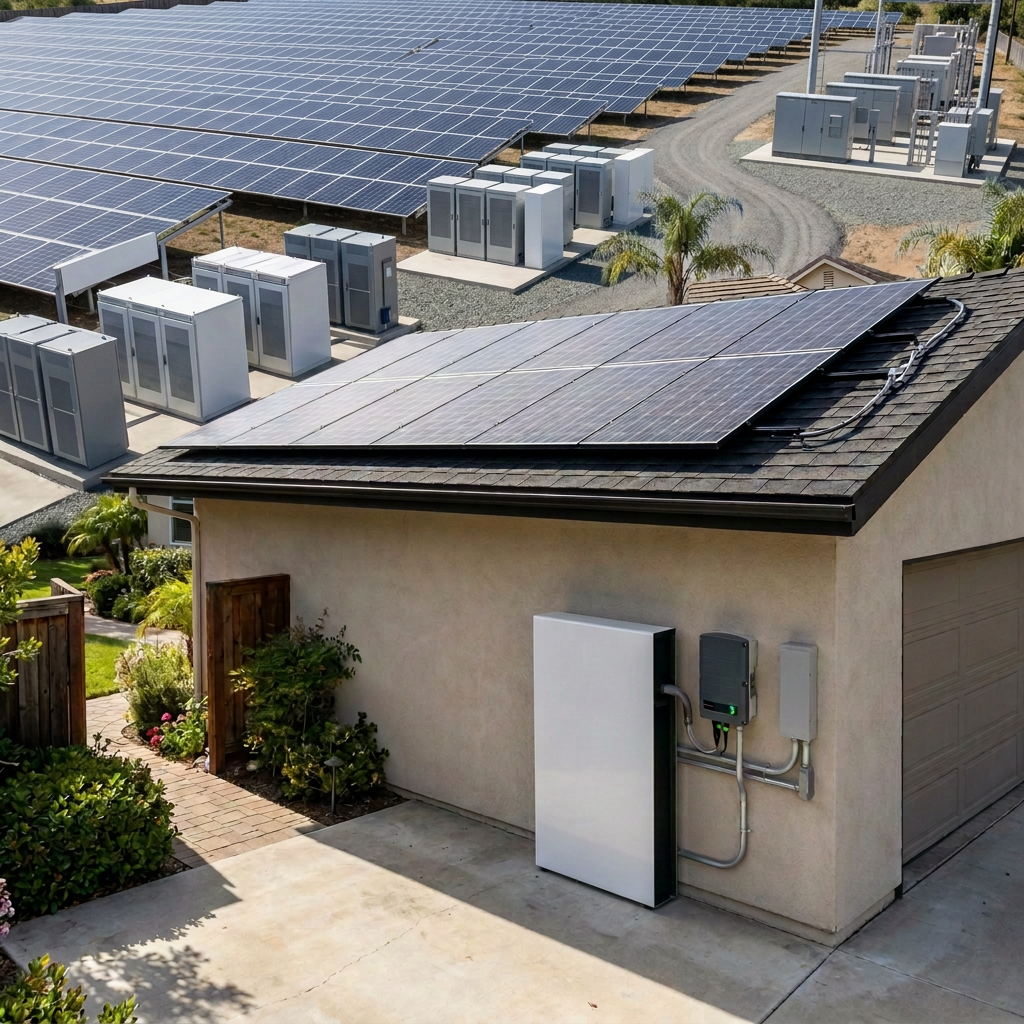
The Maharashtra Electricity Regulatory Commission (MERC) has approved a major renewable energy proposal submitted by the Brihanmumbai Electric Supply and Transport Undertaking (BEST), allowing the utility to procure 220 MW of solar power integrated with a 110 MW/440 MWh Energy Storage System (ESS). The power will be sourced through the Solar Energy Corporation of India (SECI) under a long-term agreement spanning 25 years, marking another important step in Maharashtra’s transition toward cleaner and more reliable electricity.

The approval was issued through MERC’s order in Case No. 76 of 2026 along with Interlocutory Application No. 96 of 2026. BEST had requested an urgent hearing to ensure timely approval of the procurement and to avoid the risk of losing the allocated renewable energy capacity. With the Commission’s approval, BEST can now move forward with signing a Power Sale Agreement (PSA) with SECI.
Under the approved arrangement, SECI will supply electricity procured from three selected developers. LC Infra Projects Private Limited will provide 50 MW of solar power at a discovered tariff of Rs 2.86 per unit. GH2 Solar Limited will also supply 50 MW at Rs 2.87 per unit, while Navayuga Green Energy Private Limited will develop the remaining 120 MW at Rs 2.87 per unit. SECI will receive a fixed trading margin of Rs 0.07 per unit above the discovered tariff, in accordance with applicable central regulatory provisions.
BEST informed the Commission that the procurement is necessary to meet its Renewable Purchase Obligation (RPO) and Energy Storage Obligation (ESO) targets set under Maharashtra’s renewable energy regulations. These obligations require electricity distribution companies to steadily increase the share of renewable power and energy storage in their supply portfolio over the coming years. MERC observed that the procurement aligns with BEST’s long-term Resource Adequacy Plan and supports the state’s clean energy objectives.
The Commission also noted that securing renewable power through a competitive bidding process will help protect electricity consumers from fluctuations in short-term market prices. By locking in fixed tariffs for 25 years, BEST is expected to reduce its dependence on expensive power purchases from electricity exchanges, thereby improving cost stability for consumers.
Another important advantage of the project is that all the selected solar plants will be developed within Maharashtra and connected directly to the State Transmission Utility (STU) network. This arrangement eliminates inter-state transmission charges and reduces transmission losses, making the project more economical. In addition, recent reductions in taxes on solar cells and modules are expected to lower the effective tariff by another 10 to 12 paise per unit after financial adjustments.
During the proceedings, the Maharashtra State Load Despatch Centre raised certain operational concerns regarding battery energy storage systems. MERC clarified that dedicated regulations governing battery storage are currently under preparation. Until those regulations are finalized, the Commission has directed state transmission agencies and load dispatch authorities to facilitate grid connectivity, scheduling, and other operational approvals without unnecessary delays. Power supply from the approved project is expected to commence within 24 months of signing the agreement, helping BEST strengthen its renewable energy portfolio and meet its sustainability commitments from FY 2028-29 onward.
Discover more from SolarQuarter
Subscribe to get the latest posts sent to your email.
Source link