

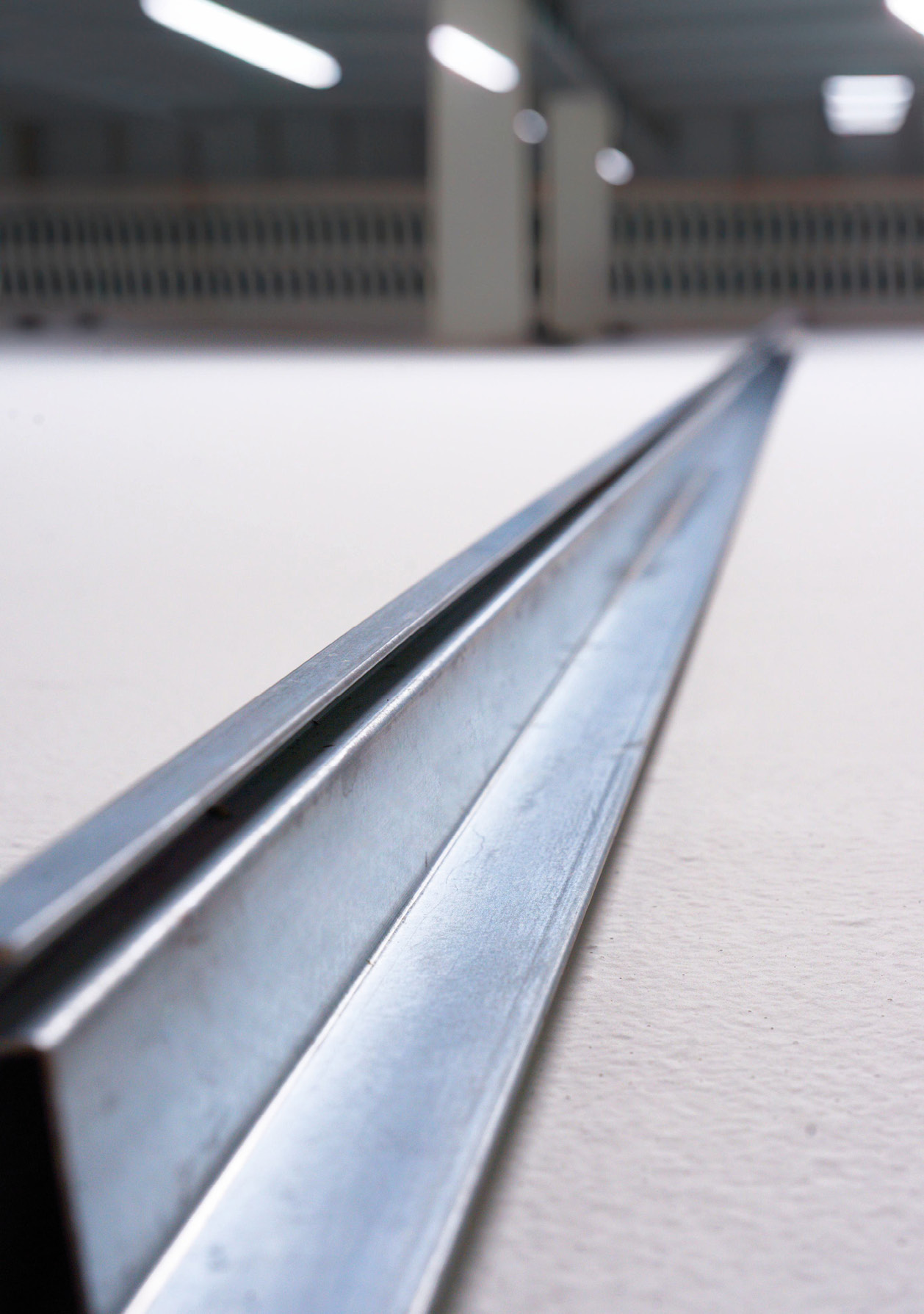
NX CoreFrame module frames are roll formed from steel coils, requiring more than 50 bending steps. The frames are designed to be a drop in replacement requiring no process changes for factories currently working with aluminum frames.
Aluminum has long been established as the standard material for module frames. The 2026 International Technology Roadmap for Photovoltaics report, published by German engineering industry association VDMA, estimates that 92% of modules were made with an aluminum frame in 2025. While the report acknowledges other materials gaining some market share, it still expects aluminum to represent 74% of the market by 2036.
VDMA forecasts that over the next decade, steel frames will grow to represent around 15% of the market, while glass composites reach a 5% share, and frameless modules continue to occupy a niche for certain applications. Other market observers have similar expectations.
“Aluminum is well understood by module manufacturers, installers and investors. The solar supply chain is designed around it, and it has a long record of bankability,” said Karl Melkonyan, principal analyst for solar PV at S&P Global Energy.
Recent developments in the PV module market have some looking at alternative frame materials. Cost-performance optimizations have driven manufacturers toward larger formats, while efforts to cut material consumption have them simultaneously working with thinner glass and smaller, weaker frames. These trends have led to a worrying increase in module breakage in the field, and a stiffer frame material could form part of the solution.
US company Nextpower sees these quality concerns as a demand driver for steel as a frame material. In 2025, the company acquired startup steel frame producer Origami Solar, and is in the process of ramping up production of its roll-formed steel frames to meet expected demand. Large-scale supply agreements are already in place with several module manufacturers in the US.
Jenya Meydbray, vice president for advanced steel frames at Nextpower, explained that wind conditions at some project sites require the tracker to incorporate additional steel to strengthen the structure, and a stronger frame could be more effective than this. “That is component manufacturers cost optimizing in a silo, rather than thinking in terms of systems,” he said.
American steel
Meydbray sees addressing this issue as the highest value proposition for steel frame products in the utility-scale segment, where large format modules are installed on trackers and potentially exposed to strong winds and other mechanical stresses.
But quality concerns are not the only thing behind renewed interest in alternate frame materials. Geopolitics and regional supply chains also play a role in shaping this market. Aluminum manufacturing is highly concentrated in China and difficult to establish elsewhere. Steel production, on the other hand, is more widespread and could allow manufacturers outside of China to take advantage of local availability and domestic content incentives.
For module manufacturers in the United States and their customers, a locally made steel frame contributes to domestic content requirements where projects can qualify for a 10% tax credit. For this reason, Nextpower is focusing its steel frame rollout on US manufacturers to begin with, and said it already has multi-year, gigawatt-scale agreements in place. But Meydbray sees potential for steel frames in utility-scale PV markets around the world, given their impact on module strength.
He also noted that the more distributed supply chain for steel can create other advantages for manufacturers, particularly those without a plentiful supply of aluminum located nearby. Meydbray explained that manufacturers working with overseas components typically stockpile at least two months supply, to combat the risk of hold ups at customs or delays elsewhere in the supply chain. When those components are sourced locally, within a day’s drive of the factory, deliveries can be much more frequent and the worst-case scenario is a delay of a day or two, rather than several weeks of lost production. By forming this kind of “just-in-time” relationship with manufacturers, a local frame supplier can increase efficiency and potentially bring savings on the space required to store several weeks’ worth of components.
Glass composite
Glass composite materials present another alternative to aluminum. René Moerman, founder of Xilia Group – a Hong Kong-based company that helps Western manufacturers navigate supply chains and source components from China – is working with a glass fiber reinforced polyurethane material. He sees various advantages for this composition.
Moerman explained that the composite material results in a frame 25% lighter than a comparable aluminum product, as well as having up to 30% cheaper upfront cost. He estimated that the glass composite can achieve an 85% reduction in manufacturing emissions compared to aluminum, making it especially suitable for imports coming to Europe that need to meet the requirements of the Carbon Border Adjustment Mechanism that puts a carbon tariff on certain energy intensive imports. Composite materials are not covered by the CBAM, and are less exposed to import restrictions in many other regions.
“By 2027, manufacturers still using aluminium frames for EU-facing products will carry higher costs, higher carbon exposure, and higher regulatory complexity than those who have already switched. The window to move early is closing,” he said.
Similar to steel, though, one key reason for growing interest in glass composite frames is in response to recent quality concerns over aluminum products. This is where Moerman sees a particular advantage that may not be well understood by the industry. The glass composite materials has a coefficient of thermal expansion close to that of glass.
“The frame and the glass are mechanically locked together but respond differently to temperature,” Moerman explains. “That tension is physics. A composite frame that expands in harmony with glass removes that entire risk.”
Practical matters
Switching to any alternative frame material needs to cause minimal friction with existing processes during manufacturing and installation. Nextpower has worked to ensure that its NX CoreFrame can function as a drop-in replacement.
“EPCs do not require retraining, module manufacturing facilities can integrate this into existing framing tools in their factory lines. It’s the lowest-friction entry point,” explained Meydbray, noting that previous efforts to integrate alternate frame materials have fallen at precisely this hurdle.
Moerman also said that Xilia works with its module manufacturer customers on suitable frame designs, and with suppliers on ways to make these designs easier to manufacture and more cost effective.
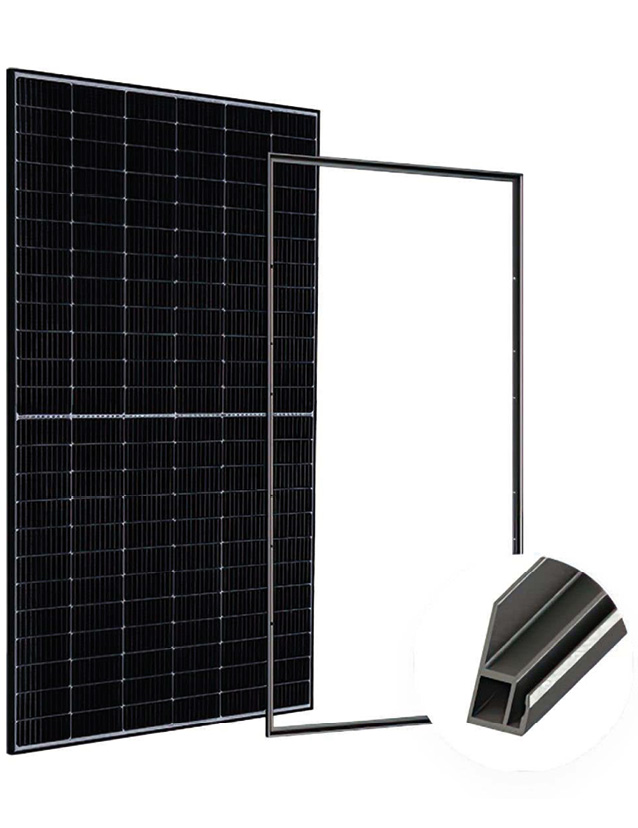
Xilia has begun sourcing glass composite frames for module makers in Europe. Their lower carbon footprint can reduce payments required for imports under the EU Carbon Border Adjustment Mechanism. Photo: Xilia Group
Long-term reliability
Despite the recent quality concerns, aluminum’s long track record in the field makes it difficult to supplant. “Its main advantage is not only its performance, but also its long operating history and low qualification risk,” said S&P Global’s Melkonyan.
For composite frames, he sees challenges in demonstrating long term performance, particularly against ultraviolet exposure, as well as in fire safety and classification, and end-of-life treatment. Moerman, meanwhile, noted that Xilia’s frame has been certified by TÜV, and in testing has shown resistance to UV exposure, as well as to damp heat, salt spray, ammonia and chemical corrosion.
Nika Aliahmad, sales manager at Xilia, explained that some manufacturers are apprehensive about composite frames thanks to bad experience with earlier designs – but these were down to design issues rather than the material itself. He said that while few have made it public, tier 1 manufacturers are trialing composite frames for certain projects – particularly floating PV and projects in coastal locations, where the materials resistance to corrosion is an advantage, and for rooftop projects where the lower weight helps. He also noted the material’s strong chemical resistance, which is emerging as an important factor for agrivoltaics installations sharing space with crops sprayed with different chemicals.
Xilia is initially targeting smaller manufacturers in Europe for the composite frame, but Aliahmad sees it as a matter of time before larger module producers in Asia also begin to see the benefits. Moerman said he counted more than 20 glass composite frame suppliers among exhibitors at the 2026 SNEC exhibition in Shanghai, compared to just a handful the previous year.
Steel, meanwhile, has the advantage of a long track record in outdoor use, including in mounting systems for solar projects. Its added weight compared to aluminum and its susceptibility to corrosion are challenges to wider adoption, but Meydbray explained that Nextpower has taken these into account. On the weight, it expects only a slight increase that would not create a problem for the tracker/racking structure, and keep modules within the 100 lb (45 kg) limit that can be lifted by two workers in the field. The company’s steel module frames are coated with a zinc-aluminum-magnesium anti corrosion product. NextPower uses this coating for its trackers when a project is particularly high risk for corrosion. For module frames it will use this coating as standard.
“Alternatives do not need to replace aluminum globally to succeed. They only need to offer better system value in the right applications,” said Melkonyan.
Aluminum’s concentrated supply chain and high carbon footprint could make it less attractive in the future. For now, though, it will likely remain the mainstream material for module frames, even as steel takes a meaningful market share in the United States and glass composites become more common in floating PV, agrivoltaics and certain other applications.
The post New materials in the frame appeared first on pv magazine Global.
Source link