

April 22, 2026
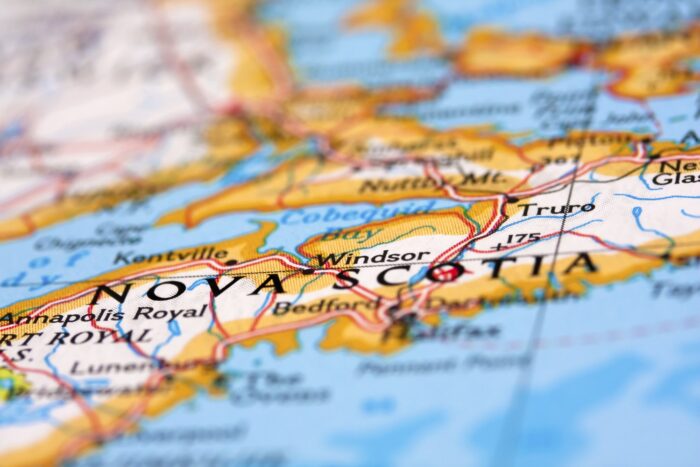
Solar and battery storage is booming in Nova Scotia. In April, Nova Scotia Power (NSP), the province’s largest energy supplier, released figures on new installations in the province, including 99 new commercial solar installations completed during 2025, a 41% increase compared with 2024. The 2025 installs bring the commercial solar nose count to 342 commercial solar installations in the province, apart from behind-the-meter installs not connected to the grid.
Residential solar outstrips commercial solar in both number and megawatts in Nova Scotia, however. There are now over 13,000 solar customers within the Nova Scotia Power grid with the capacity to generate over 110 MW, the utility reckons.
“We’ve got more work coming in than ever before,” says Michael Rendle, CEO of Watts Up Solar, based in Wilmot, Nova Scotia. Watts Up is a Nova Scotia-grown business that handles nearly 20% of all residential net metered PV solar systems in the province. With more than 1,500 installations, the company’s clients have generated over 63 GWh and have 323 kWh of storage. “All services in-house. Our team is local to Nova Scotia and we do not outsource or subcontract to third parties,” the company website states.
Ambitious renewables targets
As a province heavily dependent on coal for electricity generation, Nova Scotia has ambitious goals for replacing coal with clean power. Nova Scotia Power, the primary utility in the province, has set a target of an 80% renewables share for its electricity by 2030. While renewables provided some 42% of the utility’s energy base in 2025, solar only provides about 1% of its energy now.
The provincial government also has a target of phasing out coal generation by achieving 80% renewables by 2030, along with a more ambitious net-zero renewables state by 2035. By 2030, the provincial Clean Power Plan will add close to 2,000 MW of wind, solar and battery storage.
One driver in the province’s expansion is the new Community Nova Scotia targeting 100 MW of new capacity. The program increases the size of installs able to engage in net-metering at 1 MW. Generated solar energy is sold to Nova Scotia Power through a power purchase agreement (PPA). Residences or businesses enter into a Subscription Agreement with the project owner and continue buying energy from NSP and receive $0.02/kWh solar energy credit on their bill, amounting to a 10% to 15% bill reduction.
Community Nova Scotia projects are 100% privately financed, owned and operated. In turn, project owners can secure financing from special purpose lenders, like Woodbridge, Ontario-based AI Renewable LP, a flow-through limited partnership established to invest in clean infrastructure and/or renewable energy projects.
More First Nation tribal energy efficiency projects, including solar, will similarly add to the provincial renewables goal. The Mi’kmaw Home Energy Efficiency Project for example, supports the 13 First Nation communities across Nova Scotia to enhance energy efficiency and reduce greenhouse gas emissions. The project has already helped some 1,400 homes since its inception in 2018.
Rising energy cost, more solar finance
Going solar in Nova Scotia has become a no-brainer. Apart from the 30% federal tax credit, government incentives abound. The provincial Efficiency Nova Scotia Solar Homes Program offers a rebate of $0.30 per watt DC installed, up to a maximum of $3,000. Similarly, the Home Battery Pilot provides up to $2,500 for eligible battery storage systems; when paired with solar, the subsidy is capped at $300/kWh or 40% of total system costs.
On the municipal level, several municipalities, like Halifax offer relatively low-interest, 10-year PACE loans attached to the property taxes.
Rising energy costs are also encouraging solar adoption. Polaron Solar estimates that energy costs in Nova Scotia have risen between 2.1 and 4.1% over the near past, and that costs this year will continue to climb.
Polaron has been Canada’s largest solar company since 2013, with over 13,200 residential and commercial installations nationwide, the company claims. Polaron is also the largest solar installer in Nova Scotia, where 1 in 3 solar homes are installed by the company. Apart from Halifax, the provincial capital, Polaron has five other service areas in Nova Scotia. Polaron also markets through a presence in several Home Depot stores in the province.
Installer training critical to growth
One of the challenges of being a large solar installer in Canada is adding enough trained solar installers to keep up with growth. Polaron and WattsUp both operate in-house training programs, which is supported in part by governmental programs. The Clean Power Plan, for example, aims to “support training programs that will help workers transition to new opportunities in the green economy,” the program website states.
Government support is key to solar growth, installers say. “The federal government recently announced a massive $48.5-million investment into the Green Jobs Through Youth program, a move that signals a major shift in how Canada prepares its workforce for a low-carbon future,” Polaron states on it website.
“While the funding is a crucial step for bridging the employment gap for young Canadians, its impact on the renewable energy sector is also a loud statement about how Canada is planning to push its energy sector forward,” Polaron reckons.
Source link