

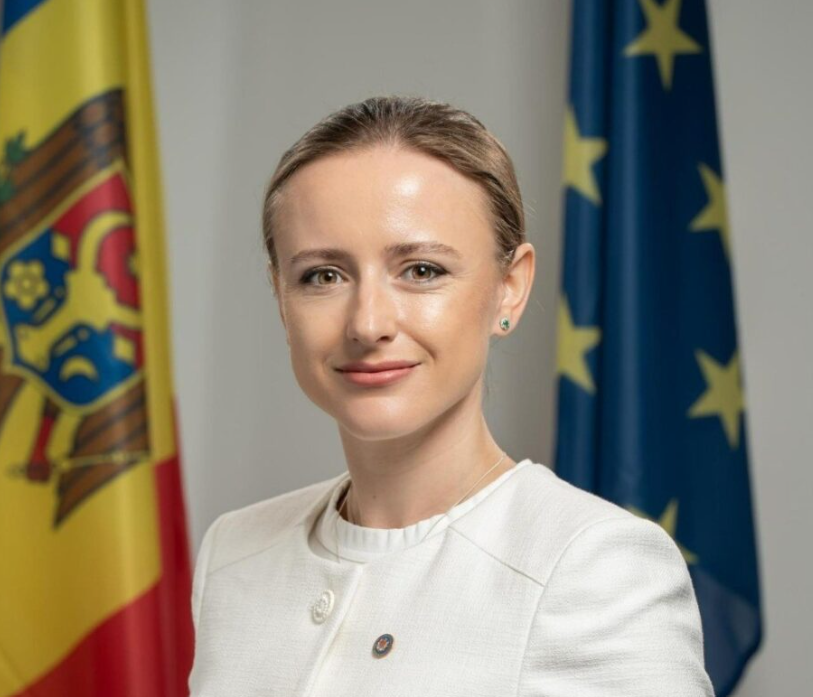
Moldova has increased its installed PV capacity twelvefold over the past five years, recently reaching 1 GW. That is one of the key messages from Carolina Novac, Secretary of State at Moldova’s Ministry of Energy, who also offers advice to other European countries: photovoltaics are now essential for strengthening energy security as part of a resilient energy mix.
The country recently launched a tender for 170 MW of wind power capacity, coupled with 44 MWh of battery energy storage systems (BESS). Moldova is supporting the deployment of BESS alongside renewable energy projects and aims to achieve a 30% share of renewables in final energy consumption by 2030.
Novac, who also serves as vice chair of the Committee on Sustainable Energy at the United Nations Economic Commission for Europe, explained that Moldova is “leading three energy efficiency projects for public institutions.” The government is now turning its attention to the residential sector, with plans for a dedicated energy efficiency fund to support the installation of PV systems and potentially heat pumps.
“Photovoltaics are, first and foremost, about energy security. It’s about diversifying sources; it’s about domestic energy—and it also turns out to be the cheapest electricity,” Novac told pv magazine. “One lesson learned is that internal generation must be diversified.”
“We allowed PV, wind, BESS and biogas installations on agricultural land. We also reduced VAT to zero for the construction of these projects. PV modules are subject to 0% VAT. We allocated various grants, including to farmers,” said Novac. Moldova recorded a landmark year for solar deployment in 2025, bringing cumulative installed capacity to 710 MW.
The country’s next objective is to support the expansion of its domestic BESS market.
Moldova is also working to improve the predictability of its regulatory framework, aiming to send clear market signals and enable balanced sectoral growth.
It recently established an electricity market operator and introduced a requirement for electricity trading to take place exclusively on organized markets. Additional reforms include the transition from a net metering scheme to net billing for residential PV.
By the end of 2025, prosumers had installed more than 200 MW of capacity, including 120 MW under the former net metering scheme.
“Net metering is a thing of the past. We are not going back to it. In Moldova, we still lack sufficient balancing capacity, so diversification is essential. In general, prosumers need to understand that a PV installation is not about business cases, but about covering consumption and maximizing self-consumption,” Novac said.
On workforce availability in the energy sector, Novac noted that Moldova still requires business consultancies, while most other parts of the value chain are largely in place—provided that energy policies continue to reflect the availability of local expertise.
“We need to ensure steady development, with engineers in place—a full workforce ready to support this transition,” she said.
Moldelectrica, the country’s TSO, has stated that Moldova requires at least 600 MWh of battery storage capacity to address current system needs, including the rapid growth of renewables.
“We also face export limitations due to Net Transfer Capacity (NTC). The 600 MWh of installed BESS capacity is the bare minimum,” Novac added.
The government is taking steps to accelerate deployment. “Given the current emergency situation, we have temporarily waived the requirement for construction and urban planning permits. For the next two months, BESS installations can proceed without these permits,” Novac said.
She also highlighted additional measures under consideration, including a full VAT exemption for BESS installations.
“We have achieved remarkable progress, as highlighted in the annual implementation report of the Energy Community, where Moldova ranked first among all nine contracting parties,” Novac concluded.
The same report notes that, due to limited domestic generation and insufficient market competition, Moldova’s wholesale electricity market remains heavily reliant on imports from the EU and Ukraine. It also highlights recent legislative changes: in June, Parliament adopted amendments introducing a VAT reverse charge mechanism, which is expected to facilitate cross-border electricity trading from January 1, 2026, according to the report released in December 2025.
Energy security, as demonstrated by Moldova’s experience, is not only about economics and politics—it also encompasses cybersecurity. This is particularly relevant for a country in a region of significant geopolitical importance.
“We face multiple cybersecurity threats and attacks, including incidents affecting the websites of Moldelectrica and the Ministry of Energy. We also need to transpose a network code on cybersecurity. What is crucial for us now is to pursue clear policies and regulations aligned with European standards,” said Novac.
The recent tender for wind and BESS capacity also included a dedicated annex requiring developers to comply with cybersecurity provisions.
According to the Secretary of State, regional and international cooperation is essential in the field of cybersecurity.
“We also need to ensure strong cooperation mechanisms with Ukraine, which is facing a full spectrum of attacks—both physical and cyber,” said Novac, referring as well to a recent meeting with German authorities on cybersecurity.
Novac concluded by calling for continued engagement with the European Commission, noting that despite narratives from Russia targeting PV, public support in Moldova is increasingly in favor of solar and, more broadly, renewable energy installations.
This content is protected by copyright and may not be reused. If you want to cooperate with us and would like to reuse some of our content, please contact: editors@pv-magazine.com.
Popular content
Source link