

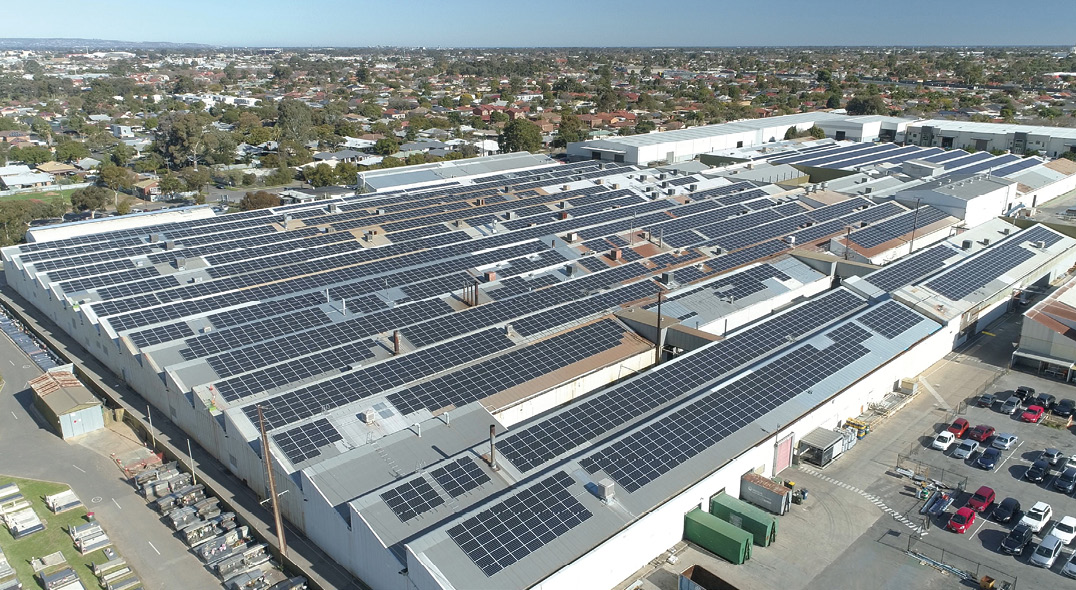
Australia is portrayed as a solar success story, and on two fronts it has earned that reputation. More than 4 million households have rooftop solar, while large-scale solar and wind continue to grow under state and federal schemes. Between these two extremes lies a forgotten market – C&I solar and storage. Systems sized between 100 kW and 30 MW – sitting on warehouse roofs, shopping centers, cold stores, farms, and factories – remain severely underutilized.
Australia’s C&I solar gap was not created by economics. Barriers are not posed by equipment costs for panels, inverters, and batteries. Outdated regulatory settings are holding the sector back.
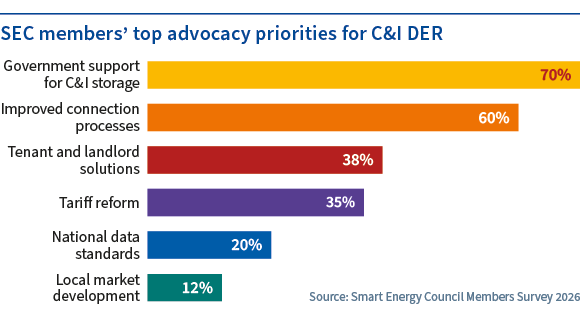
C&I sites offer an ideal foundation for renewables, due to expansive roof space, matching daytime load profiles, and strong corporate balance sheets. But when the Smart Energy Council surveyed developers, financiers and property owners, it was systemic friction that emerged as a theme. The council’s advocacy priorities now include unlocking the missing middle. This means tackling excessive grid connection approval times, rigid post-connection tariff structures, certificate market limitations for mid-sized projects, landlord-tenant split incentives, and a lack of network capacity transparency.
Small household connections typically take 10 business days. C&I projects fall into negotiated frameworks where statutory windows stretch to 30 to 65 business days – often more once technical studies and network augmentations begin. Over two-thirds of respondents to the SEC survey cited slow response times and drawn-out approvals as their primary grid connection challenges.
Connection transparency is equally critical. Proponents currently spend substantial time and capital discovering whether a network has room for a site. Accessible hosting capacity data would let developers filter viable locations up front.
Australia’s Climate Change and Energy Minister Chris Bowen has flagged several of these issues for review, including unclear application requirements, inconsistencies across Distribution Network Service Providers (DNSPs), and incentive frameworks that give DNSPs little reason to exceed baseline connection targets. It is similarly encouraging that the federal government has made C&I systems between 100 kW and 1 MW eligible for Small-scale Technology Certificates.
Tenancy dynamics present another major hurdle. Most C&I space is leased, separating the entity paying the energy bill from the property owner. The vast majority of those surveyed report that split incentives routinely stall projects. Broader adoption of environmental upgrade agreements – attaching upgrade costs to property rate charges rather than shifting tenants and renewable energy lease templates – offer a practical path forward.
Storage multiplier
Resolving these barriers for solar alone unlocks substantial value, but adding storage turns C&I sites into flexible assets.
A solar-only site offsets daytime load, but is otherwise reliant on the grid. Paired with an appropriately sized battery, the site becomes a mini power station capable of shifting self-generated power to cover peak tariff windows, smooth costly demand spikes, provide backup power for critical operations, and deliver grid support services.
Transitioning C&I sites into dispatchable assets requires closing the finance gap. Our survey data shows only one in five members view financier appetite for C&I battery projects as strong, with two in five describing it as cautious. Establishing predictable revenue streams through connection and tariff reform will give financiers the confidence to fund these larger investments.
Electrifying freight
The clearest case for paired C&I solar and storage is transport decarbonization. Logistics hubs feature large roofs, high daytime activity, and growing fleets of electric trucks and forklifts.
Charging a heavy fleet introduces concentrated loads that can easily overwhelm local grid connections. On-site solar and battery storage allow operators to power daytime charging without waiting years for costly network upgrades. On-site batteries absorb sudden demand spikes when fleets plug in, while transparent hosting capacity data allows fleet managers to evaluate potential depot locations before making major capital investments.
Rather than treating transport decarbonization as a separate challenge, fixing C&I regulatory settings builds the necessary foundation for heavy vehicle electrification.
Unlocking potential
None of these proposed reforms are radical, several are already under discussion across state and federal jurisdictions. What has been lacking is a unified strategy that treats C&I energy as a distinct segment rather than an afterthought between residential and utility-scale policy.
Because C&I projects sit close to existing electricity demand, they require no expensive new transmission lines – a major advantage for a grid under tight development timelines.
Unlocking the missing middle requires coordinated action from network businesses, the Australian Energy Regulator, the Clean Energy Regulator, and state and federal governments. The economic case for C&I solar and storage is clear. It is time for the regulatory environment to catch up.
The post Shining light on Australia’s largest rooftops appeared first on pv magazine Global.
Source link