

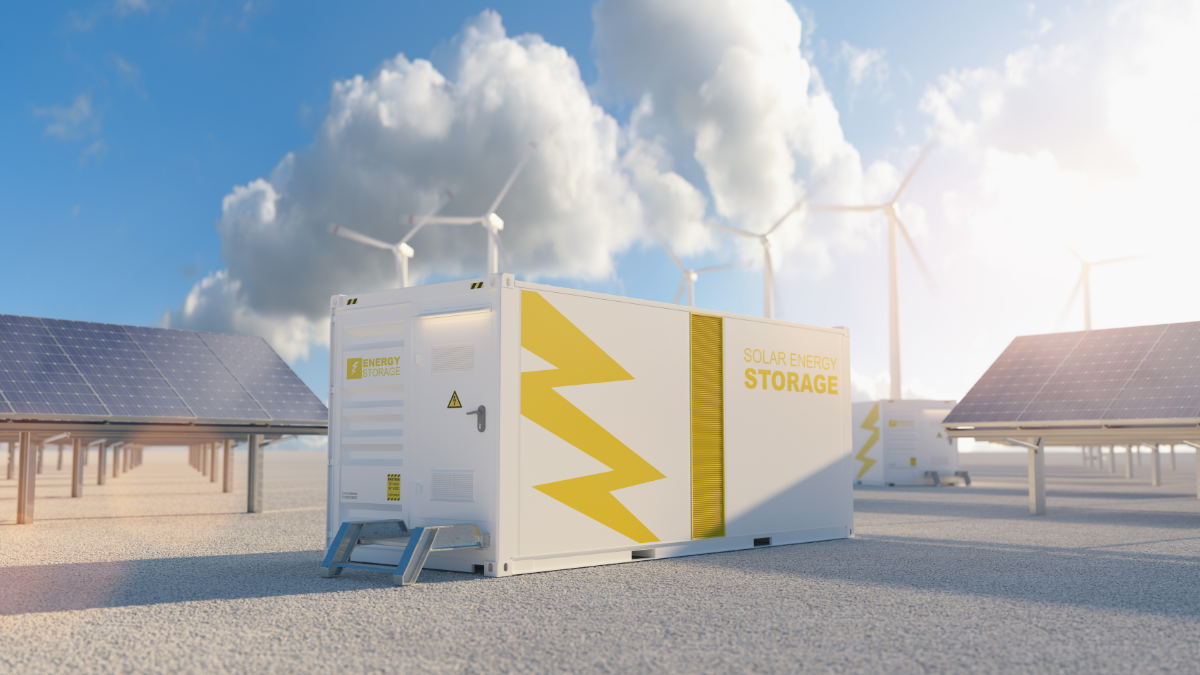

Europe’s battery energy storage market continued its strong upward trajectory in 2025, adding 36 GWh of new battery capacity and recording its twelfth consecutive year of growth, according to SolarPower Europe’s European Battery Market Outlook 2026–2030. The latest installations pushed Europe’s total operational battery storage capacity beyond 100 GWh for the first time, highlighting the increasingly important role that battery storage is playing in supporting the continent’s clean energy transition.

The market grew by 48% compared to 2024, marking a significant rebound after a slower year and signalling the beginning of a new phase of expansion led primarily by utility-scale battery projects. This growth reflects the increasing need for energy storage solutions capable of supporting a power system that is becoming more reliant on renewable energy sources such as solar and wind.
A major shift occurred in 2025 as utility-scale battery installations accounted for more than half of all new capacity additions for the first time. The growing dominance of this segment has been driven by rising demand for grid flexibility, stronger business cases supported by multiple revenue streams, and the rapid deployment of hybrid renewable energy projects that combine solar generation with battery storage.
While residential battery demand remained relatively subdued, large-scale storage projects emerged as the key driver of market growth across Europe.According to SolarPower Europe, the market is expected to expand even further over the remainder of the decade. Annual battery installations are forecast to exceed 50 GWh in 2026 and continue increasing steadily to reach 138 GWh per year by 2030.
This would represent nearly a fourfold increase compared to installation levels recorded in 2025. Across the European Union, the total installed battery fleet is projected to grow more than six times, reaching approximately 470 GWh by the end of the decade.Despite this strong growth outlook, industry experts believe that deployment is still not advancing quickly enough to meet Europe’s long-term energy objectives.
Current projections remain below the levels considered necessary to fully support the European Union’s goals for energy security, competitiveness, and decarbonisation. SolarPower Europe estimates that battery storage capacity would need to increase by around ten times by 2030 under an ideal scenario, while its Solar+ modelling suggests that approximately 600 GWh of battery capacity would be required to align with the EU’s broader energy transition targets.
To accelerate deployment, SolarPower Europe is urging policymakers to introduce a dedicated Battery Storage Action Plan that would establish a clear roadmap for expanding storage capacity across the continent. The organisation argues that stronger policy support will be essential to ensure battery storage can grow at the scale required to support Europe’s rapidly evolving energy system.
Key recommendations include simplifying permitting procedures and improving grid access for battery projects, particularly for retrofits and hybrid renewable energy developments located in congested grid areas. The industry is also calling for electricity market reforms that provide battery storage projects with fair and non-discriminatory access to energy markets while properly valuing the flexibility and grid services they provide.
In addition, SolarPower Europe believes that creating stable and attractive investment conditions will be critical for sustaining market growth. This includes fair treatment of storage assets within grid tariff structures, the removal of double charging practices, and greater harmonisation of regulations and technical standards across EU member states.
The organisation also advocates for stronger financial support mechanisms and targeted EU instruments to help reduce investment risks and accelerate project development.Industry representatives emphasise that battery storage is becoming increasingly important not only for integrating renewable energy but also for strengthening energy security and resilience. The experience of Ukraine has demonstrated the value of storage technologies during periods of crisis.
Following extensive damage to the country’s electricity infrastructure, battery systems have played a vital role in maintaining grid stability and ensuring reliable power supply. As a result, Ukraine emerged as one of Europe’s five largest battery storage markets in 2025, highlighting the growing strategic importance of energy storage technologies.
The European battery market is also becoming more geographically diverse. While Germany, the United Kingdom, and Italy remained the largest battery markets in 2025, countries such as Ukraine and Bulgaria entered the top five, reflecting the broader adoption of storage technologies across the continent.
This expansion demonstrates the increasing recognition of battery storage as a critical tool for enhancing energy security, supporting renewable energy integration, and improving overall system resilience.Looking ahead, utility-scale batteries are expected to dominate Europe’s storage landscape. By 2030, they are projected to account for around 75% of total installed battery capacity, forming the backbone of the continent’s energy storage infrastructure.
As renewable energy deployment continues to accelerate, large-scale battery systems will play an increasingly central role in balancing electricity supply and demand, stabilising power grids, and supporting Europe’s transition towards a cleaner, more secure, and more flexible energy future.
Related
Discover more from SolarQuarter
Subscribe to get the latest posts sent to your email.
Source link