

A research team from India has developed a PV panel self-cleaning coating that iincorporates silicon dioxide (SiO2) nanoparticles into a polydimethylsiloxane (PDMS) matrix, forming a nanocomposite that is then applied to the module’s glass substrate.
“The novelty of this research work is an integrated experimental and computational evaluation of a PDMS/SiO₂ superhydrophobic nanocomposite coating for solar photovoltaic panels,” said corresponding author C. Ayyanar to pv magazine. “Unlike previous research works that mainly focused on the coating’s hydrophobic or self-cleaning behavior, the present research work combined long-term outdoor performance testing with Particle Swarm Optimization (PSO)-based extraction of the five parameters of the single-diode PV model.”
“The research study directly compared coated, manually cleaned, and naturally dust-accumulated PV panels under identical environmental conditions, providing a comprehensive assessment of the coating’s effectiveness in reducing dust-related power losses and improving photovoltaic performance,” the academic went on to say.
The researchers prepared a superhydrophobic nanocomposite coating by dispersing 1 wt% SiO₂ nanoparticles in ethanol, followed by magnetic stirring and ultrasonication. The suspension was then mixed with a PDMS base polymer and curing agent, spray-coated onto the PV glass, and cured at 80 C for two hours to form a transparent coating approximately 1.5 μm to 2.0 μm thick.
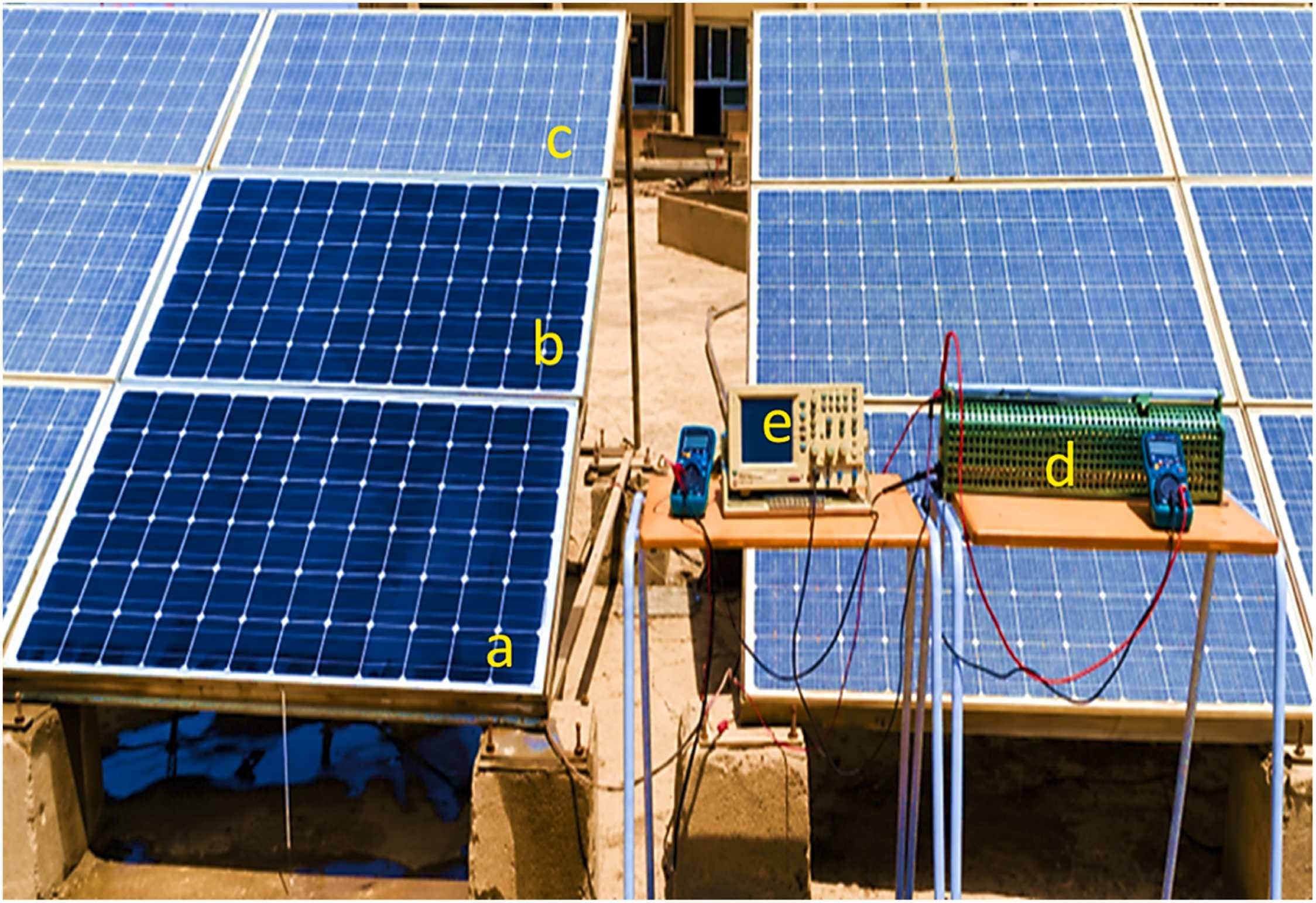
The experimental setup consisted of three identical 165 W PV modules with 15.8% efficiency. One panel was coated with the PDMS/SiO₂ layer, one was left uncoated but manually cleaned every day, and one was left uncoated and exposed to natural dust accumulation. The modules were installed on a south-facing rooftop in Tamil Nadu, India, at a 30° tilt angle, exposed to outdoor conditions for six months in summer 2025.
Following the experiments, the researchers used the measured current-voltage (I-V) data from the coated module to calibrate a standard single-diode PV model. They identified the model’s five electrical parameters using a PSO algorithm, which minimized the difference between the simulated and measured I-V characteristics.
“The most surprising finding of this research work was that the PDMS/SiO₂-coated solar panel outperformed even the manually cleaned panel,” said Ayyanar. “The coated panel achieved approximately 16% higher power output than the dusty reference panel and 7% higher output than the manually cleaned panel, demonstrating that a self-cleaning coating can be more effective than standard manual cleaning.”
The scientist also explained that the coating also reduced panel temperature by up to 12%, improved performance stability, and enabled dust removal through natural wind and water without external energy or human intervention. “Furthermore, the PSO model achieved excellent agreement with experimental results, with a very low root mean square error (RMSE) of 0.06, confirming the accuracy of the computational approach,” Ayyanar added.
The new coating technology was described in “Polymer with silicon dioxide coating on solar photovoltaic for enhancement of power output performance – Experimental study,” published in Next Energy. Scientists from India’s PSN Institute of Technology and Science and Vaigai College of Engineering have contributed to the study.
Source link