

How do you see the market for solar and storage projects in the United States this year? How is demand spread across the different regions and grid providers?
This is probably one of the first times in the past few decades where there’s been a sustained projected demand increase for electricity. If you look at all the projections out to the next five to 10 years, you see massive, multi-gigawatt growth rates across various markets in the US.
The top three markets that that we see growth in are ERCOT [Texas], PJM [Eastern US], and MISO [Central]. They’re driven by large loads, so manufacturing, data centers, etc., that are requiring power to connect to the grid. That’s where we’re seeing the big sources of demand, although other markets in the US are attractive and are experiencing a lot of electricity demand growth as well.

Vesper has a sizable pipeline of projects on the way. How are those split between solar and energy storage?
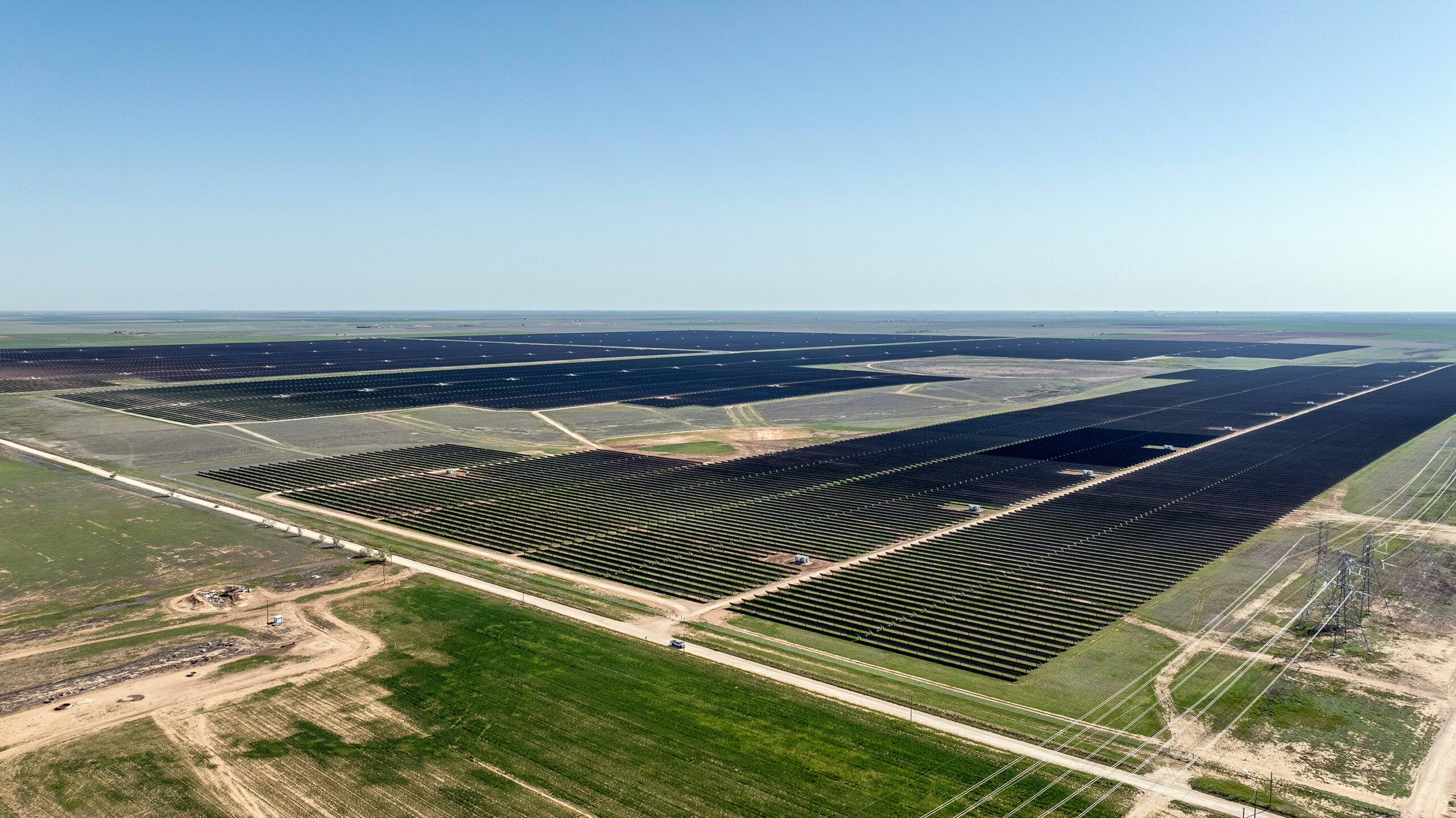
Almost every project in our pipeline has storage. We’ve got one major project operating right now, the Hornet Solar project, that’s PV only. We have another project, the 200 MW Nazareth Solar, that is also PV only. But the majority of projects in our pipeline have some aspect of storage associated with them. I’d say roughly 60% of our pipeline is PV plus storage and the other 40% is standalone storage.
Do you see much of a retrofit market, adding co-located storage to older solar projects?
There’s two ways to think about retrofitting. There’s physically co-locating, and there’s adding standalone storage to the grid that is just a natural complement for existing PV generation, wherever each is located.
It’s helpful to co-locate, there are advantages depending on where you’re locating the battery and what the grid dynamics are in a given location. But there are also many benefits of just using standalone storage to complement existing PV generation, using storage to help balance and smooth the power grid for our customers and ratepayers.
The US market has seen a series of major policy shifts in 2025 and 2026, beginning with the accelerated removal of tax credits for renewable energy projects. How is that affecting Vesper’s pipeline and ability to deliver projects?
In the near term, we are focused on our mid- to late-stage pipeline, advancing as many projects ahead of the tax incentive expirations. But overall, we’re just going to continue to focus on developing the best projects that we can for our customers and in turn ratepayers.
We see tax incentives ultimately as a way to make power cheaper. We can’t control what happens from a policy or even a supply chain perspective, but what we can do is look for opportunities and develop the very best projects.
Does that pipeline take you past 2030 and the end of the ITC? And what do you see in terms of demand beyond that point?
The growth we see across some of the major markets, that’s five- to 10-year demand and there’s additional electricity growth to come on top of that. Solar and battery storage projects can be quickly deployed, and we continue to see business after 2030.
Absent everything else, the cost of power will go up. That’s a natural reality, the tax incentives really are a mechanism to make power cheaper. There will be a cost increase, but there’s a lot of demand as well. The market will have to find the right balance between the available supply of electricity and the high demand for power.
The other issue here is space on the grid to meet all that demand. You talked about storage, which is obviously a big part of the solution, but is Vesper also involved in the grid upgrade and management side of things?
Vesper currently is not going out and building hundreds of miles of transmission lines, but we are involved in grid upgrades is as they’re associated with the solar and storage projects that we’re developing. For example, we could interconnect a project, and it could require a system-wide upgrade that benefits more than just our project. Our project would pay for that upgrade as part of our process of connecting to the grid.
Going back to the recent policy changes in the US, this year we’ve seen several shifts in trade policy affecting procurement of various components for energy projects – how is that affecting business?
I think back to my early days as a project developer in the 2010s, when people ask me the commercial operations date of a project. Back then, it was largely driven by the remaining development milestones. Procurement milestones and long lead times for equipment are now the deciding factor in project timelines.
It’s forced us to think about projects differently, and to consider different procurement strategies. Now we might look at bulk procurement orders that we can use to satisfy multiple projects within our pipeline, just to get delivery timing certainty.
Which components in particular do you see that shift in lead times for?
It’s mainly transformers and circuit breakers right now. For PV modules, battery systems, inverters etc., it’s not necessarily a lead time issue. There is sufficient supply, but the costs have been increasing with some of the changes in the procurement landscape, and that’s the main impact that we feel at project level.
So far, we’ve been talking about policy at the federal level. Do the changes here make state-level support more important to a project?
Many states have renewable energy procurement targets or mandates that require utilities and retailers to go out and procure a certain amount of renewables. And for us, that’s helpful, because it sends a signal that this is a place that we should go and invest and be there for the next 10, 15 years, or however long. Those policies are important in helping us focus our pipeline and ultimately develop projects in the right locations.
The post Sustained demand appeared first on pv magazine Global.
Source link