

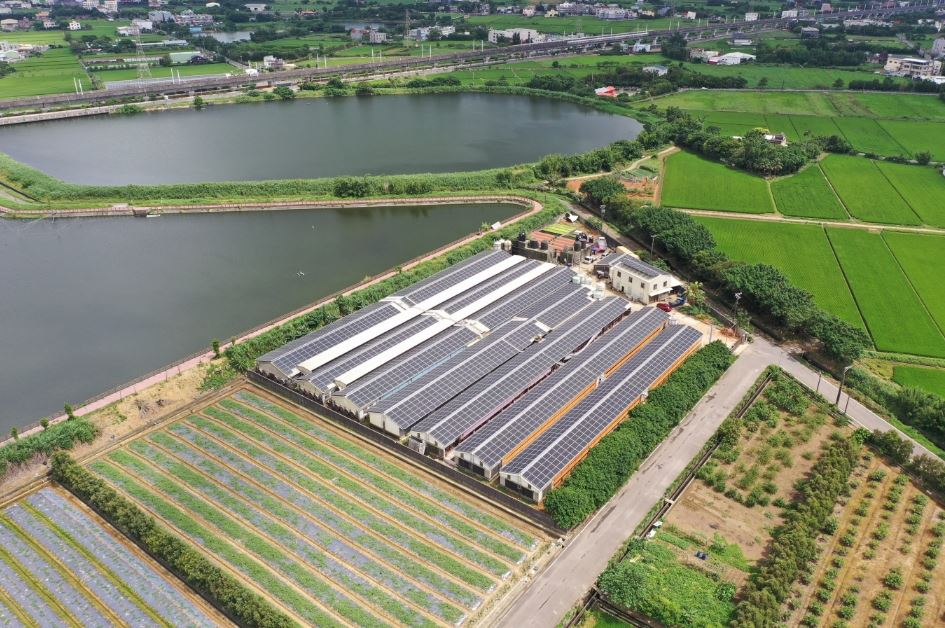
Taoyuan’s Department of Economic Development says its new guidelines for solar projects are designed to make photovoltaics “reliable and trustworthy neighbors.” Solar operators will be required to inspect environmentally-sensitive areas during the planning of future projects and prepare plans for storing damaged solar panels as a result of any natural disasters.
The city of Taoyuan in northern Taiwan has published local guidelines for solar power projects.
The guidelines, implemented by the city’s Department of Economic Development, are geared towards improving environmental protection, safety, and future recycling of solar power projects in the area.
They stipulate that operators will be required to conduct self-inspections on hillsides or environmentally-sensitive areas during the planning and site selection of future solar projects. The guidelines also recommend that developers communicate substantially with local residents during the planning phase.
Third-party experts will be brought in by the city to conduct equipment health checks once plants begin operating, the guidelines add, while developers will be expected to set up contact channels so local residents can report problems or ask questions.
Solar plant operators will also be required to prepare plans for storing damaged panels as a result of any natural disasters in order to prevent pollution from the mishandling of broken panels.
The guidance then promises stricter standards for collection, storage and recycling of solar panels that are ready to be retired or recycled, in order to ensure panels do not become unmanaged waste.
Director of Taoyuan’s Department of Economic Development, Chang Cheng, commented that with central government regulations focusing mostly on power generation and land use, existing guidance on environmental impact, safety management and handling of aging equipment is not detailed enough.
“We must ensure that every photovoltaic project is managed from its inception to its retirement; this is the only way to be responsible for Taoyuan’s land,” the director said, adding that while the city welcomes green energy, it must be “responsible”.
“The goal is to make photovoltaic facilities reliable and trustworthy neighbors through these standards,” a statement on the department’s website adds. “In the future, the [department] will continue to coordinate the efforts of various departments to make Taoyuan a new model for green energy management and sustainable governance nationwide.”
Taoyuan’s new rules for solar follow a series of changes to Taiwan’s Legislative Yuan on national-level regulations governing the development of ground-mounted and floating solar projects. The amendments, passed late last year, introduced requirements for environmental impact assessments prior to development of solar projects and ruled out solar installations larger than one hectare in scenic spots and geographically-sensitive areas.
The policy changes came after a major typhoon that struck southern Taiwan in early July, damaging over 135,000 solar panels.
Taiwan is on track to more than double its current solar capacity by the end of 2035, according to analysis by consultancy GlobalData, with forecasted annual growth additions between 1 GW and 2 GW.
This content is protected by copyright and may not be reused. If you want to cooperate with us and would like to reuse some of our content, please contact: editors@pv-magazine.com.
Popular content
Source link