
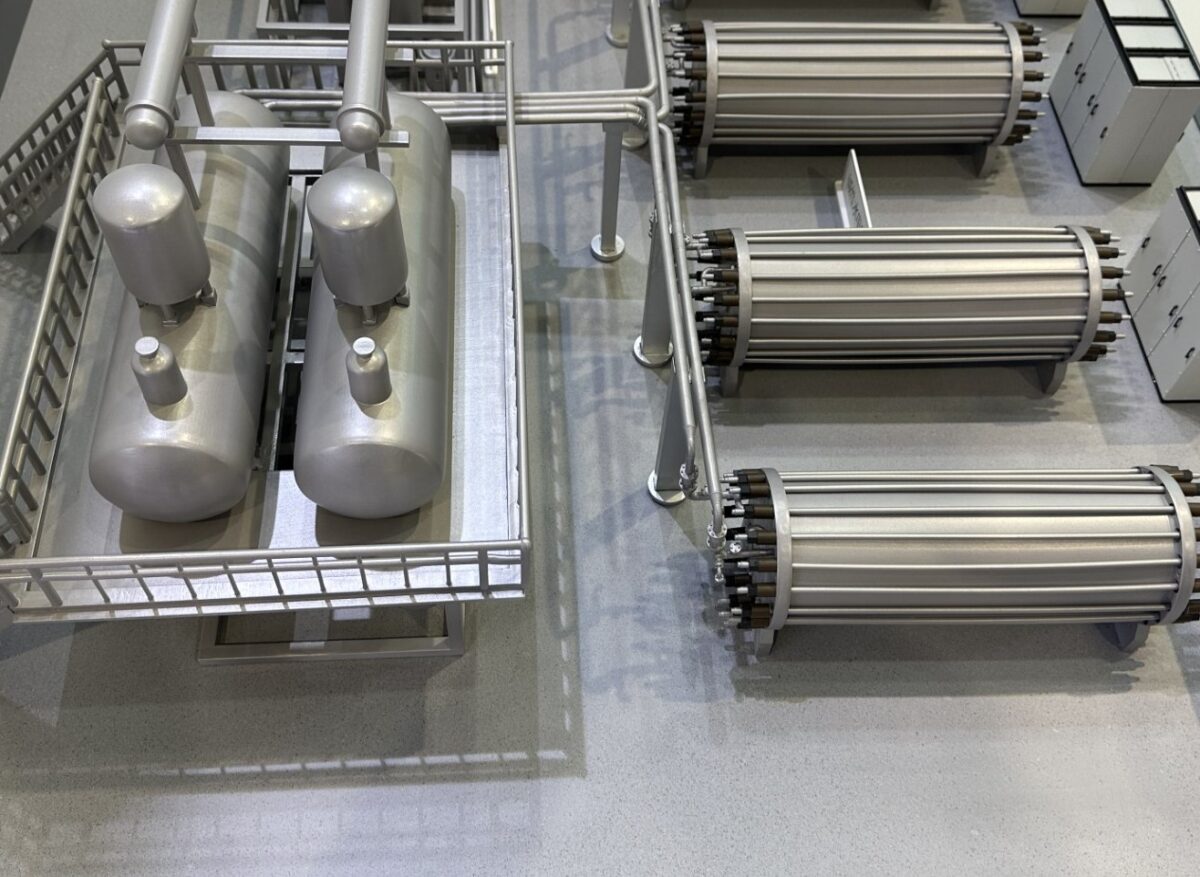
China has started operating a 195 km hydrogen pipeline connecting Darhan Muminggan United Banner with Baotou, Inner Mongolia, reported Xinhua News Agency. The pipeline has an approved annual transport capacity of 100,000 tons of hydrogen, potentially increasing to 240,000 tons. Developed by Inner Mongolia Huadian Huameng Pipeline, the infrastructure will connect renewable hydrogen production facilities in northern Baotou with industrial consumers in the south. Pipeline transport could reduce hydrogen delivery costs from about CNY 13 ($1.83)/kg by tube trailer to approximately CNY 3/kg, according to Xinhua. China has been expanding its hydrogen transport infrastructure to connect renewable energy resources with industrial demand.
ACME Group has reached a final investment decision (FID) on a $3.6 billion green ammonia project in Odisha, India, with an annual production capacity of 760,000 tons. The facility, scheduled for commissioning in 2029, will feature a 2,200-ton-per-day ammonia production loop designed by Thyssenkrupp Uhde. It will use renewable electricity to produce hydrogen through electrolysis for green ammonia production, targeting customers in India, Japan and Europe. Brookfield has committed up to $600 million to support ACME’s green molecules platform. The project is expected to avoid more than 1.5 million tons of greenhouse gas emissions annually. ACME has also secured green ammonia supply contracts in India and is developing green methanol projects.
Researchers in Chile have found that green hydrogen produced from curtailed solar electricity could achieve a levelized cost of hydrogen (LCOH) as low as $5.58/kg, compared with $7.27/kg for the most competitive wind projects. The study, “Green hydrogen from curtailment: Real data analysis,” assessed operational data from 56 solar plants and 44 wind farms with a combined capacity of 10.4 GW between July 2023 and June 2024. Curtailment occurred in about 25% of recorded hourly intervals, predominantly at low power levels. Using a techno-economic model based on proton exchange membrane (PEM) electrolyzers, the researchers identified optimal electrolyzer capacities of 5% to 13% of the renewable plants’ net effective power across the 10 best-performing projects, all located in northern Chile. The projects achieved LCOH values of $5.58/kg to $6.97/kg, with electrolyzer capacity factors of 25% to 30%. Deviations of up to 50% from optimal electrolyzer sizing increased hydrogen production costs by no more than 3.8%. The study, to be published in Energy Reports, found that curtailed renewable electricity could support competitive hydrogen production, although storage, compression and transport costs remain additional considerations. Chile has experienced significant renewable energy curtailment, particularly at solar plants in the north of the country.
Qair has inaugurated its Hyd’Occ renewable hydrogen production facility in Occitanie, France. The 20 MW plant is supported by a regional network of hydrogen refueling stations forming part of the European H2 Corridor. Qair opened its first hydrogen refueling stations in Béziers and Narbonne in spring 2026. A second development phase will double the plant’s installed capacity to 40 MW, increasing annual hydrogen production capacity to 5,400 tons. Total investment amounts to €130 million.
Plug Power has launched GenEco Scale, an integrated electrolyzer plant offering for utility-scale hydrogen production. Arcadia eFuels has selected the system for a 280 MW hydrogen facility at its Project ARC development in Texas. Plug Power said it has completed the project’s technical evaluation and front-end engineering design (FEED) study. Once operational, the facility is expected to support production of approximately 23.2 million gallons of electro-sustainable aviation fuel (e-SAF) annually. Plug Power previously signed a 280 MW electrolyzer supply agreement with Arcadia eFuels for a separate project in Denmark.
Protium has completed due diligence for two green hydrogen projects under the UK government’s second Hydrogen Allocation Round (HAR2). The South Tees Net Zero project in northern England and the South Wales Net Zero project have both advanced to the Invitation to Offer stage. The 70 MW South Tees facility is designed to produce up to 11,000 tons of green hydrogen annually, equivalent to about 433 GWh, for industrial consumers in Teesside. The projects will now progress toward Low Carbon Hydrogen Agreements, which provide revenue support to reduce investment risks. Protium is also developing other UK hydrogen projects, including a 15 MW electrolyzer project that secured support under the first Hydrogen Allocation Round.
Source link