

When will my robot fold my laundry?
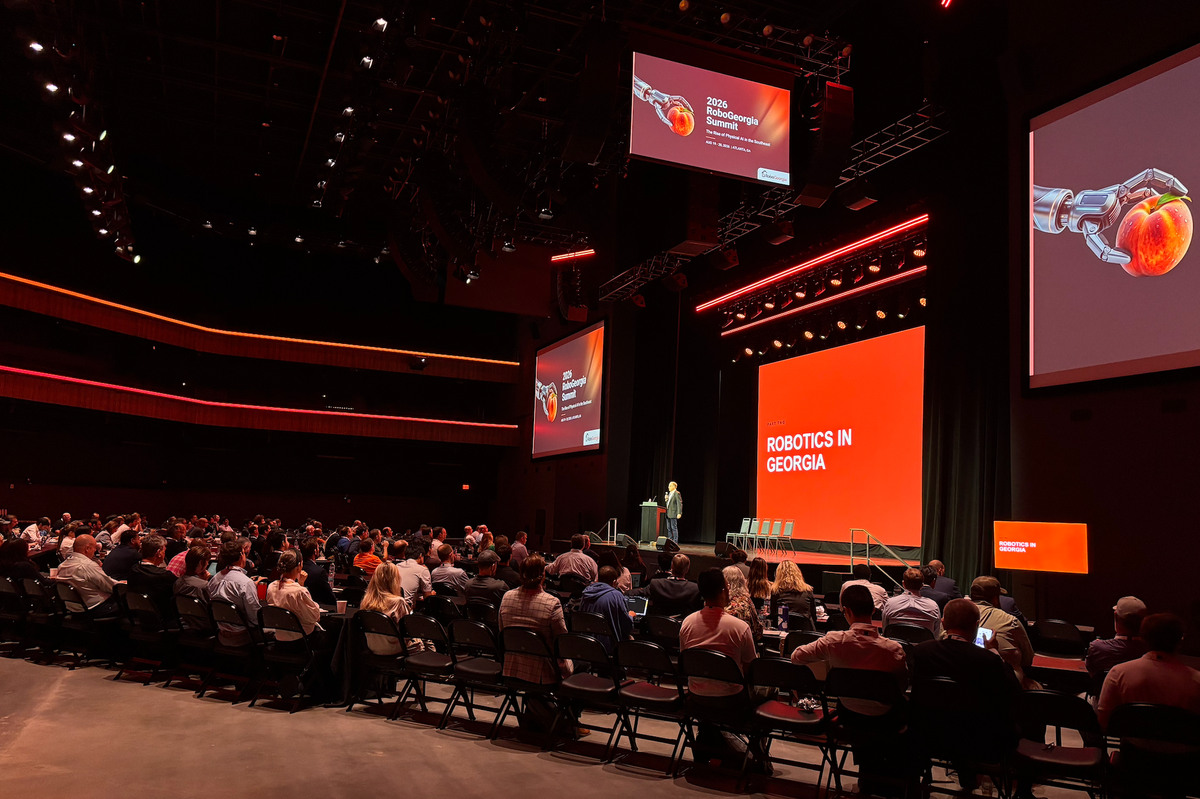
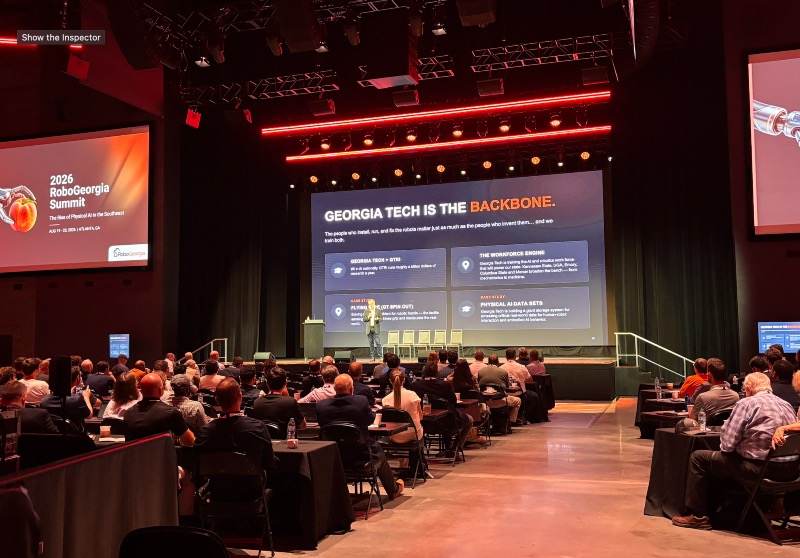
That’s the question I opened with when I recently gave the keynote at the RoboGeorgia Summit, in front of a room full of people who build these machines for a living. I spent two months digging for the answer.
The short answer is no time soon. Not even close.
Here are the slides.
Hypepotamus also covered the summit and this keynote: Georgia’s bet on physical AI and robotics, by Maija Ehlinger.
The three things I argued
Robotics has hit a new inflection point but the gaps are real
Decades of progress in batteries, motors, and software have set the stage for “physical AI.” But the biggest bottlenecks aren’t compute — they’re judgment and dexterity.
The humanoid hype deserves some skepticism
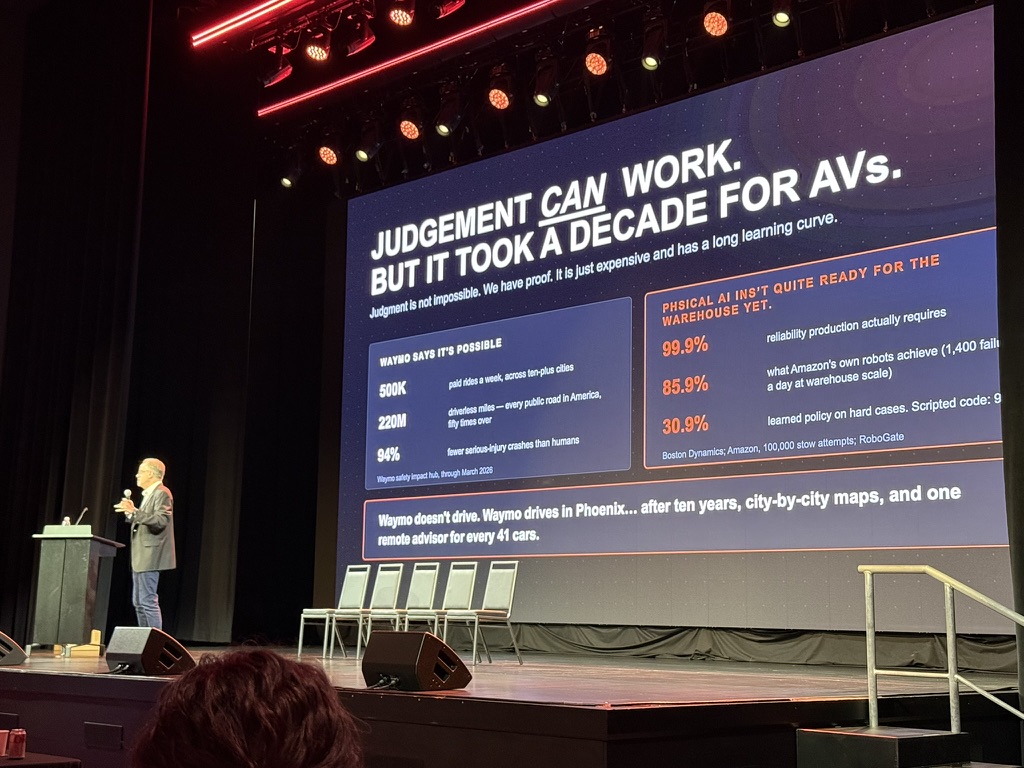
One in four venture dollars is flowing into a handful of humanoid companies, but reliability tells a different story: on the hard cases, old-fashioned scripted automation still succeeds about 94% of the time where a learned policy manages roughly 31%. The real opportunity is deployment in real-world facilities — keeping in mind that the iteration cycle for hardware is quarters, not hours.
Georgia is one of the best places in the world to build in robotics
Between AMPF, Georgia Tech’s research, and the third highest concentration of Fortune 500 headquarters in the US, Georgia has a rare advantage: multi-industry density across airports, farms, hospitals, logistics and more. More real-world testing environments than almost anywhere else!
Now let me go deeper on each one.
Robotics inherited every tech curve and paid for none of them
The AI came from large language models. Battery density came from smartphones and EVs. Motors and actuators rode down a cost curve built by drones and scooters. Cameras and lidar were paid for by phones and self-driving cars. None of those curves were built for robotics. Robotics gets all of them for free — and it still isn’t enough.
A robot is only as good as its slowest part, so I graded the parts. Sensors get an A. Perception gets an A, and that’s the AI we actually nailed. Muscles get a B+. Judgment gets a D. Hands get a D. Three are having a spectacular decade, two are failing, and here’s what surprised me… both failures are software. The bottleneck isn’t compute.
Judgment is knowing what to do when the world doesn’t match the training data. Automation cleans every square inch of the floor; judgment knows which inch to skip — just ask the robot vacuum that met a dog’s little accident. The reason it lags is data. There are roughly a billion hours of internet video behind today’s AI models, and about 300,000 hours of robot manipulation data ever collected, by anyone, in the entire history of the field.
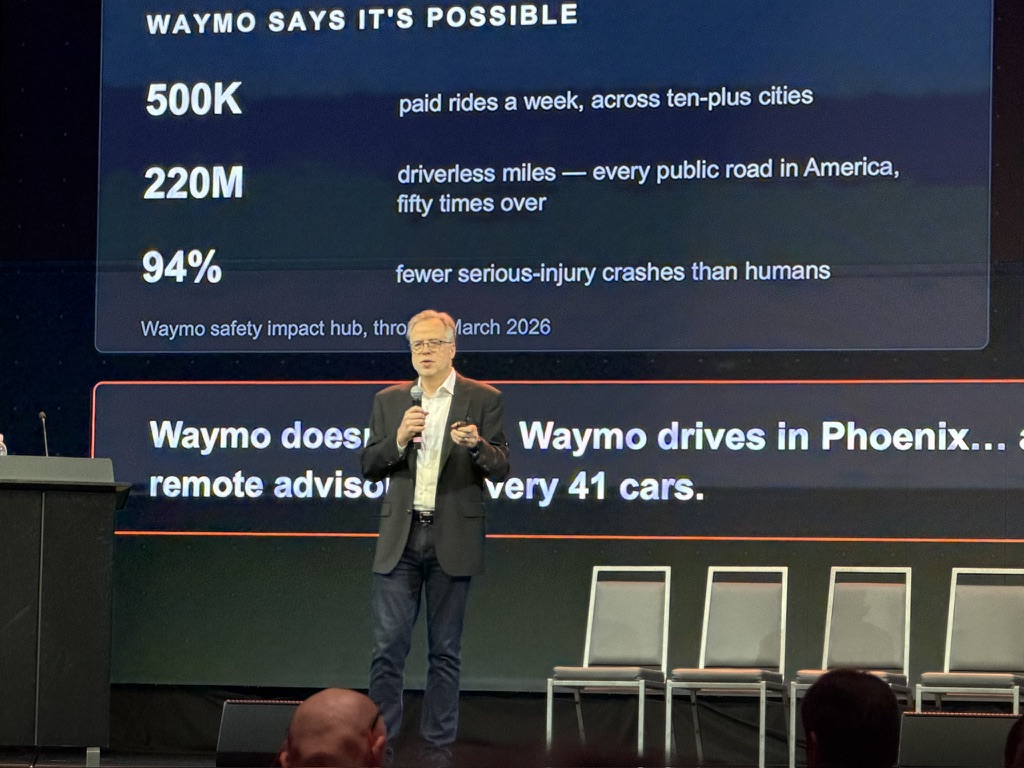
Let me give the optimists their due, because judgment clearly isn’t impossible. Waymo runs 500,000 paid rides a week and has 94% fewer serious-injury crashes than human drivers. That’s proof. It’s also a warning about the price: Waymo doesn’t drive, Waymo drives in Phoenix — after ten years, city-by-city maps, and one remote advisor for every 41 cars.
Hands are the harder D. Your hand has about 17,000 mechanoreceptors and grips an object you’ve never touched 10 to 40% firmer than its slip threshold, automatically. We’re only now learning touch.
Which leads to the number that decides whether anyone buys your robot: production needs about 99.9% reliability, and Amazon’s own warehouse robots run 85.9% — roughly 1,400 failures a day at their scale.
If you believe the headlines, every robot has two legs
Humanoids dominate the feeds — dancing, flipping, boxing — and the money followed. One in four venture dollars going into robotics now goes to humanoids, and nearly all of it to a handful of companies: $1.5 billion in 2024, $6.1 billion in 2025, another $5.0 billion in just the first half of 2026. Now put that next to 85.9%.
About those videos: most are curated. You’re watching take #47, because nobody posts takes 1 through 46. And a lot of the demos racking up millions of views aren’t autonomous at all — they’re a person in a motion-capture rig.
Meanwhile the two things everyone is racing to build are becoming commodities. China industrialized the robot body, and physical AI is going open source and open weight. That pushes the durable value to deployment data, integration, and trust — which favors whoever is actually out in the field.
To be fair to the humanoid believers, the biggest bet in America isn’t a fantasy and it’s 90 minutes down I-16. Hyundai plans more than 25,000 Boston Dynamics Atlas robots across its US plants, and Georgia goes first — the Metaplant in 2028. But look at the actual work: repetitive tasks, fixed routes, in a plant designed around the machine. Even that is really a bet on applied autonomy. They just made theirs look like us.
You can only virtualize a loading dock to a small degree
If the bottleneck in physical AI were algorithms, Georgia would have to catch up with Silicon Valley. But it isn’t algorithms. It’s machine-hours, in real places, doing real work. For the first time in this entire AI cycle, geography is a critical input.
Invent, manufacture, deploy — Georgia is one of very few places on Earth that can credibly claim all three. Georgia Tech is #5 in AI nationally and GTRI runs about a billion dollars of research a year. The state has 426,300 manufacturing jobs across 12,882 plants. Then there’s the busiest airport on Earth and the number one auto port in America. Every other state is arguing about the first one. The industry just made the last two decisive.
Here’s the part I think is most underrated. Georgia isn’t the biggest deployment market in the country — it’s the most diverse one: ports, docks, an airport, farm fields, hospitals, and plants. Texas has energy and logistics. The Inland Empire has warehousing at enormous scale. Nobody else has all six, owned by companies that don’t compete with each other. And diversity is worth more than volume: in one study, a model trained across 104 different locations matched a model trained inside the test site itself, without ever having seen it.
Add one of the highest concentrations of Fortune 500 headquarters in the country and something unusual happens for a founder: a robot proven at Home Depot can walk straight into UPS, then Delta, with no channel conflict. And Delta isn’t waiting — its autonomous jet bridges have docked more than 1,100 flights with zero damage and zero injuries, a first in commercial aviation.
Two things people here don’t know yet. There’s a self-driving robotics laboratory on 14th Street, where robots run the machines and AI agents design the experiments. Georgia Tech’s Advanced Manufacturing Pilot Facility just won $18.1 million from NSF to become one of twenty national AI cloud labs — and it quietly cut its rates for startups.
And three weeks before this talk, the FCC restricted imports of new humanoid and quadruped robots. Read the fine print and it’s not a ban, it’s a domestic-content test — 65% today, rising to 75% by 2029. A content rule is a manufacturing argument, and that’s a conversation Georgia can actually win.
My favorite local example makes the whole case in one product. Slip Robotics built a sled, not a humanoid. Every competitor tried to solve unloading from inside the trailer; Slip moved the problem to the dock and can load or unload a full trailer in about five minutes with no retrofit. Nobody buys a robot, by the way — they buy a payback period, and under eighteen months gets their attention.
So, when will my robot fold my laundry?
Not soon. The hardest problem between you and that robot isn’t a smarter model. It’s manufacturing, deployment, and enough different real places to train physical AI in the actual world instead of a simulation of it.
Which means the thing holding robotics back is the thing Georgia already has. Go Georgia! Go Southeast!
From the stage
Sources
- Maija Ehlinger, Hypepotamus, August 21, 2026 — coverage of the summit and this keynote.
- Bessemer Venture Partners, State of Robotics — internet video hours versus robot manipulation data.
- Waymo safety impact hub, through March 2026 — rides, miles, and the 94% crash reduction.
- Boston Dynamics; Amazon (100,000 stow attempts); RoboGate — the 99.9% and 85.9% reliability figures.
- Crunchbase (June 2026) and PitchBook (May 2026) — humanoid VC funding.
- US Bureau of Labor Statistics (June 2026) and the National Science Foundation (August 2026) — Georgia manufacturing and the AMPF award.
Source link